Hormuz Reopening: A Boost for Asia, But Economic Scars Remain
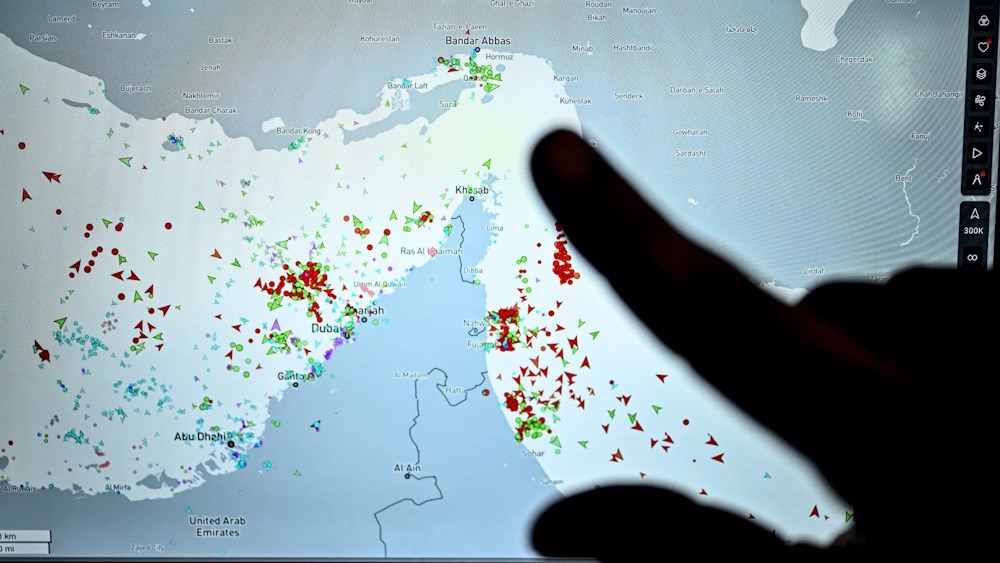
A potential agreement between the US and Iran to reopen the Strait of Hormuz could provide immediate relief for Asia, a region that has significantly felt the economic impact of the prolonged conflict. Even so, the repercussions of the crisis are expected to extend through the end of the year, and potentially much further. In the last three-and-a-half months, Asian currencies have experienced significant declines, inflation rates have escalated, and supply-chain disruptions have started to hinder industrial output. The disruptions can be attributed to Asia’s significant dependence on energy and various commodities that transit through the Strait of Hormuz. More than 80% of the petroleum and liquefied natural gas passing through the waterway is generally destined for Asian markets. On Sunday, President Trump stated in a social media post that an interim cease-fire agreement achieved by Washington and Tehran would lead to the reopening of the strait, and that he had authorised “the immediate removal of the United States Naval blockade” on Iranian ports. The agreement is set to be finalised on Friday.
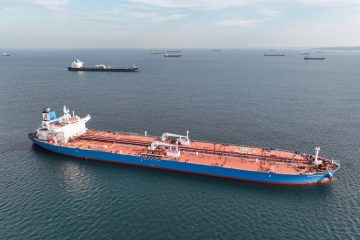
“Ships of the World, start your engines,” he wrote. “Let the oil flow!” If an agreement to reopen the strait holds, it will provide an immediate reprieve, allowing hundreds of tankers laden with oil, petrol and fuel byproducts to commence their monthlong journey back to Asian ports. Industry experts and economists continue to warn that the prolonged disruption of trade flows will necessitate a significant period for global markets to return to normal. This suggests that elevated inflation and supply-chain challenges are expected to persist until the year’s end. For Asia, “the good news is that once the strait opens, oil and some gas come back,” stated Joshua Ngu. The unfortunate reality, he noted, is that throughout the last three-plus months, “with each passing day the strait has remained closed, the economic disruptions have escalated significantly and permeated deeper into the supply chain.” Those disruptions, Ngu stated, “won’t be solved in a short period of time.” On Monday in Asia, leaders of various countries marked the occasion with celebrations following the announcement of the cease-fire agreement. Markets across the region experienced a notable rally, with benchmark stock indexes in Japan and South Korea both increasing by approximately 5 percent.
Japan’s prime minister, Sanae Takaichi, stated on X that the agreement represents a “major step toward a resolution.” She also expressed her hope that “free and safe navigation in the Strait of Hormuz will actually be ensured.” In a joint statement, Australia’s prime minister, Anthony Albanese, and foreign minister, Penny Wong, expressed satisfaction that the agreement encompassed measures aimed at reopening the strait and reinstating freedom of navigation. “While full recovery will take time, restoring this vital trade corridor is essential to easing pressure on energy prices and economies, including in our region,” the statement indicated. While Western nations have predominantly faced challenges at the petrol pump and through elevated jet fuel prices, Asia has been contending with a significant physical supply shortage for several months. Throughout developing Asia, economic growth forecasts have been adjusted downward as shortages of crude oil and natural gas compel countries to implement power rationing. A return to secure shipping routes would greatly enhance the prospects for nations reliant on West Asian energy, such as Pakistan, Vietnam, and the Philippines — the latter of which has proclaimed a national energy emergency and mandated consumption reductions.
Wealthier economies, such as Japan and South Korea, have utilised their financial resources and strategic reserves to mitigate the initial impact. Even these industrial powerhouses, however, have faced challenges due to soaring oil prices that have impacted their currencies, along with supply disruptions that can only be addressed through a resumption of trade flows. Economists express concern that these pressures may persist beyond the current geopolitical crisis. The turnaround time alone — for ships to clear the strait, reach their final destinations, and return — will take months, a timeline that could easily slip if fears of renewed Iranian aggression or a lack of insurance coverage keep vessels away. Inflationary pressures associated with disruptions in the flow of oil, gas, and their byproducts are expected to remain persistent. In Asia, liquefied natural gas prices are generally linked to oil prices, exhibiting a price lag of three to six months. This indicates that, regardless of a potential decline in oil prices in June, high natural gas prices are expected to remain elevated until the year’s conclusion. “From a price increase perspective, we’ve not even necessarily seen that play through fully,” said Wood Mackenzie’s Ngu, “the $100 oil price that we saw in March will only fully come through three to six months from then,” he stated. Consequently, “we are still in a very precarious time.” Supply-chain disruptions are expected to persist as well. One of the most significant economic casualties of the conflict has been the global fertiliser supply.
Five major exporters — Iran, Saudi Arabia, Qatar, the United Arab Emirates, and Bahrain — together account for over one-third of global urea supplies, which is the primary type of nitrogen fertiliser. The disruption has already impacted the peak planting season across a significant portion of Southeast Asia, which occurs from May to July. “A disruption of a month or so is manageable, but if it bleeds far into the planting season, the reduction in crop yields raises serious food security issues,” stated Albert Park. “The impact will be postponed, indicating that we probably won’t experience the full extent of the production shortfalls until later in the year.” In other regions, companies in Japan and South Korea are facing challenges due to a naphtha shortage, which is a petrochemical byproduct derived from crude oil refining and utilised in plastic wrap and food packaging. Limited supply of other commodities, including helium and liquefied petroleum gas, has put pressure on various sectors, affecting everything from cooking to medical imaging. According to Haruhiko Sakaino, an adviser to Japan’s Agency for Natural Resources and Energy, it is anticipated that the restoration of naphtha supply chains to normalcy will require a minimum of one year following the resumption of West Asian shipments. The challenges begin with small businesses that need to quickly increase their production capacity. “It won’t be as straightforward as resuming imports,” he stated. “It’s akin to capillaries that have been compromised. They take a long time to recover,” Sakaino stated.