Traders prepare for fresh chaos as Strait of Hormuz tensions escalate

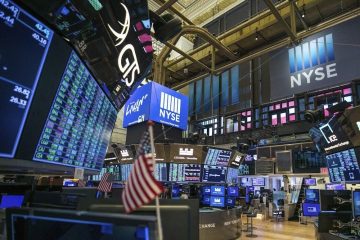
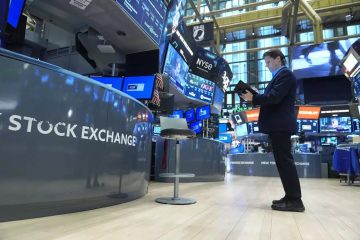
Traders are bracing for a tumultuous start to the week as the ongoing impasse surrounding the Strait of Hormuz rekindles the uncertainty that Wall Street had been keen to overlook, following a week that propelled the S&P 500 Index to a new high and nudged oil prices closer to $90 a barrel. Over the weekend, Iran issued a warning that vessels approaching the waterway “under any pretext” would be regarded as breaching the ceasefire. This comes as the Revolutionary Guard Corps has engaged in firing upon commercial ships, resulting in tanker operators left in a state of uncertainty while awaiting directives from Tehran. The developments solidified a stalemate that seemed to have softened on Friday, as indications of a potential thaw sparked a widespread rally in risk assets. The Islamic Republic of Iran has announced, its decision to forgo participation in the upcoming second round of US-Iran discussions scheduled in Islamabad this week. This decision comes in light of the ongoing American naval blockade, although communications continue to be facilitated through intermediaries.
President Donald Trump, who indicated on Friday that a deal was nearly finalized, escalated his rhetoric by Sunday morning, threatening to obliterate every power plant and bridge in Iran should the negotiations collapse. The recent volatility highlights that a significant portion of last week’s rally was predicated on optimism rather than concrete solutions. The S&P 500 recorded a third consecutive week of gains exceeding 3 percent and is poised for its most significant monthly increase since 2020. On Friday, the dollar momentarily eliminated all of its gains accrued during the war period. Brent crude experienced a significant decline, whereas US bonds saw an uptick in value. Trading will commence in earnest for US stocks, Treasuries, and oil at 6 p.m. Sunday. “It seems that investors may have jumped the gun,” remarked Martin Hennecke noting that the weekend’s developments “could result in a reversal of some of the recent market gains in the short term.” In early Asian trading Monday, the dollar showed strength against major peers, while the Australian dollar experienced the most significant declines among risk-sensitive currencies. Inflation risks persist at elevated levels and are unlikely to diminish readily, even if the tenuous US-Iran ceasefire continues past its Tuesday deadline. Hennecke observed that businesses are currently transferring increased input costs to consumers, referencing the most recent S&P Global US Flash PMI. This trend diminishes cash and fixed-income assets, suggesting a rationale for maintaining investments in equities amid market fluctuations.
The Strait of Hormuz has largely been closed for the duration of the seven-week conflict, with crude prices remaining significantly elevated compared to pre-war levels. Central banks are now compelled to reassess their strategies regarding rate cuts — a consequence that is unlikely to be mitigated even with the signing of a deal. “Even though the US stock market has pushed to a new record high, the risks are growing in the marketplace every time there is a setback in the negotiations to reopen the Strait of Hormuz,” stated Matt Maley. “We’re approaching a period where it’s not solely elevated prices that will pose challenges, but also the emerging shortages.” Vice President JD Vance, special envoy Steve Witkoff, and Jared Kushner are set to arrive in Islamabad on Monday night for discussions that the Trump administration indicates will build upon the terms Vance outlined last week. The US naval blockade permits vessels transporting non-Iranian goods to exit the Persian Gulf, while those that have departed from Iranian ports are excluded — a differentiation that Tehran has referenced in reinforcing its position.
On Sunday, Trump announced on Truth Social that a US Navy vessel intercepted an Iranian-flagged cargo ship “by blowing a hole in the engine room,” and that US marines are now in custody of the ship. “Our contention all along is that we need to actually see transit through the Strait of Hormuz,” stated Sarah Hunt. “Until and unless that occurs, I believe markets will remain volatile; however, we appeared to move somewhat closer to a resolution last week. If there is an expectation that discussions will recommence, I think last week’s market activity reflected a positive backdrop.” Hunt indicated that investors may be inclined to overlook the energy shock, provided that earnings and spending remain robust, particularly in the United States. The bond market has consistently remained skeptical of the peace trade. Since the onset of the war, two-year Treasury yields have risen, reflecting a reduction in traders’ expectations regarding Federal Reserve rate cuts for this year. Oil represents the most significant divergence between market pricing and physical reality. The market decline on Friday reflected an adjustment towards normalization; however, shipping routes continue to face disruptions, tanker rates remain high, and inventories are low—factors that analysts indicate will require weeks to resolve. Approximately 20% of global oil and liquefied natural gas transit through the Strait of Hormuz prior to the onset of hostilities. Bank of America’s cross-market risk gauge was on track for its second-quickest monthly decline on record, surpassed only by the early-pandemic recovery.
Commodity trading advisers who had maintained short positions in equities found themselves compelled to reverse their stance and pursue long positions. According to strategists, a significant factor driving the rush was the anxiety of missing out—an instinct that was solidified last year when traders who underestimated Trump’s tariff threats faced repercussions from the subsequent rebound. In light of the recent weekend developments indicating the ongoing volatility of the war, the market’s current “risk-on run” is likely to face significant challenges, according to Elias Haddad, global head of markets strategy at Brown Brothers Harriman & Co. Nevertheless, he stated that his firm maintains the perspective that although the energy shock may not have fully subsided, the most severe impacts are likely behind us. “The US ‘Open-for-All-or-Closed-to-All’ approach to navigation for vessels transiting the Strait of Hormuz is more likely to accelerate a reopening of that crucial waterway because shared economic pain raises the incentives for all parties to reach a workable diplomatic off-ramp,” Haddad stated. “Consequently, the end of March probably represented the nadir in risk sentiment, and there is potential for central bank rate expectations to partially return to levels observed prior to the conflict.”