Trump hints at end of West Asia conflict as economy shines
President Donald Trump indicates a willingness to conclude the US conflict with Iran, despite the ambiguity surrounding the specifics of a potential agreement and the significant obstacles that persist in achieving enduring peace. The president has maintained an ambiguous stance regarding his criteria and timeline for concluding the conflict in the seven weeks following the US’s alignment with Israel in initiating strikes against the West Asian oil producer. In interviews and social media posts on Friday, Trump suggested that discussions had produced a framework for an agreement that was sufficiently advanced — emphasizing his intention to bring the conflict to a close and shift focus to a domestic agenda in anticipation of the November midterm elections. “Iran has agreed to never close the Strait of Hormuz again,” he stated on his Truth Social platform, amidst a series of declarations that remain unverified by Iran itself. Tehran has indicated that the region, which accounts for 20% of global oil supplies, will remain accessible during a ceasefire between Israel and Lebanon. On Wall Street, traders hurried to wager that the conflict was virtually concluded. The S&P 500 reached an unprecedented peak, while the dollar on Friday momentarily negated its gains attributed to the conflict, and oil prices declined to approximately $90 per barrel.
As the elections approach, the president may be facing increasing domestic political pressure to bring an end to the hostilities. The ongoing conflict has resulted in a significant increase in gasoline prices, challenging a prominent assertion made by Trump, who often takes credit for reducing fuel expenses. Voters have demonstrated a tendency to penalize incumbent parties in response to inflationary pressures. While Trump’s political base has predominantly backed the war effort, survey data indicates that a majority of Americans do not share this support. Should Republicans cede control of one or both chambers of Congress to Democrats, the latter part of Trump’s presidency may devolve into a protracted series of contentious funding disputes and inquiries. In a clear indication that the White House acknowledges the necessity of altering the national discourse, Trump has dedicated a significant portion of the week to promoting the advantages of his hallmark tax legislation. This includes hosting a gig worker with McDonald’s in the Oval Office and traveling to Nevada and Arizona to emphasize his economic strategy and engage younger voters. “To be candid, it was somewhat unrefined. “You know, they come up with these unconventional concepts,” Trump remarked Thursday regarding his DoorDash delivery to the White House. “They may be somewhat minor in nature, yet we engage in them, and the outcomes are overwhelmingly favorable.”
Earlier this year, Trump’s advisers had outlined a strategy for a spring filled with domestic politically focused travel; however, this initiative was subsequently postponed due to the ongoing conflict. At different points, Trump has expressed a desire to definitively eliminate Iran’s nuclear aspirations, secure its stockpile of highly enriched uranium, terminate its backing of regional terror proxies, dismantle its drone and ballistic missile capabilities, guarantee the uninterrupted flow of goods through the Strait of Hormuz, and bring about regime change. The war has thus far produced some of the anticipated outcomes while leaving others unmet. In a phone interview on Friday, Trump stated that Iran had consented to an indefinite suspension of its nuclear program, a claim that seems to represent a new concession pending verification from Tehran. In negotiations that stalled prior to the onset of hostilities and were rekindled last weekend in Islamabad, US officials indicated that Iran had refused to cease its uranium enrichment activities. Complicating matters further, Trump could face significant pressure, including from certain right-leaning factions within his own party, to avoid concluding the conflict without demonstrable advancements in thwarting Iran’s pursuit of a nuclear weapon. A significant and formidable effort will be required to attain that objective. The prior Iran agreement negotiated by former President Barack Obama, which was subsequently abandoned by Trump, required over a year and a half of deliberation.
Trump expressed strong disapproval of Obama’s financial concessions in the initial Iran nuclear agreement, suggesting that the unfreezing of assets, the lifting of sanctions, or permitting Tehran to toll ships through Hormuz could provoke backlash from national-security advocates. On Friday, he maintained his position that no funds would be released to Iran. However, the contours of a new agreement, endorsed by Trump, may resemble the one he previously discarded. Although the White House has yet to disclose a date or venue for the upcoming formal discussions, the source has indicated that the US anticipates these talks will probably occur on Monday in Pakistan. Trump informed that he had not yet determined a delegation for the discussions, but was contemplating sending a mix of Vice President JD Vance, special envoy Steve Witkoff, and his son-in-law, Jared Kushner; the president indicated that he might personally travel to Islamabad to conclude an agreement. “The majority of the principal points have been finalized. It’ll go pretty quickly,” Trump stated.
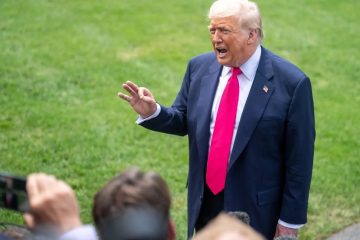
Trump has positioned himself as a transformational leader, framing the assault on Iran as the apex of a longstanding conflict that has remained unaddressed by his predecessors for decades. Throughout the war, he has oscillated between bombastic rhetoric that threatens the very fabric of Persian civilization and a more optimistic outlook regarding the prospects for peace. Trump conveyed on Friday his belief that a deal is attainable, citing an increased trust in the Iranians. “I believe they have reached their limit,” he stated. ‘On the Treadmill’ Despite his optimistic, albeit vague, language on Friday, the president indicated that a US blockade of the Strait of Hormuz would remain in effect until a deal with Iran was finalized. “I think he is aware of the need to keep the pressure on till he has something in hand,” remarked David Hale. Hale indicated that a synergistic approach involving military, political, and economic pressure would be essential for the US to achieve success. In remarks to the press on Friday in Arizona, the president indicated that discussions would persist over the weekend. “There are parallels to what we’ve done in the past,” stated Richard Nephew in reference to initial descriptions of a potential agreement. “If this indicates that the president is merely distancing himself, claiming, ‘I’ve addressed the nuclear issue, and now we can move on,’ then we remain in a state of stagnation.”