Asian shares drop as AI-driven sell-off pulls Wall Street down
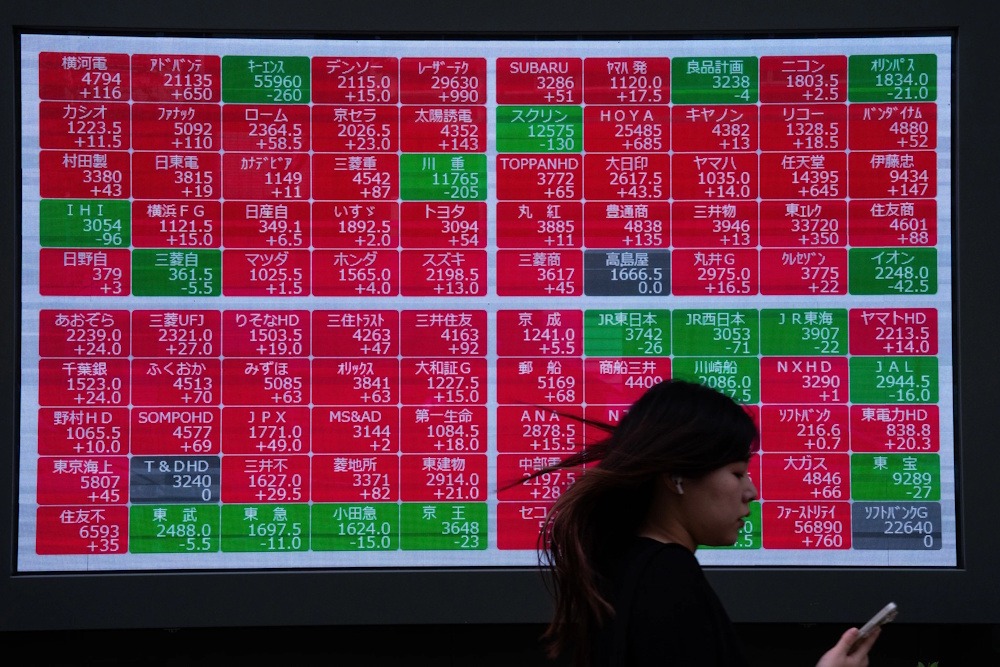
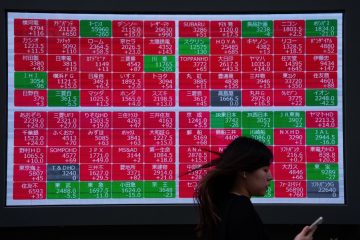
Shares are predominantly lower in Asia after yet another sell-off of artificial-intelligence stocks that significantly pulled down the US market. US futures experienced an uptick, while oil prices increased by over $1 per barrel. Tokyo’s Nikkei declined by 0.5 percent, settling at 63,878.60, whereas the Kospi in South Korea experienced a decrease of 0.2 percent, reaching 7,720.75. Hong Kong’s Hang Seng increased by 0.2 percent, reaching 24,468.82, while the Shanghai Composite index experienced a decline of 0.2 percent, settling at 3,983.80. In Australia, the S&P/ASX 200 similarly declined by 0.2 percent, reaching a level of 8,632.50. Taiwan’s Taiex experienced a decline of 0.4 percent. On Wednesday, the former titans of Wall Street remain under intense examination. The S&P 500 experienced a decline of 1.6 percent, marking its first consecutive decrease in three weeks. Closing at 7,266.99, it has returned to levels seen in early May. The Dow Jones Industrial Average tumbled 953 points, or 1.9 percent, to 49,918.78. The Nasdaq composite experienced a decline, leading the market with a 2 percent drop, closing at 25,169.50. Wall Street has experienced volatility since last week, as AI stocks transitioned from reaching new highs to a sudden decline.
Among the concerns is that their prices may have escalated too rapidly, driven by the fervour surrounding AI. The question now is whether the break lower has eliminated excessive optimism that may have accumulated in their stock prices, or if it marks the beginning of a more prolonged downturn. Super Micro Computer, which specialises in AI servers, experienced a decline of 28 percent following its announcement late Tuesday regarding plans to raise $7 billion in cash through the sale of stock and convertible preferred stock. Such moves generate the highest capital for companies when their stock prices are elevated, potentially diluting the ownership stakes of current shareholders. Micron Technology experienced a fluctuation in its stock performance, initially declining by nearly 4 percent, then recovering to a slight gain, before ultimately reverting to a loss of 4.7 percent. It has experienced a tumultuous period, declining by 7.7 percent last Thursday, followed by an additional drop of 13.3 percent on Friday, before rebounding with a 9.9 percent increase on Monday. Despite all the fluctuations, the computer memory manufacturer’s stock has increased by 212.5 percent year-to-date.
Nvidia, the chip company that has evolved into a nearly $4.9 trillion giant due to the AI boom, was the most significant drag on the S&P 500 following a decline of 3.7 percent. The second heaviest decline was attributed to another AI victor, Broadcom, which experienced a decrease of 5.1 percent. Some of the pressure on AI stocks may also stem from investors reallocating funds in anticipation of high-profile debuts on the US stock market for several AI giants. SpaceX’s initial public offering may be anticipated as early as later this week, for instance. Declining equities for firms with substantial fuel expenses also contributed to the market’s downturn. United Airlines declined by 6.2 percent, while cruise operator Carnival experienced a drop of 6.3 percent following an increase in oil prices attributed to the recent hostilities in the conflict with Iran. The price for a barrel of Brent crude oil increased by 1.8 percent to $93.10 on Wednesday following President Donald Trump’s warning that Iran would “pay the price” for the stalled negotiations between the two regarding their conflict. The ongoing conflict has resulted in the Strait of Hormuz being largely inaccessible to oil tankers, thereby hindering the transportation of crude oil from the Persian Gulf to global markets.
Elevated oil prices have contributed to an increase in inflation, with a report released on Wednesday indicating that consumer prices in the US surged in May at the fastest rate observed in three years. Market participants are anticipating that the Federal Reserve will need to increase its primary interest rate at least once this year, in light of ongoing price pressures and the robust state of the US labour market. High yields can decelerate entire economies and depress prices across various investment categories, including equities and cryptocurrencies. They targeted investments perceived as particularly costly, with some critics labelling AI as a bubble characterised by excessive inflation of investment. Early Thursday, Brent crude oil increased by $1.34, reaching $94.44 per barrel. US benchmark crude oil increased by $1.50, reaching $91.53 per barrel. The US dollar declined to 160.44 Japanese yen from 160.56 yen late Wednesday. The euro appreciated to $1.1555 from $1.1537.