US Jobs Fall in July as Fed Rate Hike Expectations Weaken
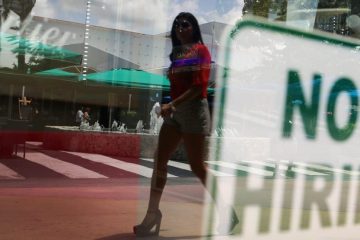
Financial market expectations for a Federal Reserve interest rate hike next month were tempered when the US economy unexpectedly lost jobs in July and previously reported job gains for the previous two months were drastically lowered. While the Labour Department’s closely monitored employment report on Friday indicated a decline in the unemployment rate to 4.1% last month from 4.2% in June, this decrease was accompanied by an exit of 264,000 individuals from the labour force, resulting in a participation rate that has reached a near 5-1/2-year low of 61.4%. Job growth, however, tends to slow down during summer, a phenomenon attributed to difficulties in adjusting the data for seasonal fluctuations. Much of the decline in payrolls, the first in five months, was concentrated in local government education. There was a second consecutive month of job losses in the leisure and hospitality industry, attributed to the diminishing impact of the FIFA World Cup. Economists cautioned against viewing the data as indicative of a sudden decline in the labour market. “This is the third summer in a row that we have seen unexpected weakness in the labor market,” said Stephen Stanley. “Policymakers broadly see the labor market as stable.”
Last month, nonfarm payrolls experienced a decline of 23,000 jobs, according to the Labour Department’s Bureau of Labour Statistics. Economists had anticipated an increase in payrolls of 80,000, following a previously reported rise of 57,000 in June. Estimates varied significantly, with projections spanning from a minimum of 10,000 to a maximum of 140,000 jobs added. The economy added 103,000 fewer jobs in May and June than previously estimated. Last year’s significant downgrades over the two-month period resulted in President Donald Trump’s dismissal of the BLS commissioner, Erika McEntarfer. Trump, without providing evidence, alleged that McEntarfer had manipulated the data. Job growth has averaged 20,000 per month during the last quarter. It averaged 77,000 per month over the three months ending in June. Financial markets have assigned a 43.9% probability to the US central bank increasing interest rates in September, a decrease from the 57% likelihood observed prior to the jobs report, as indicated by LSEG data. The Fed last week maintained its benchmark overnight interest rate within the 3.50%-3.75% range. Three members of the Fed’s policy-setting committee expressed dissent, advocating for a quarter-percentage-point increase. Next week’s inflation data may intensify the discussion surrounding the near-term monetary policy outlook. Stocks on Wall Street were experiencing upward movement.
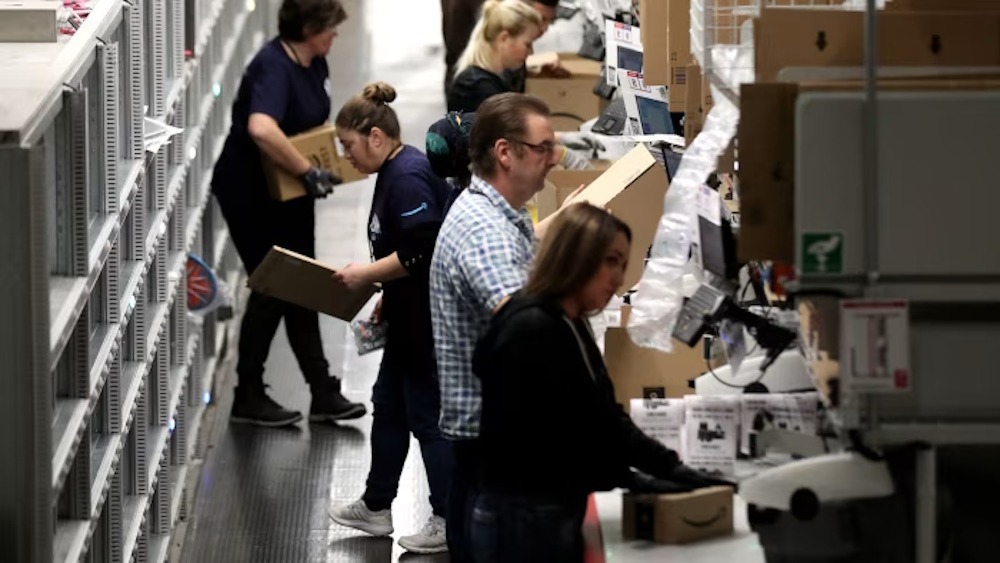
US Treasury yields declined, while the dollar weakened against a range of currencies. Last month, local government education employment experienced a decline of 49,600, marking the largest drop since October 2021. This reduction contributed to an overall decrease of 53,000 in government payrolls. Excluding government, private payrolls experienced an increase of 30,000, which is consistent with the gain observed in June. Economists anticipated the downturn in local government, which they described as a seasonal anomaly, expected to reverse in August. Employment in the leisure and hospitality sector experienced a decline of 40,000, marking a consecutive month of job losses. Payrolls at restaurants and bars experienced a decline of 26,100. The retail trade sector experienced a decline of 19,000 jobs, predominantly within warehouse clubs, supercenters, and various general merchandise establishments. Employment in financial activities declined further, resulting in a loss of 14,000 jobs. Financial activities employment has decreased by 121,000 since reaching its zenith in May 2025. Healthcare payrolls rose by 22,000, a figure that remains significantly below the monthly average of 36,000 observed over the preceding year.
In the latest employment report, the construction sector experienced an increase of 22,000 jobs, whereas the manufacturing sector saw a modest rise of 5,000 positions. The proportion of industries indicating job growth decreased to 51.8% from 53.2% in June. Despite the observed weakness in job growth, the average workweek remained stable at 34.3 hours. Wage growth has decelerated, now reflecting a 3.2% increase year-on-year, down from a 3.4% rise observed in June. The details of the household survey from which the unemployment rate is derived exhibited considerable weakness. Household employment experienced a decline of 87,000, while the count of individuals engaged in part-time work for economic reasons rose by 123,000, reaching a total of 4.804 million. The median duration of unemployment decreased to a still-high 10.5 weeks from 11.0 weeks in June. The participation rate, or the proportion of working-age Americans who have a job or are looking for one, has declined in six of the past seven months. “It isn’t lights out yet for the economic outlook, but the future is dim if pessimism leads to more dropouts and companies cannot get the help they need to produce the goods and services the economy needs to grow,” said Christopher Rupkey.