Samsung’s $648 Billion Investment: Transforming South Korea in the AI Era
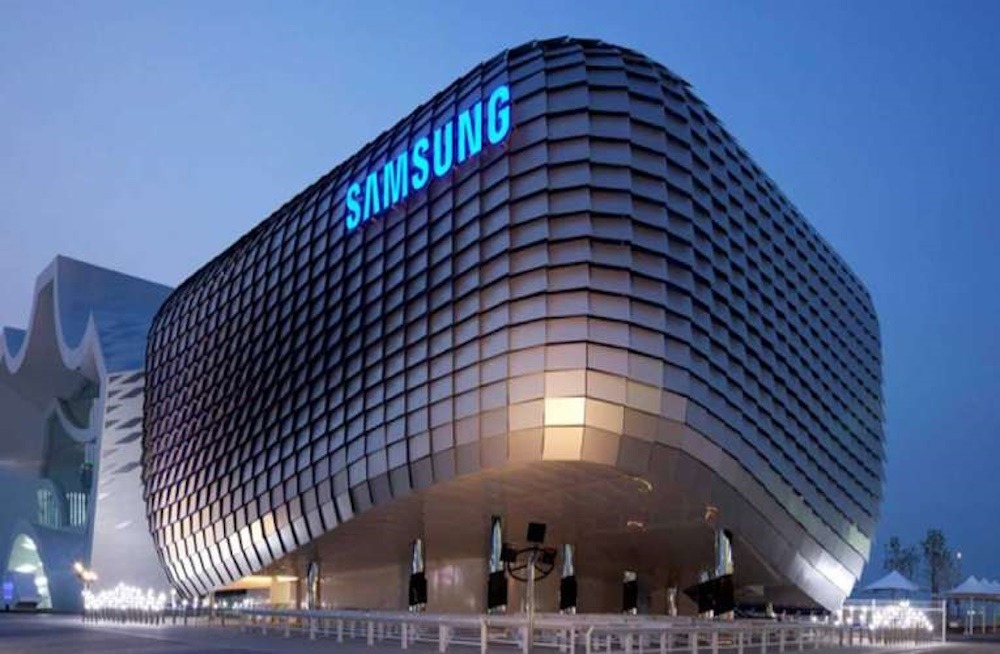
Samsung Group is set to announce an extensive investment strategy on Monday, committing 1,000 trillion won ($648 billion) to support South Korea’s forthcoming growth phase. This plan may include a significant 300 trillion won initiative aimed at establishing chip manufacturing facilities in the southwestern region of the country, according to a report. The investment, encompassing AI data centers, batteries, and displays, is set to be announced during a meeting with President Lee Jae Myung at the presidential office, according to the source on Friday, though sources were not specified. The initiative seeks to transform South Korea’s AI surge into a comprehensive growth driver by alleviating infrastructure constraints and revitalising employment and advanced manufacturing outside the capital. However, it has sparked discussions regarding the equitable distribution of the resulting benefits, particularly as Samsung Electronics and SK Hynix report unprecedented profits. Top executives from major companies such as Samsung Electronics and SK Hynix are set to participate in the meeting, where they will present investment strategies aimed at areas outside of Seoul, according to the report. The report did not specify the timing of the investment. Other local media have reported comparable plans, though they did not detail the investment amounts.
The concentration of chipmakers’ production facilities in areas surrounding Seoul has historically attracted political pressure, a situation that has been intensified by Lee’s advocacy for balanced regional development. Opposition lawmakers assert that the plan is motivated by political interests, alleging that the government is exerting pressure on companies to funnel investments into its southwestern stronghold in anticipation of the ruling party’s leadership contest. Lee conducted individual meetings with the leaders of Samsung and SK this week, according to media reports. The presidential office announced plans to reveal “three mega-projects” on Monday aimed at propelling national progress. Policy adviser Kim Yong-beom indicated that these initiatives, which encompass semiconductors, AI data centres, and robotics, will be collaboratively detailed by both government and industry. While substantial investment is anticipated, specific details remain undisclosed. Samsung and SK Hynix refrained from providing any comments.
Samsung Group stands as the largest conglomerate in South Korea, with Samsung Electronics, a leader in the semiconductor industry, serving as its most valuable asset. Additionally, the group encompasses other notable affiliates, including battery manufacturer Samsung SDI and IT services provider Samsung SDS. Kim has indicated that SK Hynix and Samsung might need to expedite projects initially planned for the 2040s to the mid-2030s due to the faster-than-anticipated growth in AI-driven memory demand, which is resulting in limited space, power, and water availability in the capital region for future expansion. He cautioned that increased concentration in the Seoul area could lead to inflated property prices and exacerbate inequality. However, certain experts express scepticism regarding the ability of a southwest chip hub to address the talent and infrastructure deficiencies that are essential for advanced manufacturing. Securing skilled workers will be extremely difficult in the southwest, “and that will determine whether the project succeeds or fails,” stated Kim Tae-yun. Unless a truly cutting-edge fab is built, the local economic impact will be limited – it risks becoming little more than a construction project and a real estate boost.
The regional dynamics influencing semiconductor investment emerged as a critical issue in the lead-up to South Korea’s June 3 local elections. The discussion regarding the allocation of future funding has gained momentum, particularly as Lee’s administration has prioritised AI within its economic policy framework. Lee’s approval rating has decreased to 51%, marking the lowest point since his inauguration in June of the previous year, according to Gallup Korea’s report on Friday. Candidates from various regions actively promoted their locales as the upcoming semiconductor center, vowing to attract major players like Samsung and SK Hynix. Proposals varied from a 500 trillion won chip complex in the southwest to expanded clusters in certain regions, as reported by local media, highlighting a nationwide competition for strategic technology investment. The debate has also raised apprehensions in established chipmaking cities like Icheon, where SK Hynix runs significant facilities and local economies are closely linked to the company. “Most of the city’s tax revenue comes from SK’s chip plant, and our welfare depends on it,” said Jo Jun-taek. “If a new cluster is created, we think SK will likely cut output here and eventually close the plant. That would cause an outflow of people – the city would become a ghost town.”
Lee has introduced a strategy to create “five regional hubs and three special self-governing provinces” aimed at mitigating the influence of the Seoul area, which represented 52.8% of South Korea’s gross regional domestic product in 2024. The disparity is particularly evident in Gwangju – a key southwestern city characterised by one of the country’s smaller regional economies and below-average per-capita output, as indicated by official data. It has reported that Samsung Electronics is evaluating Gwangju as a possible investment location. The broader southwest region, encompassing Gwangju and the Jeolla provinces, remains a traditional stronghold of Lee’s Democratic Party. Lee garnered 49.42% of the national vote in the June 2025 presidential election, while achieving approximately 85% support in Gwangju and South Jeolla, according to election data. The primary opposition, the People Power Party, has charged the administration with politicising semiconductor investment. “Where semiconductor factories are built should be decided by companies, not by the president,” stated Park Sung-hoon this week.