SpaceX IPO: Hype or Reality?
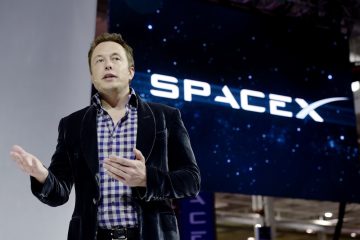
In a presentation aimed at private investors, Elon Musk forecasted that one of his enterprises would increase its revenue fivefold to exceed $26 billion and nearly achieve a fivefold expansion in its customer base by 2028. That company was Twitter, and those projections were made as Musk was gearing up to acquire the social media platform for $44 billion in 2022. Today, Twitter, now known as X, has significantly underperformed compared to Musk’s projections. The ad revenue of the social media platform experienced a significant decline of 65 percent last year. Ultimately, it was integrated into SpaceX, Musk’s rocket company, this year. As SpaceX prepares for a significant initial public offering, Musk and his investment bankers are presenting even more ambitious projections regarding the achievements of the rocket and artificial intelligence company. However, those statements, combined with Musk’s track record of overpromising, have led to growing concerns among investors that SpaceX — which has set its offering at a $1.77 trillion valuation and is poised to commence trading on Friday — may pose a risk to their investments. “It really does feel very much a ‘don’t look at the man behind the curtain’ situation,” said Jim Chanos, who predicted the 2001 collapse of Enron, the energy company that was found to have engaged in accounting fraud.
Chanos and others expressed their concerns regarding the financial situation of SpaceX. The company incurred a loss of $4.3 billion in the initial quarter of the year and is investing significantly in AI development. Revenue reached $4.7 billion and is on an upward trajectory; however, it remains significantly below that of industry leaders such as Meta, which generated $56.3 billion during the same timeframe and boasts a market valuation of $1.4 trillion. Simultaneously, SpaceX has asserted that its total addressable market — representing its revenue potential if it were to seize all demand across its diverse sectors — is the most substantial “in human history” at $28.5 trillion. The figure, contingent upon SpaceX demonstrating its capability to establish AI data centers in space and create factories on the moon, surpasses China’s annual gross domestic product by over $8 trillion. Michael Burry remarked in a Substack discussion last month that any rise in SpaceX’s stock following its IPO would “be on hype and technicals.” Burry stated “Nothing in that S-1 suggests it is worth $1 trillion let alone $2 trillion.”
Even some shareholders of SpaceX harbour uncertainties. Ross Gerber, the chief executive of Gerber Kawasaki, an investment firm that owns SpaceX stock, remarked that the company’s projections evoked memories of unverified information often employed by young start-ups to attract investors. He expressed concern regarding SpaceX’s valuation of $1.77 trillion, which represents an increase of more than four times the $400 billion valuation the company held just 13 months prior. “Investors are paying an extremely high price for this stock,” Gerber stated. A representative from SpaceX did not respond to a request for comment. SpaceX’s financial advisors, including Goldman Sachs, which is spearheading the IPO process, have contributed to the extensive forecasts. The Financial Times earlier reported that Goldman had informed a potential investor of its expectation that SpaceX’s total revenue would reach $474 billion by 2030, a significant increase from $18.7 billion last year. Morgan Stanley, currently involved in the IPO process, provided an analysis to investors projecting that SpaceX’s revenue could reach $3.4 trillion by 2040, as reported. Goldman and Morgan Stanley refrained from providing any comments.
Morningstar, an investment research firm, provided a more measured assessment. The firm stated that SpaceX’s IPO price was “overvalued” and assessed the company’s worth at approximately $780 billion. Nicolas Owens, a Morningstar equity researcher, assigned SpaceX a 7 percent probability of achieving its goal with the latest rocket, Starship, to reach a stage where it can be reused like a conventional aircraft, while also demonstrating that AI data centers are more cost-effective and efficient than their land-based alternatives. In the most optimistic scenario, Owens stated that SpaceX could achieve a valuation of $1.97 trillion. “We’ll know in two to three years if Starship is reusable or a GPU rack in space will be viable or offer some cost savings,” he stated, referencing the computer chips utilised to drive AI technology. “However, the company is requesting that everyone make a decision by Friday regarding the feasibility and valuation of the matter.” Musk has also demonstrated a tendency to alter his business objectives rapidly, according to analysts and investors. It was not until the previous year that he first addressed the concept of data centers in space, and he reinforced this notion in February following the merger of SpaceX with his AI venture, xAI. In April, SpaceX announced its agreement to acquire Cursor, an AI start-up specialising in coding software, for $60 billion, marking a strategic shift into a new area of focus for the company. Musk, who has invested billions in developing his own frontier AI models and his AI chatbot Grok, also seemed to shift direction recently regarding other AI initiatives.
Last month, SpaceX entered into an agreement with the AI start-up Anthropic to supply computing power for products that were not allocated to Musk’s own AI services. SpaceX subsequently established a comparable agreement last week to supply Google with computing capabilities. SpaceX boosters on Wall Street and social media presented the deals as successes poised to yield tens of billions of dollars in revenue. However, critics highlighted that the company was altering its long-term business strategies at the eleventh hour. “The real excitement should be about developing some new, powerful agentic model,” Chanos stated. “But xAI seems to be suddenly changing its business model from developing models like Grok to essentially transforming into a neocloud,” he stated, employing the industry term for companies that supply computing power to other AI firms. “That’s crucial because the entire valuation rests on xAI’s progress,” Chanos stated, referring to the neocloud strategy as a “commodity business” that is valued significantly lower in the public markets. Ultimately, SpaceX’s IPO will serve as a crucial indicator of investors’ confidence in Musk, Gerber stated. Those inclined to invest will do so due to Musk’s leadership, who has already revolutionised the automotive sector with his electric vehicle company, Tesla, and now heads a unique enterprise in SpaceX. “Individuals are investing a trillion dollars for Elon,” Gerber stated.