AI data centers may use 1.3 billion people’s power by 2030
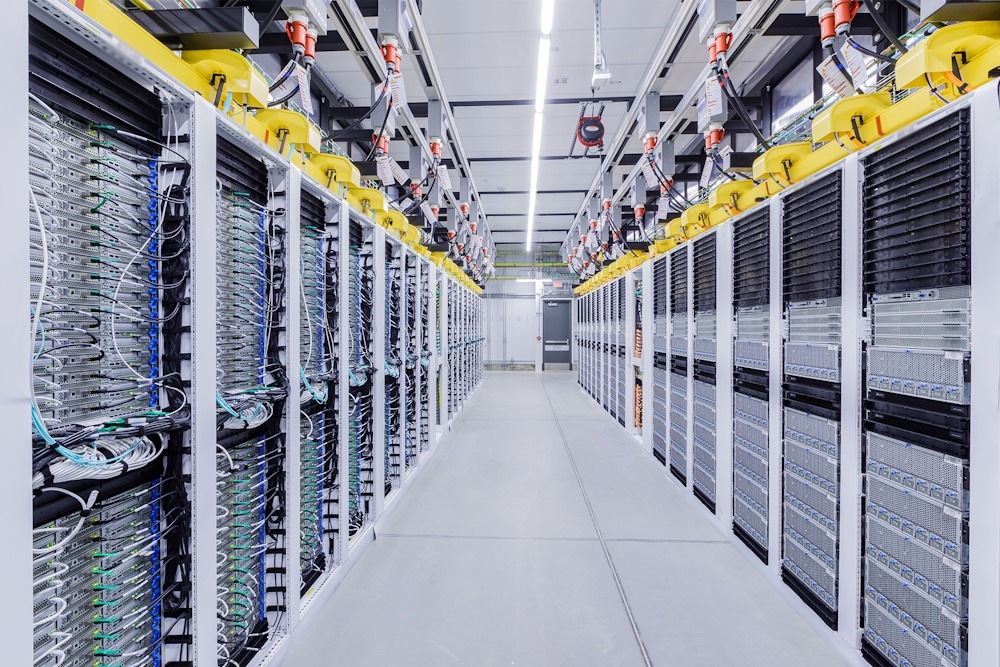
The rapid advancement of artificial intelligence and the data centres that support it are projected to consume electricity equivalent to the annual residential needs of 1.3 billion people in Sub-Saharan Africa by 2030, as indicated in a report released on Tuesday by the United Nations University Institute for Water, Environment and Health. The report, titled Environmental Cost of AI’s Energy Use: Carbon, Water and Land Footprints, cautioned that global data centres may consume 945 terawatt-hours of electricity by 2030, a figure that approaches three times the total annual electricity consumption of Pakistan, Bangladesh, and Nigeria combined. The report indicated that these three countries collectively house over 650 million individuals. It added that the associated water footprint of data centres would equal the minimum annual domestic water needs of all 1.3 billion residents of Sub-Saharan Africa, while the land footprint linked to their electricity use would exceed 14,500 square kilometres, roughly twice the size of the Jakarta metropolitan area, which is home to more than 32 million people.
AI data centres utilise millions of litres of water for their cooling systems, which are essential in preventing servers and high-performance processors from overheating during demanding computing tasks. This has raised increasing apprehensions regarding water utilisation and resource strain, especially in areas susceptible to drought and water scarcity, where substantial data centres can exacerbate the already pressured supplies. In 2025, global data centres consumed an estimated 448 terawatt-hours of electricity, according to the UN report. If considered as a nation, they would rank as the world’s 11th-largest electricity consumer, positioned behind France and ahead of Saudi Arabia. “ChatGPT alone is estimated to process around 2.5 billion prompts per day, translating to roughly 383 GWh of electricity per year for a single product,” the report added. The report further noted that AI’s energy consumption exhibits significant variability contingent upon the specific task being executed. A typical conversational AI query is approximately 200 times more energy-intensive than basic text classification, whereas generating a single AI image can necessitate nearly 1,450 times more energy.
Meanwhile, a brief AI-generated video can utilise as much electricity as 200,000 spam classifications. The researchers indicated that elements such as model selection, prompt length, output format, and video resolution can considerably influence the environmental impact of AI systems, despite the fact that many of these choices are governed by default settings that users seldom encounter. However, the researchers in the report contended that the environmental costs of AI and data centres cannot be comprehensively assessed through carbon emissions alone. Each unit of electricity consumed for the training or operation of AI systems is accompanied by a water footprint associated with cooling and power generation, as well as a land footprint related to energy infrastructure. These effects frequently operate in divergent trajectories. For instance, transitioning from coal to bioenergy could lead to a reduction in carbon emissions, albeit with a significant increase in water and land utilisation. The researchers cautioned that “low-carbon” does not inherently equate to “low-water” or “low-land,” emphasising that dependence on a singular sustainability metric may obscure trade-offs and transfer environmental stress to regions already facing water or land scarcity.
The environmental burdens of AI infrastructure are being unevenly distributed across the globe, according to the UN report. It highlighted Ireland, where data centres represented 21 percent of total metered electricity consumption in 2023, leading the national grid operator to suspend new approvals in the Dublin area until 2028 in response to increasing strain on the power system. In Mexico and Uruguay, the expansion of data centre infrastructure has heightened concerns regarding water consumption amid extended periods of drought. The researchers further cautioned that AI infrastructure may produce as much as 2.5 million tonnes of electronic waste each year by 2030, a significant portion of which is expected to be handled in low-income nations that lack adequate environmental protections. Concurrently, the extraction of essential minerals required for AI hardware continues to exert pressure on areas characterised by insufficient regulatory oversight.