Trump’s Tariff Shift Transforms Global Trade
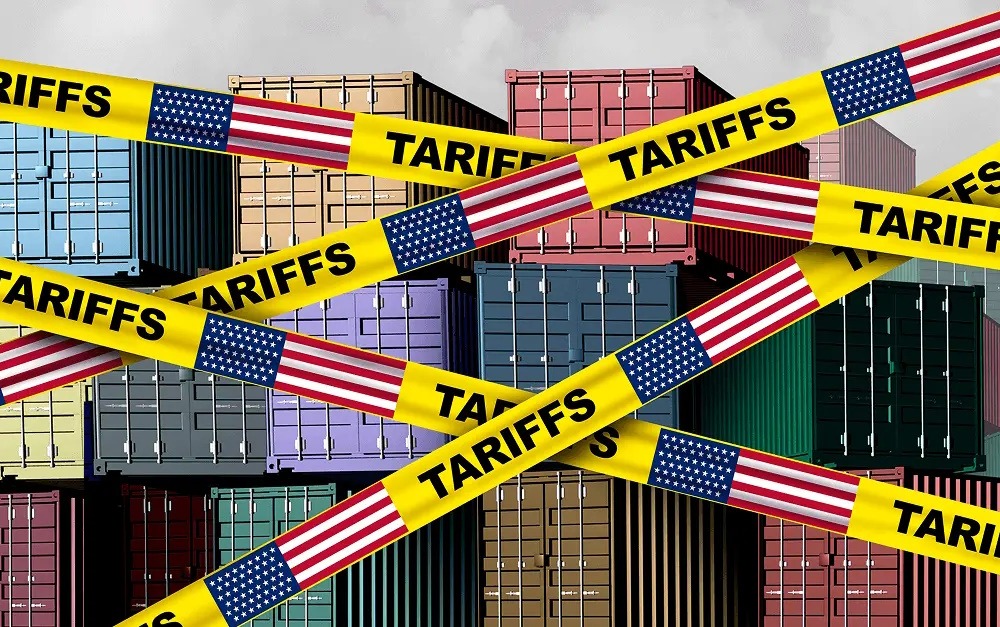
President Donald Trump is introducing new measures aimed at achieving similar protectionist objectives following the Supreme Court’s decision deeming his extensive global tariffs unlawful. His administration aims for the reconstructed wall of import taxes to reflect the tariffs imposed by Trump on each significant trading partner at the onset of his second term. However, the situation has evolved since April 2, 2025 — referred to by the president as Liberation Day. To enhance the legal robustness of tariffs, numerous nations find themselves under scrutiny due to allegations of trade inequity — with the two most significant areas of concern centring on forced-labor regulations and surplus industrial capacity. The actions were initiated under the legal framework established by Section 301 of the Trade Act of 1974. Not all countries are subject to the probes, and as Trump’s temporary 10 percent across-the-board tariffs come to an end in July, certain nations may benefit from a competitive advantage due to a lower rate than previously established. Others may find themselves in a more disadvantaged position. With Trump, it is prudent to consider him a variable in the policy-making process. On trade, the administration has utilised exemptions from tariffs for imports it seeks to keep affordable, such as AI equipment, farm tractors, and Brazilian coffee. Conversely, there are inclusions that can expand the range of items and widen the scope of tariff targets.
Another unresolved issue is the implications for economies such as India, the European Union, Japan, South Korea, and the UK, which have entered into trade agreements that establish lower negotiated tariff caps, particularly concerning automobiles. US officials have endeavoured to provide reassurance that those agreements remain intact. US Trade Representative Jamieson Greer’s trip to India this week may offer insights into the expectations for countries engaged in trade agreements. Piyush Goyal stated at a briefing that “the issue currently pending is that our duties need to be lower compared to those of competing nations,” as reported. With those caveats in mind, here is an analysis of potential beneficiaries and detractors in the forthcoming stage of Trump’s tariff barriers. Under the Liberation Day levies, the Philippines faced a rate of 19 percent. The Southeast Asia country will instead face a 12.5 per cent tariff should the proposed forced-labor penalties be enacted. It is not subject to the excess capacity investigation, thus an increase in duties in the future is not anticipated. That raises the potential for a nearly seven percentage-point decline in its tariff rate compared with April 2025. US goods imports from the Philippines amounted to $7.7 billion in the first four months of this year, reflecting a 51 percent increase compared to the January-April period of 2025.
In April 2025, South Africa faced a 30 per cent tariff rate as Trump consistently accused the government of discriminating against white Afrikaners. That duty rate is now anticipated to stabilise at 12.5 percent following the conclusion of the forced-labor investigation. South African goods shipments into the US through April amounted to $3.5 billion, reflecting a decline of 56 percent compared to the previous year. Several countries that engage in less than $10 billion of US trade are poised to gain from the new tariff wall, with some transitioning from exorbitant tariff rates back down to the most favoured nation duties. This potentially opens up a new frontier for multinationals to adjust their supply chains in efforts to circumvent elevated duties. Pakistan’s tariffs will decrease by 19 percentage points, falling to 10 per cent from the previous rate of 29 per cent. In April 2025, Myanmar faced a duty imposed at a rate of 44 percent. Currently, it may decline to a range of zero to 2 percent for the majority of goods, with Laos and Lesotho also experiencing comparable circumstances. With final details still unclear, Singapore represents a small yet significant trading partner for the US, and it is highly likely that it will find itself in a less favourable position under the new tariff regime. It did not receive a country-specific emergency tariff in April 2025. However, the city-state was subjected to the 10 percent duty that was implemented earlier this year, affecting all others as well. That is now at risk of increasing: The Southeast Asian economy confronts a 12.5 per cent tariff on forced labour, alongside an anticipated additional tariff stemming from the excess capacity investigation. Individuals in Singapore are “keenly aware” that the new tariff wall poses a challenge for them, stated Deborah Elms. “They were sitting at a comfortable, manageable 10 per cent,” and now, they’re at risk of being pushed into a more precarious position.
Making matters more challenging for American importers who incur tariffs and manage compliance documentation, Singapore stands as one of the globe’s most active transshipment centers — signifying that a substantial volume of raw materials flows into its ports and industrial areas, subsequently being exported as finished goods. At first glance, Canada seems to be in a more advantageous position, as it has lower tariffs on imports compared to those set for April 2025. Key exemptions exist for goods that qualify under USMCA. Nonetheless, tariffs specific to the metal industry have exerted pressure on Canadian industry. Trump frequently indicates a willingness to exit the North American trade agreement he was instrumental in negotiating during his initial term, expressing explicit dissatisfaction with Canada due to its retaliatory measures. Even if the threats serve as a negotiating tool, it indicates that Canada cannot afford to be complacent as it approaches the renegotiations of the US-Mexico-Canada Agreement in the latter half of the year. Mexico is advocating for a reduction in sector-specific auto tariff rates, contending that their rates surpass those of certain vehicles imported from South Korea or Japan. In the context of the ongoing USMCA negotiations, Washington is advocating for Mexico to adopt a regulation stipulating that vehicles within the North American trade area must contain a minimum of 50 percent American-sourced components. The discussions are set to persist until at least July, leaving the implications for Mexico’s trade in the near term uncertain. The EU faces mounting pressure from the US to formalise its trade agreement.
The European Parliament and EU member states are yet to cast their votes to ratify the finalised text, with a deadline set for July 4 as mandated by Trump. The US president indicated that should the agreement not be finalised by the specified deadline, he would increase tariffs on European automobiles to 25 percent from the current 15 percent. Meanwhile, US Trade Representative Jamieson Greer has attempted to reassure Brussels by stating, “a deal’s a deal.” Just last week, Trump initiated a 301 investigation targeting Germany, referencing “persistent underpayment for innovative pharmaceutical products.” Chancellor Friedrich Merz articulated his expectation that the United States will uphold its trade commitments to Europe, while also noting that decisions regarding pharmaceutical payments are fundamentally a domestic issue. China finds itself in a significantly improved position compared to the peak of Trump’s second term. During his presidential campaign in 2024, he pledged to impose a 60 per cent tariff on China. The effective rate now stands at approximately 21 percent, based on analysis. The US and China are poised to reassess their tariff agreement this autumn. While much could transpire in the interim, Chinese leader Xi Jinping illustrated the nation’s influence over the US economy by imposing a blockade on its rare earths exports last year.