Meta’s Zuckerberg Warns Against Blocking Chinese AI Models
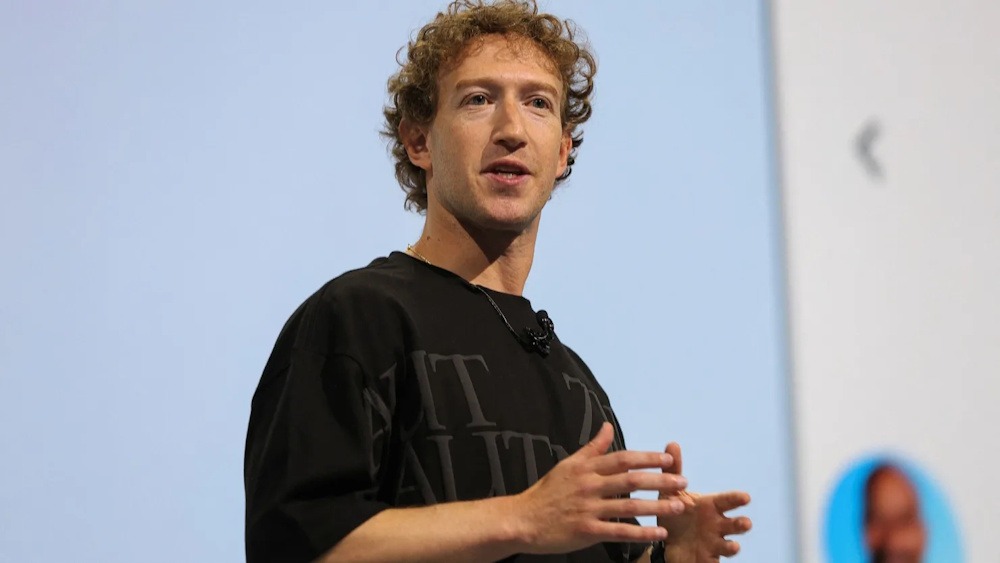
Meta Chief Executive Officer Mark Zuckerberg stated that limiting Chinese AI models is not the optimal strategy for the United States to maintain its competitive edge. Instead, he stated that the US ought to concentrate on enhancing its own AI ecosystem while steering clear of regulations that might restrict competition, the source reported. In an interview, Zuckerberg stated that obstructing advanced Chinese AI models in the United States would not constitute an effective strategy in addressing the escalating competition from China. His comments arise as the Trump administration contemplates measures against certain Chinese AI firms due to accusations of utilising intellectual property from American competitors to develop their models. Instead of implementing bans, Zuckerberg suggested that the United States ought to pinpoint the obstacles hindering its own AI advancement and eliminate them to enhance its competitive stance against China.
The debate has intensified following the launch of the Kimi K3 model by Beijing-based Moonshot AI earlier this month. The model is perceived as narrowing the disparity with prominent US AI systems created by OpenAI and Anthropic. Senior officials from the Trump administration have claimed that Moonshot employed a method known as “distillation” to covertly train its model utilising American AI systems. Treasury Secretary Scott Bessent has indicated that sanctions continue to be a viable option for Chinese AI companies that are found guilty of intellectual property theft. Zuckerberg also cautioned against permitting a limited number of dominant AI firms to dictate regulations for the sector. “There’s always this question of regulatory capture if you have a set of businesses that have their own interests that are doing peer review,” Zuckerberg told. “Are the frontier labs… going to want an open-source model to succeed? I think that there have kind of been some mixed signals on that.”
Zuckerberg once more endorsed the concept of “AI for everyone” and reaffirmed his advocacy for open-source AI models that individuals can customise and operate on their personal devices. He cautioned that the advancement of AI should not be monopolised by a limited number of firms, contending that broader access to AI technology would foster innovation and enhance competition. Simultaneously, Meta has commenced the expansion of its proprietary closed AI offerings. The company has recently introduced its proprietary Muse Spark model, citing safety concerns as a rationale for maintaining its closed status. The Trump administration is anticipated to unveil a voluntary framework permitting AI developers to present their models for evaluation prior to public dissemination. Several prominent AI firms have put forth various methodologies. Anthropic CEO Dario Amodei has advocated for more stringent regulation of advanced AI systems, whereas Google DeepMind chief Demis Hassabis has proposed the establishment of an industry-led organization, akin to the Financial Industry Regulatory Authority, to formulate common standards.
Zuckerberg also expressed opposition to restricting access to the most advanced AI models due to cybersecurity issues. He stated that advanced AI tools can assist companies in identifying security vulnerabilities and rectifying them more efficiently. In light of a recent cyber incident involving an OpenAI system, Zuckerberg noted that limited access to advanced AI models can compel organisations to depend on open-source alternatives to mitigate security vulnerabilities. OpenAI and Anthropic have both expressed their opposition to restrictions on open models. However, Amodei has contended that broader access to advanced AI capabilities does not inherently enhance security or facilitate the establishment of safeguards.