Shell: Asia’s expansion will boost LNG demand 65% by 2050
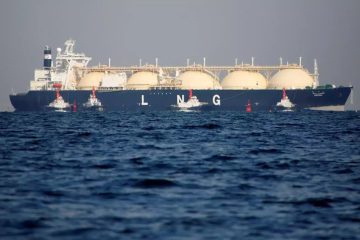
Global liquefied natural gas demand is projected to increase by approximately 65 percent by 2050, primarily fuelled by Asia as nations pursue lower-emission substitutes for coal and data centers elevate power consumption, according to Shell’s annual report released on Tuesday. Global demand is projected to approach 700 million metric tonnes annually by that date, according to the world’s largest trader of the superchilled fuel in its 2026 LNG Outlook. LNG trade, which reached 422 million tonnes in 2025, was projected to see further growth in 2026, it added. However, significant disruption to shipping through the Strait of Hormuz has curtailed approximately one-fifth of the global monthly LNG supply since the onset of the West Asia conflict. Consequently, global LNG trade in 2026 may mirror last year’s figures, contingent upon a normalisation of shipping through the strait this summer, prior to a resurgence in growth in 2027, according to Shell. “The conflict created a system-wide shock with disruption cascading across all segments of the economy, but the LNG industry has proved resilient and able to adapt to changing market conditions,” stated Cederic Cremers in the report.
The company stated that the recent expansion in LNG supply and regasification infrastructure has enhanced market resilience and mitigated the effects of the disruption to shipping through Hormuz. Furthermore, the increase in new liquefaction facilities in North America, enhanced efficiency at current plants, and a deceleration in LNG imports from Asia have contributed to mitigating the decline in supply from West Asia. The US-Israeli conflict with Iran has significantly altered the global LNG landscape, resulting in increased prices, impairing Qatar’s export capabilities, and postponing new supply initiatives, thereby raising concerns regarding demand from price-sensitive consumers in Asia. Analysts anticipate that rising prices will suppress demand in South Asia, prompting buyers to seek alternative LNG sources or to revert to coal and domestic gas.
Asian LNG imports for the first half of 2026 have decreased by nearly 4 percent, totalling 127.70 million tonnes, in comparison to the same period last year, as reported by analytics firm. Despite Asian LNG spot prices surpassing $20 per million British thermal units during the height of the West Asia crisis, they continued to be significantly lower than the peaks observed in 2022 after Russia’s invasion of Ukraine, indicating a notable resilience in the LNG market, according to Shell. Asian spot LNG prices were last recorded at $15.35/mmBtu, marking a near four-month low as market participants maintained optimism regarding a potential peace agreement to resolve the ongoing conflict. Approximately 180 million tonnes annually of new LNG supply is projected to enter the market by 2030, enhancing the accessibility and cost-effectiveness of gas while creating demand in emerging markets. Projections indicate that by 2050, South and Southeast Asia will represent approximately 40 percent of global LNG imports, as nations pursue lower-emission alternatives to coal in response to their swiftly increasing energy requirements.
In more developed Asian markets like Japan, data centres are becoming a significant driver of power demand, according to the report. LNG will also continue to play a crucial role in European energy security and assist in balancing intermittent renewable power generation as domestic gas production declines, Shell stated. To address the increasing demand, substantial further investment will be necessary in new LNG export projects throughout the 2030s and 2040s, with approximately 200 million tonnes per year of new supply needed alongside projects that are currently under construction. “While more investment in both supply and demand infrastructure is needed, the long-term outlook remains strong and LNG will continue to be a stabilising force in the global energy system,” Cremers stated.