Bond Yields Surge as Oil Prices Intensify Inflation Fears
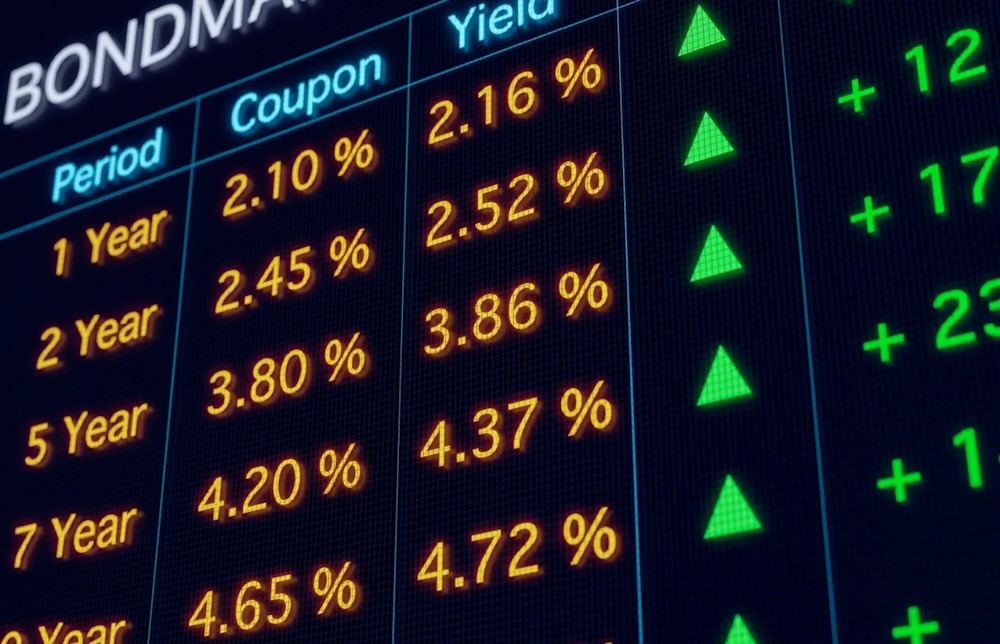
Bonds experienced significant volatility this past week, as yields worldwide surged to their highest levels in decades. Bond market volatility surged at its quickest rate in several months. Investors are expressing concern that the current turbulence may extend its impact to the stock market. The bond market’s “fear gauge,” which monitors anticipated volatility, experienced a significant increase of 19% this week. That represents the largest one-week increase since March and the second-largest since April 2025, when President Donald Trump’s “Liberation Day” tariffs disrupted global markets. Investors can adjust to a consistent increase in yields; however, sudden surges present greater challenges to absorb. As bond market volatility increases, it prompts apprehensions regarding the potential ripple effects, particularly concerning the influence on equities. Bond yields had been on a consistent upward trajectory this year before experiencing a significant surge on Wednesday, driven by robust economic data, assertive remarks from a prominent Federal Reserve official, and a lacklustre bond auction. Yields continued to rise on Thursday. The 30-year Treasury yield reached a peak of 5.53% on Friday, marking its highest point since 2004. Japan’s 10-year yield has reached its highest level since 1996.
Bond yields increase as prices decrease. Add in volatile global oil prices trading over $100 per barrel, and it can stir up more uncertainty for investors. “Oil – to use a bad analogy – is throwing gasoline on the inflationary environment, and that’s what has investors worried,” Gennadiy Goldberg told. “That’s what has the Fed worried as well.” The 10-year Treasury yield this week reached its peak level since 2007. The key yield establishes the borrowing costs throughout the economy. As the yield increases, it exerts upward pressure on the costs associated with mortgages, auto loans, and various other consumer loans. On Thursday, the average 30-year fixed mortgage rate exceeded 7%, marking its peak level in nearly two years. Oil prices continue to be a significant factor influencing both bonds and stocks. Seven months into the conflict with Iran, the global oil price has surpassed $100 per barrel, reflecting an increase of over 60% since the beginning of the year. This surge is generating significant ripple effects throughout the economy and financial markets. Brent crude exhibited volatility this week, yet it has increased by 15% this month. This rise has heightened traders’ expectations for central banks to implement further interest rate hikes to mitigate inflation, consequently driving up bond yields.
The correlation between oil prices and the 10-year Treasury yield has reached its peak this week, marking the highest level observed in 35 years, as reported. “The longer higher oil prices persist, the more likely inflation spreads to other portions of the economy,” said Mike O’Rourke. “That is prompting the Federal Reserve to raise interest rates, which is pressuring bonds.” A decline in oil prices may alleviate pressure on bonds, as traders observe developments in the Middle East to assess the likelihood of ongoing disruptions to oil flows. A prolonged surge in oil prices, so severe that it prompts fears of an economic slowdown, could also lead investors to seek refuge in the safety of bonds. Currently, economic indicators are robust, oil prices remain high, and interest rates are increasing. “The historically strong correlation between oil and yields will leave the market particularly focused on the durability of the latest diplomatic efforts in the Middle East,” Ian Lyngen wrote in a note. Investors are closely monitoring the effects of the turmoil in the bond market on stock performance. The S&P 500 has experienced a decline of less than 1% since reaching a record high five weeks prior. However, there exists underlying distress within the market dynamics. Among the 11 sectors within the S&P 500, only technology, communication services, and healthcare have recorded gains this month, with healthcare experiencing a modest increase of merely 0.1%. The remaining eight sectors are experiencing losses, with the utilities sector at the forefront, suffering a decline exceeding 6%, a reflection of its sensitivity to rising interest rates. The S&P 500 is weighted by market value, which means that larger companies in the tech sector exert a more significant influence on the index. The S&P 500 equal-weight index, which assigns equal weight to each stock, has declined by over 5% since reaching its peak in August.
The increase in oil prices and interest rates is generating challenges for certain sectors of the equity market, such as utilities and consumer discretionary. “It’s been driving parts of the market, most notably the consumer-facing market,” Jonathan Krinsky stated. In the last eight trading sessions, a greater number of stocks within the S&P 500 have reached a 52-week low compared to those that have achieved 52-week highs. Oil and rates are impacting the stock market, albeit “not quite on the surface of the S&P 500,” Krinsky noted. “The AI story has been kind of holding up the S&P,” Krinsky added. The S&P 500 is up 13% this year and has added just over $8 trillion in market value. The tech and communication services sectors have contributed approximately $6.3 trillion to that market value increase, as noted by O’Rourke. “The ‘Yes, No, Maybe So’ jawboning over the Strait of Hormuz reopening keeps investors on edge,” Craig Johnson wrote in a note, adding that rising bond yields hurt stock valuations and put pressure on small and mid-cap stocks, real estate, utilities and “other rate-sensitive groups.” The prolonged uncertainty surrounding the Strait of Hormuz, coupled with the ongoing ascent of bond yields, may exert increasing pressure on the stock market. “Oil has … been in the driver’s seat for both stocks and bonds,” Ohsung Kwon wrote in a note earlier this week.