Oil, rate concerns drive global bond selloff to US 10-yr yield near 5%

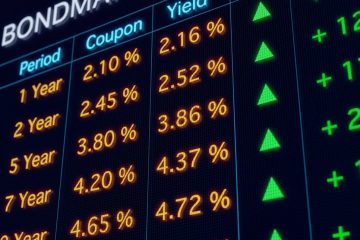
A global bond selloff has driven U.S. 10-year Treasury yields close to the significant 5% threshold on Friday. This movement is largely attributed to inflationary concerns arising from oil prices exceeding $100 a barrel and increasing expectations of a near-term U.S. rate hike, which have unsettled investors. With borrowing costs from Tokyo and Sydney to New York and London at multi-decade highs, investors are factoring in the necessity for interest rate hikes to address inflationary pressures stemming from the prolonged conflict in the Middle East, which has now lasted over six months. The European Central Bank raised rates on Thursday and cautioned that price pressures may be persistent. Meanwhile, data indicating a rise in U.S. producer prices for August fuelled speculation regarding a potential rate hike during the Federal Reserve’s upcoming meeting next week. Rising government borrowing in developed markets has emerged as a continual source of apprehension, prompting investors to seek higher returns for holding sovereign debt.
Sovereign yields act as a benchmark for asset valuations throughout financial markets, and the elevated cost of capital translates into increased mortgage rates for consumers, resulting in more challenging fiscal decisions for governments as the expenses associated with debt rise. “We’re seeing a perfect storm of higher oil prices, more inflation fears, central bank hawkishness and ongoing concerns over fiscal deficits all combining to push global yields higher,” said Mansoor Mohi-uddin. “If tonight consumer price data is strong then 10-year Treasury yields will likely break 5.00%,” he said, referring to eagerly anticipated U.S. CPI data later on Friday. A sustained break for 10-year Treasuries above 5% is viewed by certain analysts as a pivotal threshold that could enhance the competitiveness of bonds relative to stocks, potentially diverting capital from equity markets.
Higher Treasury yields also permeate the broader economy via increased costs for mortgages, auto and consumer loans, as well as elevated expenses for corporate and municipal borrowing. Yields on 10-year Treasury notes increased to 4.97% during early Asian trading hours, reaching their highest levels since late 2023. This movement has left investors apprehensive about the potential for a rise beyond the 5% threshold, a level that was briefly surpassed three years prior. Asian bonds continued the global selloff, as Australia’s three-year government bond yields jumped 18 basis points, reaching a 15-year high of 5.047%. Japan’s 10-year government bond yields increased by 6 basis points to 2.97%, as the Bank of Japan is anticipated to elevate rates to a 31-year peak in the upcoming week, potentially indicating a shift toward more rapid tightening measures in the future. In Europe, Germany’s bund futures declined by 0.22%, approaching their lowest levels since 2011, whereas French OAT futures decreased by 0.3%, reaching a record low.
Prashant Newnaha said 10-year yields above 5% are inevitable the longer oil sustains above $100, noting the August inflation data is “setting up â as the most important print for the Fed and markets so far this year.” And “A soft print and no hike next week should drive a kneejerk move lower in ​yields. However, it’s unlikely to sustain unless oil prices move lower as well,” he said. Brent crude futures have reached a four-month peak of $109.97 per barrel, indicating an approximate 13% increase for the week. This rise is driven by escalating attacks on critical shipping routes in the Middle East, which heighten concerns over potential prolonged supply disruptions. The significant increase in oil prices, coupled with persistent price pressures, has altered investor expectations regarding the U.S. central bank. Traders are currently assigning a 72% probability to a Federal Reserve interest rate hike in the upcoming week, an increase from the 49% likelihood observed just a week prior, according to the CME FedWatch tool.
The yield on the 2-year note, which generally aligns with expectations regarding Federal Reserve interest rates, reached its peak since July 2024 at 4.596% on Friday, following a rise of 12 basis points in the preceding session. The bond selloff intensified following the announcement from the U.S. government regarding its recent buyback operation, in which it repurchased $5.2 billion worth of bonds. This figure fell short of the $6 billion cap and represented only half of the $10.5 billion in bonds that were available in the operation, highlighting concerns about market liquidity. Rising Treasury bond yields are expected to begin attracting fixed-income investors, according to Tina Teng. “These yields are very high,” she said. “There might be an opportunity now,” she added. “There could be a reversal of this trend coming soon.”