Bessent Under Pressure as Treasury Yields Climb Above 5%
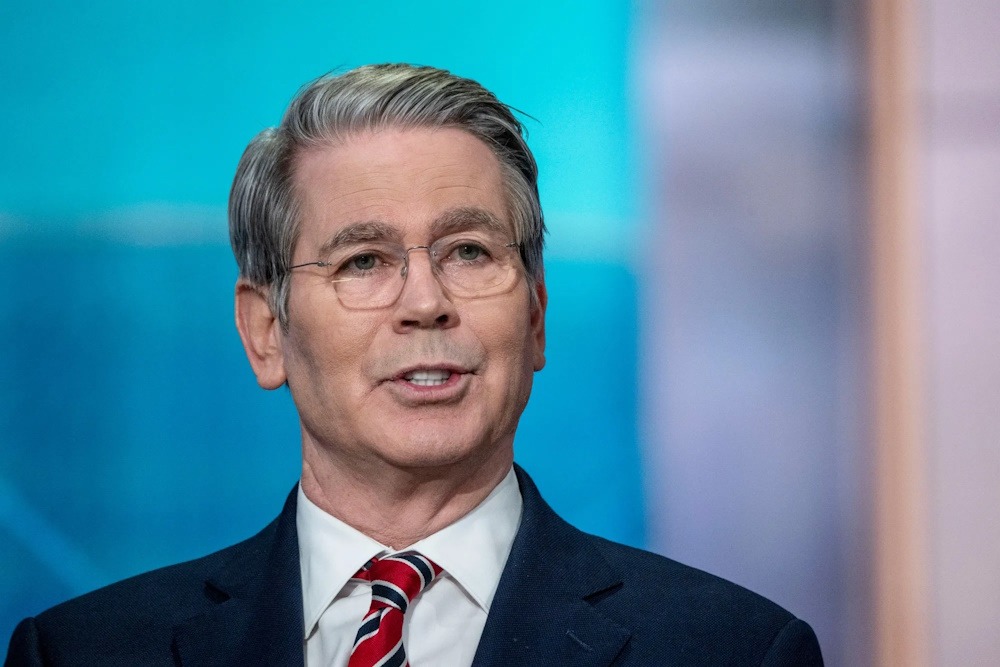
Last year, Scott Bessent became a member of the Trump administration, bringing with him limitless confidence, widespread respect on Wall Street, and extensive expertise in the markets. Just as he helped George Soros “break” the Bank of England in 1992 by placing large bets against the pound, Bessent has approached his role as main economic counsellor to President Trump and Treasury secretary with the same self-assuredness. Soros made more than a billion dollars thanks to the move, which forced the UK to give up on trying to prop up the currency. Bessent has recently dared traders to cross him by boldly declaring, “I am the house now.” He’s dismissed criticism by saying if “some of the Bloomberg Terminal bros are unhappy with what I’m doing, well, that’s too bad.” The cost of borrowing money will be reduced, he says, since he would lower bond yields. Despite the initial enthusiasm, his efforts to outmanoeuvre the bond market, the most profound and consequential market on a global scale, have fallen short. Even his detractors admit that he hasn’t accomplished anything. “The data is clear. He’s added accelerant to the fire. He’s had the exact opposite impact that he wanted,” said Tim Mahedy.
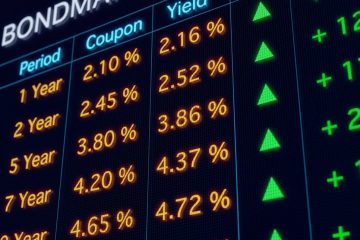
The important 10-year yield was to be brought down to below 4%, as Bessent had previously stated his aim to do in early 2018. The inverse is true; on Tuesday, the benchmark rate briefly surpassed 5.04%, a level not seen since 2007. Bessent shocked many on Wall Street last month with a contentious intervention that tripled Treasury buybacks, in response to rates becoming uncomfortably high. Having said that, the strategy has not worked. Since Bessent’s intervention, bond yields have risen, making borrowing money more expensive for everyone from individuals seeking mortgages to small businesses seeking loans and even the federal government itself. “It massively flopped,” Hardika Singh told. “If anything, this may have made the problem worse. Bessent showed his hand. To investors, it was like, ‘Oh my gosh, he’s worried.’ We should be too.” Stanley Druckenmiller, Bessent’s mentor and a famous investor, wrote an op-ed warning that efforts to restrict yields would be unsuccessful in the long run. Douglas Holtz-Eakin, a prominent economist during the administration of President George W. Bush, remarked that Bessent’s strategy to manage yields was “doomed to fail” as it overlooked the significant issue at hand: Trillion-dollar deficits stretching into the foreseeable future. “I don’t think you can fool mother nature. You’ve got to fix the fundamentals,” said Holtz-Eakin.
It is safe to say that the United States had a significant debt problem even before Bessent took office. The budgetary dilemma is the shared fault of the two groups. The problem, however, will be addressed by Trump and Bessent, who have pledged to do it in part by bringing the deficit down to 3% of GDP. Despite low unemployment and the White House’s assertion that the economy is prospering, budget deficits are currently operating at almost double that level. “They’ve made it worse. There’s no way around that,” said Holtz-Eakin. David Wessel stated that such intervention in the bond market would be effective only if there is A.) a significant issue in market functionality and B.) it is accompanied by policies designed to address the government budget. “But this isn’t a market-functioning-style emergency. It’s a politically inconvenient increase in yields,” Wessel said. Unfortunately, the American ideal is getting more and more out of reach as bond yields climb. Mortgage rates have been at their highest point since June 2025, when they were closely tied to the yield on 10-year Treasury bonds. With Trump’s policies, which are frequently seen as unpopular and even inflationary, forcing Bessent to campaign for them, he certainly faces substantial obstacles.
The bond market was rattled and inflationary gains were rolled back last year when his boss started a worldwide trade war. A major bounce in bonds and especially equities occurred last spring after Bessent convinced Trump to halt the worldwide tariffs. The expense of living in the United States is getting worse, and the bond market is unstable, all because his boss started a war with Iran this year. “He’s been taken for a ride by Trump’s chaos policy,” said Access/Macro’s Mahedy. The other issue is that the powers of the Treasury, although extensive, are more constrained than those of the Federal Reserve. In order to calm market fears, Bessent intervened in the bond market, seemingly taking a page out of the Federal Reserve’s crisis playbook. That is similar to what Jerome Powell did in reaction to the COVID-19 outbreak and Ben Bernanke did during the 2008 financial crisis, both of whom were chairs of the Federal Reserve. “Bessent is trapped by the system. The Fed can just hit the ‘M’ button on the keyboard and create money out of thin air,” said Mahedy.
“But Treasury doesn’t have that same power to create money. Bessent’s got to find it and what he’s promised are drops in the bucket.” Ed Yardeni notes that the $6 billion in buybacks Bessent has promised are “little more than a rounding error” in the $32 trillion Treasury market. “The Bond Vigilantes are daring Bessent to use the bazooka in his toolkit,” Yardeni wrote in a note to clients last week. Even as the bond markets have shifted unfavourably, Bessent has maintained his characteristic confidence. Last week, Bessent justified his actions in the Japanese currency market by cautioning traders that he possesses information they lack. “I have asymmetric information… You can bet against me if you want,” he said at a fireside chat at Southern Methodist University. Holtz-Eakin expressed surprise at Bessent’s brash comments. “It’s unwise. He’s been on the other side. He broke the pound. You don’t bait people like that. It’s not a good move,” he said.