ASML Under US Spotlight for Alleged Chip Tech Transfers to China
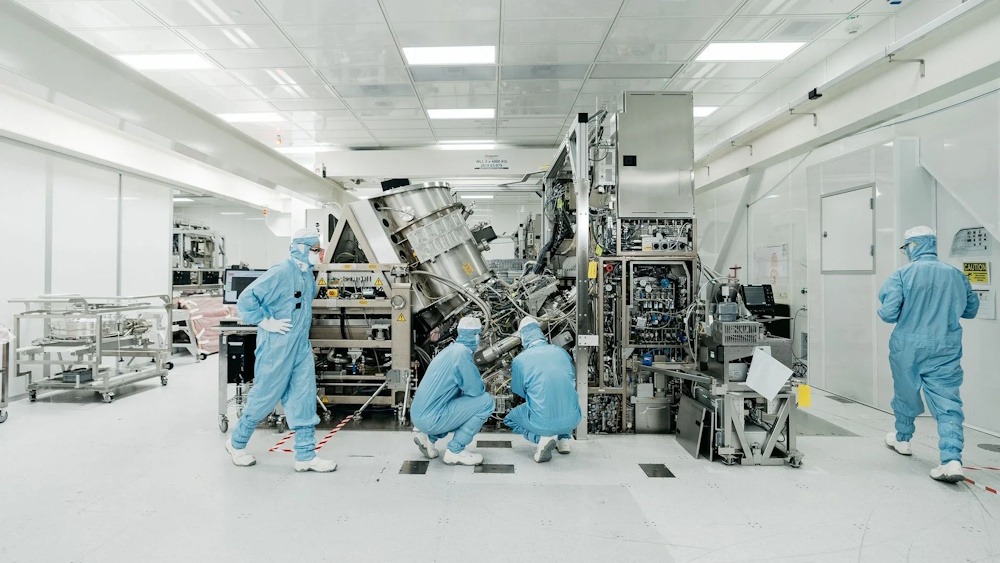
Dutch chip-equipment giant ASML Holding NV is facing its most significant challenge to date under the Trump administration: In a series of recent meetings, Commerce Secretary Howard Lutnick expressed concerns to ASML’s senior leaders regarding the potential unauthorised transfer of one of its advanced machines to China, which would contravene US-led export restrictions. In the meetings, Lutnick conveyed apprehensions to ASML executives regarding the company’s extreme ultraviolet lithography, or EUV, machines, as reported by individuals familiar with the discussions. EUV systems are utilised by companies like Taiwan Semiconductor Manufacturing Co. to produce processors for entities such as Nvidia Corp. and Apple Inc. Furthermore, ASML has consistently been prohibited from exporting these systems to China due to restrictions established during the initial Trump administration. ASML has countered Lutnick’s suggestion, clarifying that none of these tools — comparable in size to a school bus, produced in limited quantities, and necessitating ongoing maintenance from ASML personnel — are located in China, according to sources who requested anonymity to discuss private conversations. A company spokesperson, when enquired about the meetings, stated that ASML engages in discussions with all governments and confirmed that it has never delivered an EUV machine to China. It remains ambiguous what specific objectives the Trump administration has in relation to ASML, which is currently tasked with demonstrating a negative. Additionally, the nature of information that could be derived from the equipment manufacturer to resolve the China EUV matter is also uncertain. The Commerce Department did not respond to several enquiries regarding the issue, including whether there is any evidence suggesting the presence of an EUV machine in China.
Multiple senior administration officials, speaking on condition of anonymity to describe a sensitive matter, indicated that there is evidence suggesting ASML is not acting in good faith — including exports to China of equipment specifically related to EUV tools, which ASML denied. US officials, who refrained from commenting on Lutnick’s meetings with ASML, declined several requests for evidence of the shipments, citing the sensitivity of the information and sources involved. They also refrained from disclosing whether they have observed any evidence of a functioning EUV system in the Asian nation. Ongoing apprehensions from high-ranking officials within the Trump administration, including a member of the Cabinet, intensify the scrutiny on Europe’s most valuable corporation. This comes in light of prior accusations from American authorities suggesting that the company’s operations pose a threat to US national security and technology policies. Should ASML continue to be unable to address Washington’s concerns, the situation may further exacerbate the already strained relations between the US and the European Union. “ASML regularly engages in transparent and open dialogue with government leaders globally,” a company spokesperson stated. “We acknowledge the national security factors influencing export control regulations in the US and the Netherlands, and we are entirely dedicated to adhering to all relevant regulations.” They added that ASML has previously “refuted several unfounded rumours regarding non-compliance with export controls concerning China which were inaccurate and damaging to our reputation.”
A representative of the Dutch foreign ministry stated that the Netherlands acknowledges the significant responsibility associated with its “unique role in the semiconductor industry.” The country enforces restrictions on EUV tools and other relevant exports with a high degree of rigour and consistently intervenes when deemed necessary, according to the representative. It remains ambiguous what exactly triggered Lutnick’s enquiries regarding EUV, which he raised during a meeting that addressed various other subjects, including ASML’s pledges to invest in the United States. Both Lutnick and ASML Chief Executive Officer Christophe Fouquet have characterised the overall conversation in favourable terms, omitting any reference to the EUV issue in their LinkedIn posts. In private, however, ASML has entered a state of crisis, according to individuals familiar with the discussions. Following the April meeting with Lutnick, the Dutch firm developed and started distributing a document in Washington entitled “No indication of any ASML EUV System in China.” According to the document, there are currently 314 EUV machines operational globally, with 26 having been decommissioned, and notably, none located in China. The presentation indicated that ASML has the capability to automatically identify “any interruption, abnormal behaviour, or loss of connectivity” within its EUV portfolio, and emphasised that customers “cannot remove, transport and relocate EUV systems without ASML involvement due to specialised handling procedures.”
The senior administration officials indicated that they possess evidence of ASML dispatching to China specialised equipment utilised for the transportation of EUV machines, along with additional components that may be applicable in EUV systems. The evidence pertaining to those exports is deemed too sensitive for disclosure, they stated, in response to numerous enquiries. A company spokesperson refuted these claims, stating, “ASML has never shipped an EUV machine to China nor have we shipped to China any component, module or equipment specially designed to be used in an EUV machine.” China’s limited access to EUV tools represents a significant constraint for Huawei Technologies Co., the leading competitor to Nvidia in the AI chip sector. Huawei’s semiconductor chief recently highlighted the company’s advancements in chip production independent of ASML’s EUV machines during an uncommon public appearance in English. If an EUV system were to reach China, it would represent one of the most significant breaches of US-imposed restrictions aimed at curtailing Beijing’s access to artificial intelligence technologies that could enhance its military capabilities. Source enquired of senior officials from the Trump administration regarding the rationale behind the US government’s lack of pursuit for more stringent policies or punitive measures, despite possessing evidence that may support such actions. They chose not to provide a statement. ASML has long encountered escalating restrictions on its operations in China, as the United States has urged both the Netherlands and Japan to curtail the export of chip production equipment to a geopolitical competitor. The three countries are home to the leading manufacturers of these tools, and while Chinese competitors are advancing, they have yet to reach parity—especially in lithography, where ASML maintains its position as the global leader.
The Netherlands has already imposed restrictions on ASML regarding the sale of EUV machines and certain types of the next-most-advanced immersion deep ultraviolet, or DUV, lithography equipment to China. However, there was significant frustration within the Biden administration following ASML’s expedited shipments of equipment that would soon be prohibited, prior to the formal implementation of specific DUV controls. The senior officials from the Trump administration, discussing the purported shipments of EUV components to China, also referenced previous legal DUV shipments. They expressed overarching concerns that ASML may be prioritising immediate profits at the expense of national security. “Any assertion that ASML would or did intentionally breach any agreement with the Dutch, the US, or any other government is not only factually incorrect but also significantly misleading,” a company spokesperson stated. ASML has consistently modified its business operations in response to developments in export controls, ensuring compliance with any new regulations. The Hague and Tokyo have typically trailed Washington in the timing of their regulatory measures, showing reluctance to adopt specific actions — for instance, prohibiting their engineers from maintaining and repairing certain restricted equipment already located in China, a restriction that US individuals and companies are subject to. US chip tool-makers Lam Research Corp., KLA Corp., and Applied Materials Inc. have indicated that this discrepancy places them at a competitive disadvantage.
There are also distinctions in the limitations that US and foreign companies encounter regarding sales to particular Chinese customers on Washington’s entity list, which enforces stricter regulations on specific firms compared to the broader landscape across China. The US has effectively severed all technology flows to Huawei, for instance, and employed extraterritorial authorities to broaden those measures to encompass companies such as ASML. However, the regulations in the United States continue to permit specific forms of international commerce with certain Chinese companies included on the entity list — for instance, Huawei’s associate SwaySure Technology Co., which was incorporated into the list in 2024. The senior officials from the Trump administration, who voiced apprehensions regarding ASML’s broader business operations, indicated that ASML has been offering technological assistance to SwaySure to enhance the company’s adaptability to US regulations. They chose not to disclose additional information. SwaySure did not provide a response to enquiries for comment. To be certain, Washington possesses the means to mandate ASML to cease all collaboration with SwaySure — yet the administration under President Donald Trump has not exercised these options. The US administration has faced challenges in developing a cohesive strategy regarding export controls on semiconductor manufacturing equipment. Officials from the Trump administration initiated their tenure with a warning to completely sever ASML’s ties with China, as reported by individuals familiar with the discussions, who spoke on the condition of anonymity due to the confidential nature of the talks. Subsequently, they suggested significantly more limited measures during discussions with the Netherlands and Japan, concentrating mainly on the issue of gear maintenance — a challenge that the Biden administration also attempted, but ultimately did not succeed in addressing comprehensively. The discussions during the Trump administration have not yielded any significant results.
Concerns in the United States regarding Chinese chipmakers’ utilisation of advanced tools produced by ASML may have minimal effect on the company’s sales. Reports says that in recent meetings, Commerce Secretary Howard Lutnick conveyed concerns to ASML’s leaders, indicating that one of its top machines may have been transferred to China, thereby breaching US-led restrictions. ASML asserts that it has not dispatched extreme ultraviolet lithography systems to China and has adhered to the increasingly stringent regulations concerning deep ultraviolet tools. Additionally, employing ASML machines for the production of advanced chips would likely necessitate the use of complex tools from other international companies that are similarly subject to restrictions. China is progressively enhancing its capability to produce more advanced chips utilising legacy tools. Consequently, the concerns expressed by the US may indicate a significant advancement in Chinese engineering rather than any failure on ASML’s part to adhere to export controls. That diplomatic stalemate prompted Congress to intervene earlier this year, with a bipartisan bill that broadly aims to strengthen restrictions on companies including ASML and Japan’s Tokyo Electron Ltd., ensuring they face the same level of limitations in China as US firms. It also proposes a significant restriction on the export of all varieties of immersion DUV tools from ASML, which would substantially curtail the Dutch firm’s access to a market from which it anticipates generating approximately 20% of its revenue in 2026. The Trump administration has not adopted an official stance on the legislation, which successfully passed a significant congressional committee — with certain amendments — in April. US Ambassador to the Netherlands Joe Popolo recently indicated that a favourable trade deal between the US and European Union would “take some pressure off” the bill, which faces opposition from several foreign governments, including the Hague.