China gains manufacturing edge from Hormuz crisis
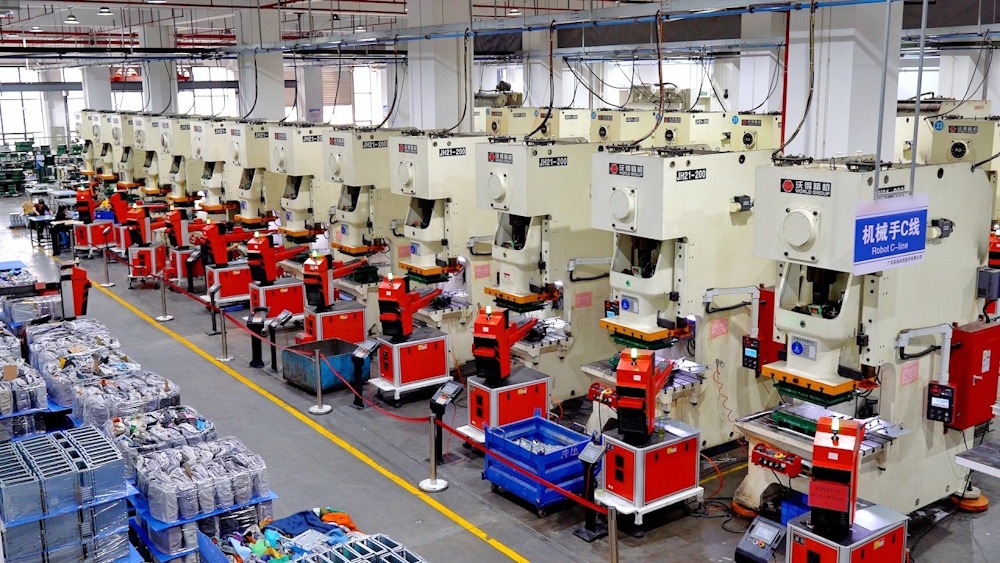
The conflict in Iran and the substantial obstruction of the Strait of Hormuz have imposed significant economic distress on numerous nations, causing certain sectors to experience turmoil as they grappled with escalating costs for energy, fertiliser, and chemicals. It may also have conferred upon China a competitive advantage. Despite the energy shocks and supply chain challenges arising from the war, China has largely navigated these issues without experiencing the inflation spike and subsequent economic and political ramifications that have impacted numerous other countries. The reason: China’s oil and gas reserves and clean energy supplies have enabled it to mitigate the most severe impacts, as indicated by an analysis released Monday by the Asia Group, a consulting firm based in Washington. That is reinforcing the nation’s standing as a competitive hub for manufacturing. The firm analysed the implications of disruptions in the strait and their impact on Asian economies and political dynamics. One main takeaway is that the crisis has illustrated Beijing’s capacity to utilise prices, export controls, subsidies, and a managed currency to mitigate shocks in its economy. The disruptions initiated by the United States have facilitated Beijing’s positioning as the stable partner of choice for other nations, while simultaneously accelerating global demand for clean energy technologies such as solar panels, batteries, and electric vehicles—industries in which China holds a dominant position. “It’s hard not to come to the conclusion that China is a winner here,” stated Kurt Campbell.
Disruptions to energy production and shipping resulting from the conflict in Iran have led to an increase in the global prices of oil and gas over the last three months. Asia, the largest manufacturing center globally, exhibits a significant reliance on West Asia for both energy and industrial goods. Asia sources 80 percent of its oil and 90 percent of its natural gas via the Strait of Hormuz. However, the effects have extended well beyond the energy sector. The war has also hindered the production and distribution of several essential products — such as naphtha, utilised in the manufacturing of plastics and chemicals; helium, employed in semiconductor production and M.R.I. technology; and sulphur, necessary for the refinement of copper, nickel, and vital minerals required in electric vehicle batteries and electrical systems. The Trump administration asserts that it has achieved a peace agreement, and there has been an increase in maritime activity in the Strait of Hormuz. In recent days, Iran and the United States have engaged in a series of reciprocal attacks and threats. Even if the cease-fire were to get back on track, numerous analysts anticipate that the repercussions of the conflict will persist. The potential for future closures or damage to vessels navigating the strait is likely to increase insurance premiums for shipping companies, prompting them to seek alternative, longer, and costlier routes to circumvent the risk.
In China, manufacturing facilities producing items such as chemicals, metals, and synthetic fibres continue to rely significantly on imported sulphur, helium, and naphtha, which are transported via the Strait of Hormuz. China has successfully mitigated the adverse effects of rising global energy prices by leveraging its energy reserves and implementing export restrictions and quotas on its oil refineries. In May, China’s oil imports experienced a decline exceeding 30 percent on an annual basis, resulting in a substantial surplus of global oil available for acquisition by other nations. Recent supply chain disruptions present considerably greater challenges for other Asian countries, as indicated by the report that employed A.I. to simulate various scenarios regarding the responses of governments, companies, and other stakeholders to different outcomes in the strait. In India, escalating costs for fertiliser, fuel, and food have intensified political dissent against the government. Elevated fertiliser expenses, coupled with the likelihood of a lacklustre monsoon season, may exert pressure on the over 40 percent of India’s labour force engaged in agriculture. In Japan, fuel subsidies currently account for approximately half of the defence budget, and rising energy prices may further exacerbate fiscal pressures on the government.
Increasing costs and scarcity of aluminium and naphtha, essential for the production of auto components, have resulted in reductions in output and postponements for Japanese automobile manufacturers. The political and economic repercussions are particularly pronounced in Southeast Asia, where numerous countries are net energy importers. In response, governments have resorted to emergency borrowing and have extended subsidies to mitigate the impact on their economies. The Philippines has experienced labour strikes and has declared a national energy emergency. In Indonesia, nickel producers facing a shortage of sulphuric acid have reduced their production levels, while the tourism sector in Bali has experienced a decline due to increased airfares. In the context of the energy shock, numerous Southeast Asian nations are turning to China for solar panels, battery energy storage systems, and electric vehicles, leading to a significant increase in China’s exports of these products. The energy crisis may undermine the perception of Southeast Asia’s manufacturing competitiveness, potentially decelerating the trend of companies relocating their factories from China to other markets, according to the group’s analysts.
The closure of the Strait of Hormuz has exerted a considerably constrained influence on the United States, particularly in light of its robust energy production capabilities. However, it may yield adverse effects in areas such as artificial intelligence. The Hormuz crisis has exerted pressure on Asian supply chains responsible for the production of semiconductors, transformers, energy systems, copper, and other materials essential for constructing US data centers, according to the report. The most pressing inquiry at this juncture is the duration of the crisis’s persistence. Mr. Campbell stated that the effects on numerous nations and supply chains have been “deep and profound,” and may deteriorate further if the crisis persists. Japan, South Korea, and other nations have depleted a significant portion of the reserves that previously shielded them from the economic repercussions. “In many capacities, from jet fuel to a lot of diesel oils, we are basically almost running on empty,” he stated.