Andy Burnham Takes Office as Britain’s New Prime Minister
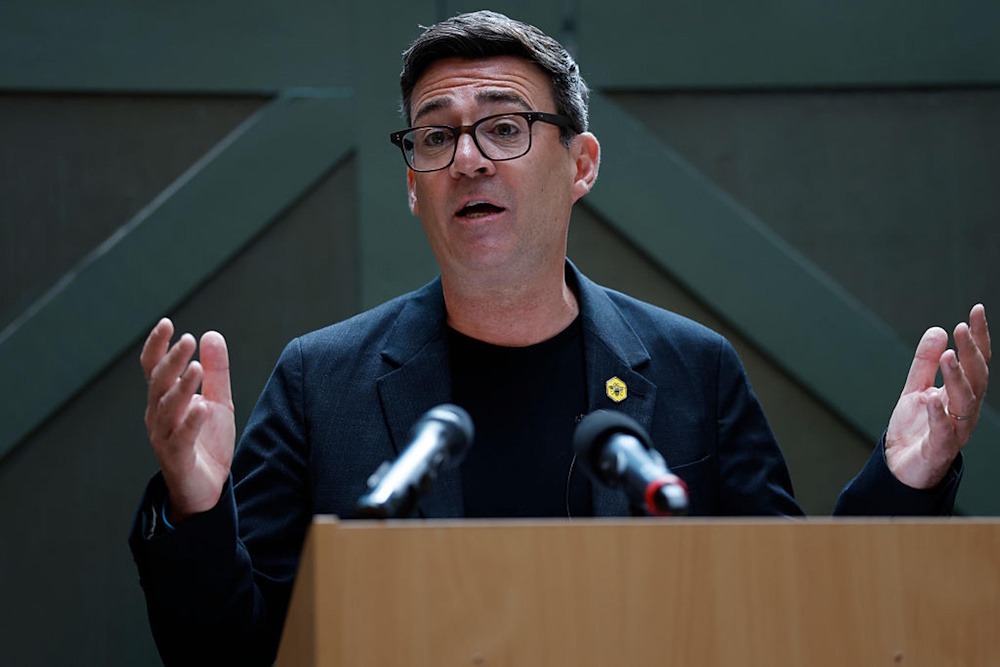
Andy Burnham assumed the role of prime minister of the United Kingdom on Monday, succeeding Keir Starmer. This transition marks Britain’s seventh prime minister in a decade, concluding a period of political uncertainty within the ruling Labour Party. Starmer resigned amid increasing pressure from within the party, triggered by Labour’s lacklustre performance in local elections and a rising discontent with his leadership. Burnham, elected as Labour leader on July 16 following his return to Parliament via a by-election in June, received an invitation from King Charles III to form the government. In his inaugural address from 10 Downing Street, Burnham recognised the political turbulence that had led to his ascension to office. “I am acutely conscious that I am the sixth person in the last 10 years to walk up this street, the seventh Prime Minister since 2016,” he said. Burnham also pledged to restore stability, devolve power away from Westminster and address the country’s cost-of-living crisis.
Andrew Murray Burnham stands out as one of the Labour Party’s most seasoned politicians, with a career that includes roles as a cabinet minister, shadow minister, member of Parliament, and, most recently, as Mayor of Greater Manchester. Born on January 7, 1970, in Merseyside, located in north-west England, Burnham spent his formative years in Cheshire. His father was employed as a telephone engineer, whereas his mother held the position of receptionist at a general practitioner’s surgery. He pursued his studies in English at Fitzwilliam College, University of Cambridge, subsequently embarking on a political career as a researcher and special adviser to prominent Labour figure Tessa Jowell. Burnham was elected as Labour MP for Leigh, a constituency in Greater Manchester, in 2001, marking his entry into Parliament. Over the next decade, he ascended swiftly within the hierarchies of the administrations led by Tony Blair and Gordon Brown. Between 2007 and 2010, Burnham held the positions of Chief Secretary to the Treasury, Secretary of State for Culture, Media and Sport, and subsequently, Secretary of State for Health. Following Labour’s defeat in the 2010 general election, he occupied various prominent opposition roles, such as Shadow Health Secretary, Shadow Education Secretary, and Shadow Home Secretary.
Burnham had previously contested the Labour leadership on two occasions. He initially contested in 2010 after Gordon Brown’s resignation but was defeated by Ed Miliband. Five years later, he once more participated in the contest but was bested by Jeremy Corbyn. Following his second unsuccessful attempt at leadership, Burnham redirected his attention from Westminster to local governance. He stepped down from his position as an MP to run for the newly established role of Mayor of Greater Manchester, securing victory in the 2017 election. He was re-elected in 2021 and 2024, thereby serving nearly nine years in the capacity of mayor. His tenure transformed him into one of Britain’s most recognisable regional politicians. He championed the increased devolution of powers from London, advocated for enhancements in public transport, and managed the reestablishment of Greater Manchester’s bus network under public control via the Bee Network. Burnham’s administration also concentrated on housing, economic development, and homelessness. His vocal dissent regarding the UK government’s Covid-19 funding initiative for Greater Manchester during the pandemic significantly elevated his national visibility and garnered him the moniker “King of the North”.
Burnham’s re-entry into the realm of national politics commenced in June 2026, when he secured victory in the parliamentary by-election for Makerfield, thus rejoining the House of Commons after an absence of nearly a decade. Days later, after Keir Starmer resigned as Labour leader due to increasing internal pressure and unsatisfactory electoral results, Burnham surfaced as the consensus candidate and was elected Labour leader unopposed on July 16. Four days later, on July 20, King Charles III extended an invitation to him to form the government, thereby appointing him as the new prime minister of the UK. Andy Burnham assumes office amid considerable political and economic hurdles. His immediate task will be to restore confidence in a government that has experienced frequent leadership changes over the past decade. He has also committed to addressing Britain’s cost-of-living crisis, stimulating economic growth, and restoring trust in politics. On the international front, Burnham is anticipated to persist in fortifying relationships with essential partners, including India. As Mayor of Greater Manchester, he spearheaded a trade delegation to India in 2019, characterising the nation as a pivotal market for the region’s international strategy. His elevation to the premiership is anticipated to enhance UK-India engagement in trade and investment.