UK PM Keir Starmer: Resignation Decision Was Deeply Personal
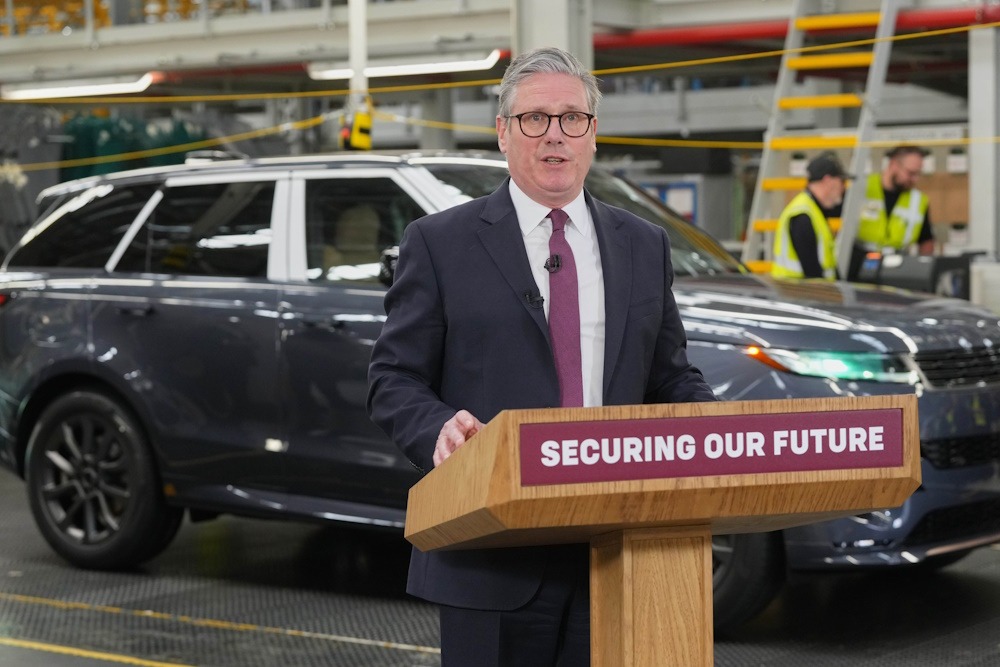
Keir Starmer has characterised his choice to resign as Labour Party leader and British Prime Minister as a “intensely personal” decision, made in consultation with his wife and children during a family weekend retreat. In his initial interview following his statement from Downing Street that initiated the leadership election, Starmer conveyed on Friday evening his intention to fulfil his current term as a member of Parliament representing central London. However, during his time on the backbenches of Parliament, the 63-year-old politician intends to “keeping his mouth shut” to enable his successor, who is widely anticipated to be former Greater Manchester Mayor Andy Burnham, to proceed with the responsibilities of the role. “I grappled with what was the best thing to do for me, for the country, for the government,” said Starmer. “In the end it became an intensely personal decision. And that’s why it was a decision taken ultimately when (my wife) Vic and I were away with the kids,” he said.
The weekend preceding June 22, when he declared his resignation from the steps of 10 Downing Street in London, the Starmer family was at Chequers, the UK Prime Minister’s countryside retreat located in Buckinghamshire. “We just spent two days together as a family and that’s when I came to my final decision… Taking the decision that your political career is over, it is an intensely personal matter, or at least it was for me,” he shared. In the interview that coincides with the two-year anniversary of his significant general election victory for Labour, Starmer advised his successor that they would encounter comparable global challenges that had preoccupied him during his brief time as Prime Minister. “Whoever is my successor, is going to face the same global conflict. We keep saying, and it’s true, we’re in a more dangerous and volatile world than we’ve been in for probably most of my lifetime. That’s not just a phrase, that’s reality.” He said “That’s not going to change. And the domestic challenges aren’t going to change.”
Despite being ousted from his position through what can be characterised as an internal coup, Starmer maintained that he “never had any personal animosity” towards Andy Burnham and expressed his commitment to “do everything I possibly can to make sure” that the next government succeeds. “(I will be) keeping my mouth shut, rather than giving constant advice to my successor about what they should be doing,” he stated. The caretaker PM also emphasised that his four years as Labour leader in Opposition before securing victory in the July 2024 general election were “absolutely core” to his legacy. “The Labour Party arguably could have been lost, but I stepped up as leader and with others we saved the Labour Party,” he asserted, admitting that he had been ousted because his party MPs no longer believed he was “the right person to take us into the next election.”
After an initial phase of popularity, Starmer was hit by some controversial decision-making and policy U-turns, which intensified an internal rebellion within the Labour Party ranks as MPs demanded tougher action on the country’s cost-of-living crisis. Burnham has thus far positioned himself as the sole candidate for the top position, which may result in his election unopposed once the process officially concludes on July 16.