Trader’s Playbook: Mastering the Trump-Xi Summit
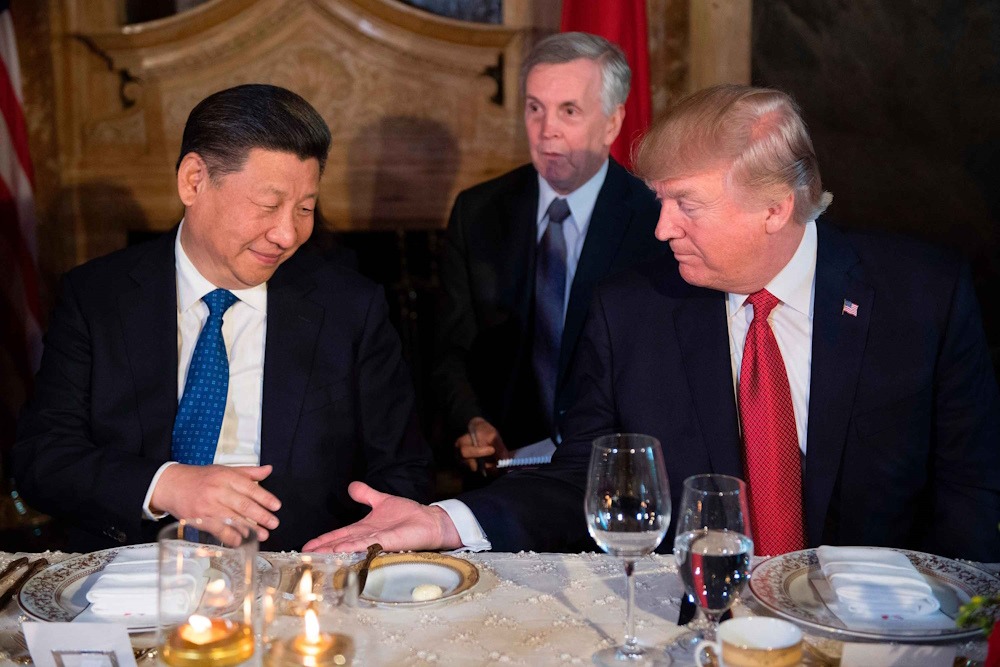
Investors are seeking additional indications of reduced tensions between President Donald Trump and his counterpart Xi Jinping, aiming to alleviate the pressure on Chinese markets, as geopolitical and trade matters remain in the spotlight. Analysts suggest that while expectations for a concrete deal between the world’s two largest economies remain low, the meeting of the two leaders may help to ease trade tensions between their countries. Any such improvement, coupled with a potential easing of restrictions on US tech exports to China, may enhance the prospects for Chinese exporters and technology hardware manufacturers. A successful meeting between the two leaders on May 14-15 could offer a significant uplift for Chinese equities, which have underperformed compared to their Asian counterparts, despite regional markets experiencing a rally last month amid diminishing worries regarding the Iran war. There is growing optimism regarding a stronger yuan as the dollar has retreated. Any structural disagreements, on the other hand, may reignite volatility in local stocks. “If the summit can bring a little bit more certainty to the US-China relationship and drive that risk premium down, that’s ultimately going to be very positive for Chinese equities,” said Christopher Hamilton.
According to Macquarie Group Ltd., the base case for tariffs is for them to remain in place without a meaningful escalation. The effective rate of current US levies on Chinese goods stands at approximately 22%, as estimated by JPMorgan Chase & Co. These levies are under investigation, with China highlighting these probes as a source of tension. “An absence of further tensions marginally improves visibility for broader China exporters by easing escalation risk and providing better supply-chain certainty, even as existing tariffs continue to cap upside,” said Eugene Hsiao. Companies associated with energy security or the global tech supply chain are expected to receive waivers; however, increased levies will pose significant challenges for biotech firms heavily reliant on US revenue, including WuXi Biologics (Cayman) Inc. and WuXi AppTec Co., which are already facing pressure from the Biosecure Act. The conflict in Iran introduces further complications to the already strained relations between the United States and China. Washington’s efforts to tighten pressure on Tehran are increasingly impacting China, which stands as Iran’s largest trading partner and a significant buyer of its oil exports. The US has imposed sanctions on refiners in the Asian country that handle Iranian oil. Trump has stated, “I would discuss the Iran war with Xi during their summit.” A sign of reduced tensions in that area could enhance risk sentiment, as analysts note that encounters between the two leaders have frequently resulted in significant fluctuations in stock prices. “While the Chinese economy is short-term resilient, both sides have strong interests in quickly resolving the West Asia conflict, reopening the Strait of Hormuz, and pacifying other potential chokepoints,” Feng Zhu wrote in a note Friday.
Tensions surrounding chip technology have escalated in anticipation of the meeting, as US regulators have reportedly suspended tool shipments to Hua Hong Semiconductor Ltd. This came after Beijing’s decision to obstruct Meta Platforms Inc.’s $2 billion acquisition of AI startup Manus, aiming to retain advanced technology within its borders. According to analysts, it is feasible for the US to moderately ease chip equipment export controls. This could involve permitting tools for more advanced 14 nanometer and 7 nanometer chips or unofficially granting exemptions to specific companies like Hua Hong and Shanghai Huali Microelectronics Corp., which would be beneficial for local players. Some analysts express caution regarding a truce as both nations persist in their struggle for dominance in artificial intelligence. Nonetheless, domestic chipmakers are likely to continue drawing capital inflows, as Beijing intensifies its efforts to diminish reliance on foreign technology. Rare earths are anticipated to be a significant focus as Trump aims to secure shipments from China, which represents over 70% of the global supply. Since late October, US-China policy has centered on a delicate detente, with Xi halting export restrictions on rare earth elements and Trump delaying limitations on Chinese access to essential American technology.
The tensions have sparked a surge in the shares of China’s leading producers, such as China Northern Rare Earth High-Tech Co. and Xiamen Tungsten Co., with their stock prices more than doubling over the past year. The meeting between Trump and Xi will “likely focus narrowly on trade and export controls — including tariffs, Chinese purchases of US goods such as soybeans, energy, and airplanes, and stable rare earth flows,” according to economists at Goldman Sachs Group Inc., including Andrew Tilton. “Beyond signaling stability, Beijing may provide new purchase commitments for US exports, possibly including soybeans, other agricultural products, oil and gas, and civilian aircraft,” stated Gabriel Wildau. According to JPMorgan, increased soybean purchases could enhance the cost structures for Chinese food producers, including Foshan Haitian Flavouring & Food Co., Jonjee Hi-Tech Industrial and Commercial Holding Co., and Qianhe Condiment and Food Co. China may also choose to purchase additional pork, beef, and poultry from the US, which could affect the domestic hog industry that is already burdened by declining prices. Shares of industry leaders like Muyuan Foods Co., Wens Foodstuff Group Co., and New Hope Liuhe Co. have experienced a decline of over 15% since mid-September, trailing behind the benchmark.