IMF, World Bank Meetings Expose Shock Mitigation Limits and US Reliance
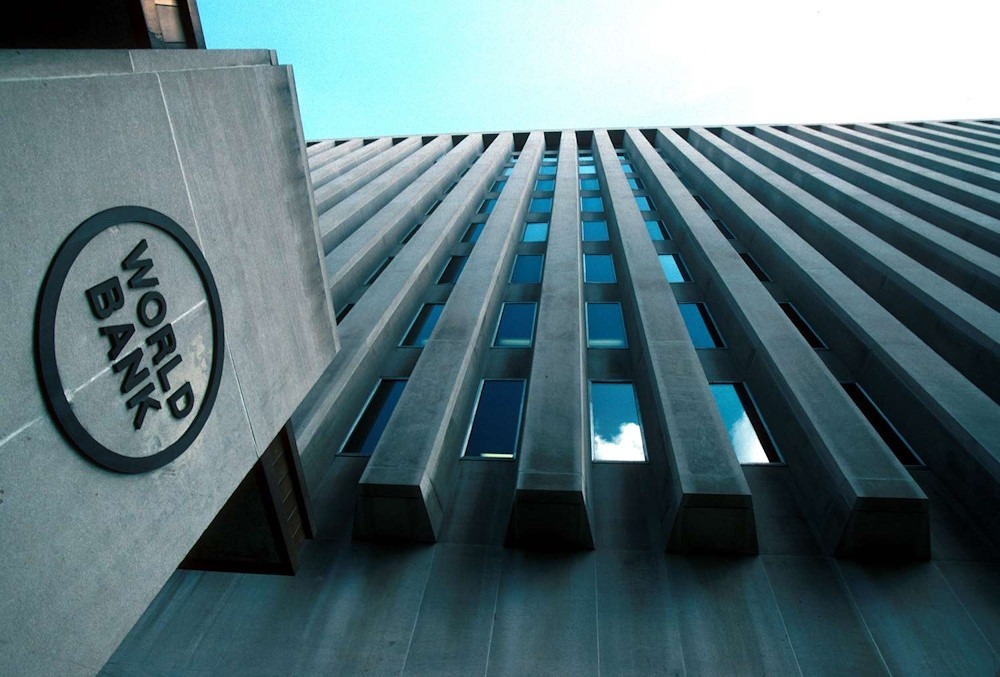
Global finance leaders, impacted by the tumultuous news from West Asia, confronted their inability to alleviate the economic repercussions of increasingly frequent geopolitical disturbances this past week. They recognized that relying on U.S. leadership to resolve crises is no longer the assurance it once was. During the Spring Meetings of the International Monetary Fund and World Bank in Washington, attendees oscillated between pessimism regarding a deteriorating global economic forecast, driven by escalating energy price and supply disruptions, and cautious optimism as indications emerged that Iran might reopen the Strait of Hormuz, potentially facilitating the resumption of oil, gas, fertilizer, and other commodity flows. By Saturday, that optimism was beginning to wane in light of renewed assaults on shipping. The IMF and the World Bank have committed to providing a total of $150 billion in new financing assistance aimed at supporting developing countries that have been significantly affected by the recent energy price shock. Additionally, they expressed satisfaction with their renewed engagement with Venezuela’s acting government following a seven-year hiatus.
Countries were cautioned against the practice of hoarding oil and advised to refrain from implementing excessive and indiscriminate fuel price subsidies. Ultimately, their options were limited to observing the declarations emanating from Tehran and the White House. “Actually, some of the most important decisions on the global economy are not happening here,” stated Josh Lipsky regarding the IMF and World Bank campus. The most significant development in the global economy occurred between the U.S. and Iran,” he stated. “We anticipate favorable developments and will observe the situation closely.” Despite the robust performance of stock markets and a significant decline in oil futures prices on Friday, Saudi Arabia’s Finance Minister Mohammed Al-Jadaan encapsulated the sentiment of numerous officials by expressing discomfort in forecasting a more favorable outlook until tankers can navigate the strait without hindrance, accompanied by reasonably priced insurance and a decrease in physical energy prices. “If the clear waters are open,” Al-Jadaan told, “I think that’s what would trigger, for me, a change in the scenario.” The IMF recently announced a modest reduction in its global growth forecast for 2026, adjusting it to 3.1% based on the most favorable of three scenarios it developed.
However, it quickly noted that this projection was already becoming obsolete, indicating that the global economy is veering towards a less favorable growth scenario of merely 2.5%. The fund’s most recent World Economic Outlook indicated that an extended conflict could drive the global economy into recession. Prior to the U.S. and Israel initiating strikes on Iran at the close of February, the global economy was in the process of rebounding from the previous year’s disruption caused by President Donald Trump’s imposition of significant tariffs on international trading partners. At this year’s meetings, discussions surrounding trade tensions were notably subdued, as was the discourse on Russia’s conflict with Ukraine; however, G7 finance ministers committed to maintaining pressure on Russia. However, a persistent series of disruptions that began with the COVID-19 pandemic in 2020 and continued with Russia’s invasion of Ukraine in 2022 has been instructing nations that the U.S. is no longer the “general” of the international order and may not always offer solutions, according to Lipsky. U.S. Treasury Secretary Scott Bessent on Friday initiated a call for G20 nations, the IMF, and the World Bank to engage in coordinated efforts to secure sufficient access to fertilizers in light of supply disruptions originating from Gulf countries. However, seven weeks into the conflict, this will have minimal impact on alleviating shortages and elevated prices for farmers currently sowing spring crops throughout the Northern Hemisphere.
Kevin Chika Urama indicated that the West Asia crisis has created a new urgency for African nations to enhance regional trade and economic connections, pursue alternative energy initiatives, broaden their domestic tax bases, and leverage significant natural gas reserves. Geopolitical tensions have established themselves as a fixture of our contemporary landscape, while the unpredictability surrounding policymaking has solidified into a state of certainty,” he remarked during a discussion with fellow chief economists from various multilateral institutions. Finance ministers, central bankers, and other officials participating in the meetings conveyed their exasperation at being drawn into yet another economic crisis due to Trump’s actions. In private discussions, European officials conveyed a definitive message to the United States, emphasizing the necessity for Washington to act in order to facilitate the reopening of the strait, according to a senior finance official present at the meetings. In public, the remarks were more measured, exhibiting a reduction in blame attribution. The crux of this conflict lies in the Strait of Hormuz. “We need this to open, but not at any price,” stated French Finance Minister Roland Lescure during a briefing. “I am unwilling to incur a cost of one dollar to traverse the Strait of Hormuz.” Successive shocks, including this war, have disrupted planning for developing economies, as noted by Retselisitsoe Adelaide Matlanyane, Lesotho’s Minister of Finance and Development Planning, during a panel of African ministers. “You hardly have time to breathe,” she remarked.
For small, open, and vulnerable economies such as Lesotho, these shocks have imposed significant pressures on fiscal stability, price levels, and various other aspects. Matlanyane indicated that the management of debt has evolved into a highly intricate issue, with the prevailing tensions creating an imperative to “rethink policy and we have to think differently. It’s frustrating dealing with this,” she stated. Thailand, as a net energy importer set to host the IMF and World Bank annual meetings in October, faces prolonged elevated prices due to the enduring impacts of the damaged Gulf oil and gas infrastructure, according to Ekniti Nitithanprapas, the country’s deputy prime minister. However, he indicated that the crisis presents an opportunity for Thailand to diminish its dependence on fossil fuels and enhance the contribution of renewable energy sources, such as solar farms – contrasting sharply with Trump’s energy agenda. “We need to commit to transform…to help people transform to face the new fragmented world and high oil prices,” Nitithanprapas stated.