SK Hynix Surpasses Samsung as South Korea’s Top Company
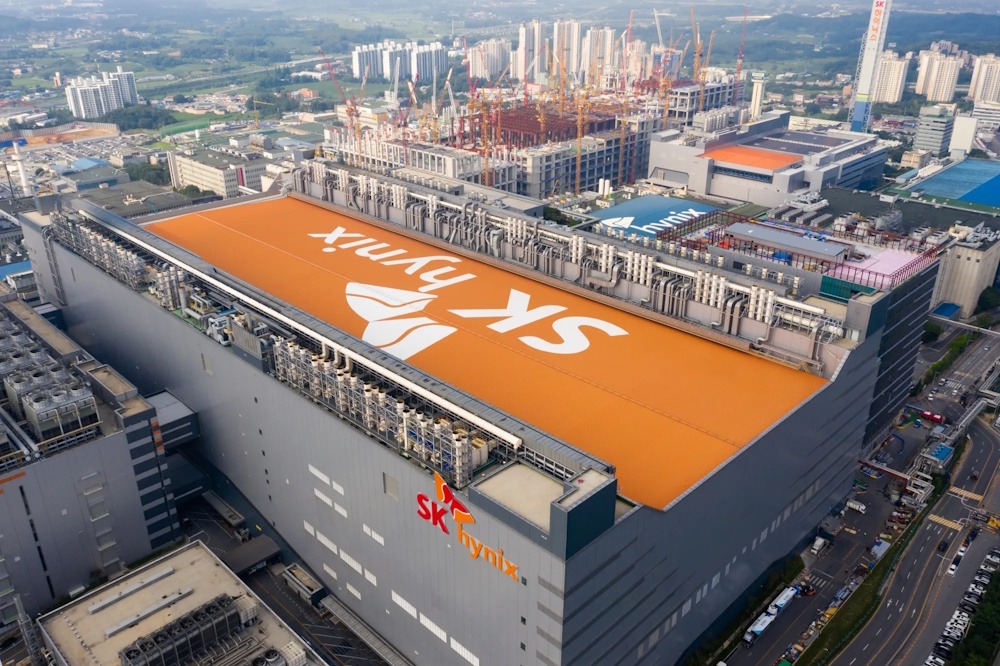
On Monday, SK Hynix surpassed Samsung Electronics to emerge as South Korea’s most valuable publicly traded company, signifying a remarkable turnaround for a semiconductor manufacturer that faced near insolvency due to debt two decades prior. The company has established itself as the leading supplier of high-bandwidth memory chips utilised in AI systems for clients including Nvidia and Alphabet’s Google. It has become one of the most significant beneficiaries of the global AI surge, resulting in a remarkable increase of over 340 percent in its shares this year and elevating its market value beyond that of both Samsung Electronics and Micron. Shares of SK Hynix, currently the leading memory chipmaker globally, increased by 5.7 per cent, elevating the company’s market capitalisation to 2,082.5 trillion won as of 0347. In contrast, Samsung Electronics saw a modest gain of 0.4 per cent, bringing its market capitalisation to 2,081.3 trillion won, excluding preferred shares. The stock reached a significant milestone as artificial intelligence transforms the global semiconductor sector, elevating specialised memory chips from mere commodities to essential components of the infrastructure that supports applications like ChatGPT and sophisticated AI models.
SK Hynix specialises in memory chips, while Samsung Electronics diversifies its production to include logic chips and consumer electronics, encompassing smartphones and televisions. Samsung Electronics had maintained its leading position since 2000. “The emergence of customised AI memory fundamentally changed the industry’s economics and allowed SK Hynix to establish itself as the market leader,” stated Kim Sunwoo. Samsung stated that any assessment of its market capitalisation ought to incorporate preferred shares, which would elevate the value to approximately 2,252 trillion won. SK Hynix’s soaring share price signifies the culmination of one of the most significant turnarounds in South Korea’s corporate history. In 2002, Hynix Semiconductor found itself on the brink of acquisition by Micron, burdened by the substantial debt incurred during a period of aggressive expansion. The deal ultimately collapsed, resulting in the company remaining under creditor control for almost a decade. Its shares plunged as low as 135 won in 2003, leaving it viewed as a penny stock, or “Dongjeon-ju” in Korean. Its fortunes in the years since have mirrored the conventional boom-and-bust cycle characteristic of the global memory industry. In 2023, a significant downturn adversely impacted memory prices, leading SK Hynix to disclose an annual operating loss of 7.73 trillion won.
It began to recover a year later as the AI boom accelerated, with significant investments from major players such as Microsoft, Google, and Meta. This surge in investment led to a reported annual operating profit of 23.5 trillion won in 2024, marking a record at that time. Analysts highlight SK Hynix’s pivotal position in the global AI ecosystem as a result of its commitment to investing in HBM, a specialised memory chip designed to be stacked vertically for enhanced performance and reduced power consumption, even amid a downturn in the memory industry. In contrast to traditional memory products, HBM chips exhibit a close integration with AI processors, resulting in markedly elevated barriers to entry and enhancing the pricing power of suppliers. By 2025, SK Hynix secured a commanding 61 percent share of the global HBM market, significantly outpacing Samsung Electronics, which held 17 percent, and Micron, with a 21 percent share. SK Hynix originated in 1983 as a division of Hyundai, subsequently being spun off and acquired by SK Group, the family-controlled conglomerate whose operations extend across various sectors including telecommunications and energy. SK Group Chairman Chey Tae-won, who encountered significant resistance to the deal at that time, articulated his rationale in a book released in January. “What I really wanted to accomplish when we acquired Hynix was to transform it from a commodity memory producer into a mainstream semiconductor company whose products are indispensable,” Chey said.
“In the past, it did not matter whether memory came from Hynix, Samsung or Micron. They were interchangeable commodity products. HBM is different. If SK Hynix’s HBM is replaced with another product, the AI system may not function properly. What used to be a peripheral component has become a core component,” Chey said. Analysts indicate that Samsung’s status as the leading DRAM producer globally may face challenges from SK Hynix. Bank of America estimates that SK Hynix’s monthly DRAM output will reach approximately 589,000 wafers this year, in contrast to roughly 691,000 wafers for Samsung Electronics. However, SK Hynix is poised to increase DRAM output by approximately 38 percent from 2025 to 2028, in contrast to the roughly 17.5 percent growth anticipated for its competitor. That would reduce SK Hynix’s production gap to under 10 percent by 2028, down from approximately 23 percent in 2025, marking a notable accomplishment given Samsung’s superior manufacturing scale. “Previously, the difference in manufacturing scale meant there was simply no way for rivals to close the profitability gap with Samsung,” said Kim. Source has reported that SK Hynix is opting to choose the Nasdaq for its planned US listing, which would broaden the company’s investor base and raise its profile further among global investors.