China has faster supercomputer than US, but AI gap remains
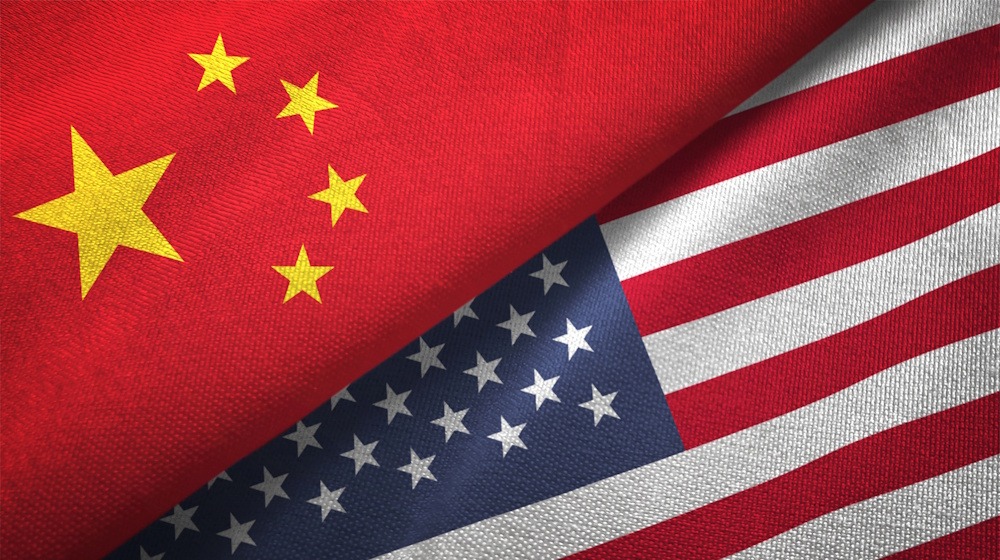
China has surpassed the US to claim the leading position on a list of the world’s fastest supercomputers. However, experts suggest that these results may reflect Beijing’s ambition to demonstrate self-sufficiency in computing systems rather than its actual status in the global AI competition. The LineShine system at the National Supercomputing Centre in Shenzhen, China, employs domestically designed chips and has secured the leading position on the TOP500, a biannual global ranking of supercomputers, marking the country’s first listing in three years. The ranking emerges amid intensifying competition between the US and China in advanced computing. On Monday, US President Donald Trump signed an executive order designed to position the US in a leading role in the burgeoning domain of quantum computing. In the June 2026 edition of TOP500, LineShine surpassed the former titleholder, El Capitan, a supercomputer located at Lawrence Livermore National Laboratory, which is utilised by the US government for the development and maintenance of its nuclear weapons stockpile.
However, technology and policy experts indicated that the findings do not imply that China possesses the fastest computer globally for AI applications, due to recent shifts in the computing sector and the methodologies employed in compiling the rankings. LineShine achieved a fourth-place ranking on a benchmark test aimed at simulating computing tasks that closely resemble those associated with artificial intelligence. For decades, supercomputers have been composed of numerous interconnected machines tasked with addressing intricate scientific challenges, such as simulating atomic interactions, primarily within the realms of national laboratories and academic institutions. To achieve a position on the TOP500 list, operators of supercomputers are required to execute a series of benchmark tests designed to replicate specific workloads. In recent years, cloud computing firms like Microsoft, Amazon.com, and Alphabet’s Google have developed substantial supercomputers specifically optimised for artificial intelligence tasks.
Most of those companies choose not to pursue a position on the TOP500 list. A study conducted last year by AI policy researchers Konstantin Pilz, James Sanders, Robi Rahman, and Lennart Heim discovered that the Colossus system, owned by SpaceX’s xAI, was probably already more powerful than the El Capitan system utilised by the US government. “If the hyperscalers submitted their systems, this ‘world’s fastest’ would not crack the top five,” stated Jimmy Goodrich. The Chinese victory on the list more likely indicates that China sought acknowledgement for its chip design initiatives, reflecting a shift from previous years, experts noted. China first claimed the leading position on the TOP500 in 2010, engaging in a competitive exchange of titles with the US and Japan until 2023.
This year marked a significant shift, as China ceased submissions of its systems following years of export controls related to chips and computing, initiated during Trump’s administration and continued under President Joe Biden. It is not unexpected that it holds the position of the leading system. “I’m not surprised it’s the number one system. What I’m surprised by is that they submitted it and want recognition for it,” said Addison Snell. The LineShine system lacks advanced AI chips, as indicated by the details accompanying the results, presumably due to the ongoing US export controls on the tools required for their production. “China is hoping to convince the world export controls are useless by hoping we ignore the details,” Goodrich stated.