Kevin Warsh says inflation is ‘concerning’ but not interest rates
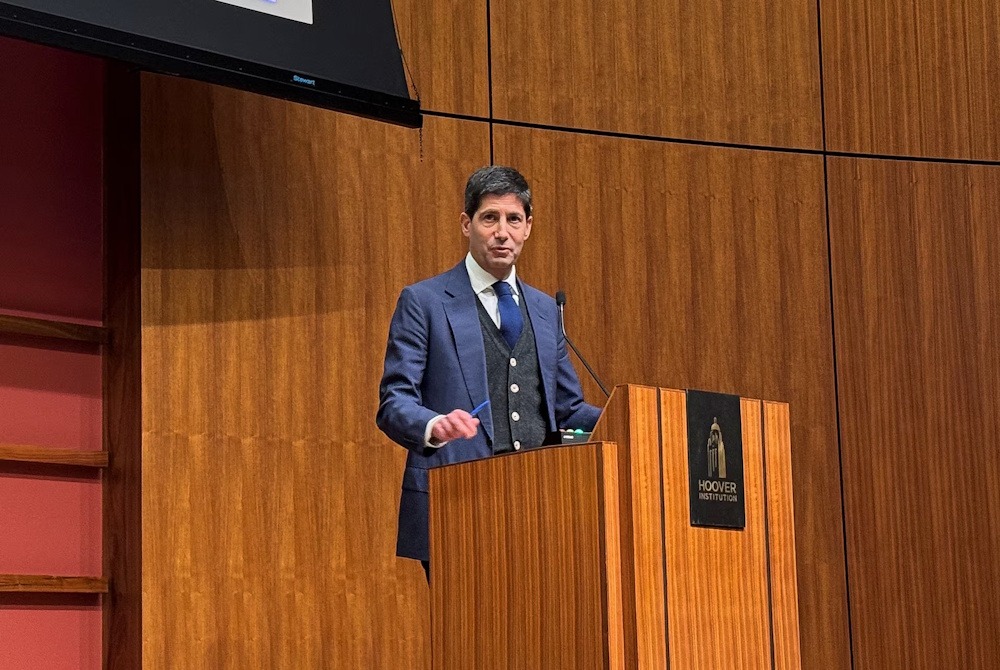
Inflation represents the foremost challenge for the Federal Reserve; however, investors must independently ascertain the timing of any intervention by officials, as articulated by Chairman Kevin Warsh in his prepared remarks for the Jackson Hole speech on Friday. The US economy is at “full employment,” Warsh stated during the prominent gathering of central bankers, finance ministers, and policymakers from around the world, yet inflation figures “are more concerning.” For over twenty years, the current chair of the Federal Reserve has indicated the trajectory of interest rates during their keynote speech at the annual economic symposium hosted by the Federal Reserve Bank of Kansas City. Warsh’s departure from convention on Friday underscores one of his most significant shifts at the Fed: reducing the frequency of communications to markets and the public regarding the Fed’s prospective strategies. That, in turn, has left traders navigating the complexities of a transformed landscape of US monetary policy, while also contending with global pressures stemming from government debt, the ascent of AI, and an inflation surge driven by conflict that is unsettling financial markets. “A quieter Fed, more purposeful in its communications, is better able to meet its objectives,” Warsh said Friday.
Meanwhile, inflation has increased, and some of Warsh’s colleagues are already advocating for a rise in borrowing costs for the first time since July 2023. While Warsh didn’t indicate the direction of interest rates — or what might influence his decisions — his perspective that inflation represents the more significant challenge is noteworthy. However, that may not offer sufficient clarity for market participants. Shortly after Warsh’s post-meeting news conference last month — during which he refrained from commenting on interest rates — long-term bond yields experienced a significant increase, suggesting that traders may be apprehensive about the Fed’s ability to adequately address persistently high inflation. Rising government deficits and the increased supply of corporate bonds, among other factors, have led to an uptick in bond yields in recent months. Consequently, the federal government will persist in incurring substantial interest payments, further exacerbating its existing $40 trillion debt burden. Warsh hasn’t provided what is referred to as a “reaction function.”
A reaction function is when a central bank elucidates “what it is watching, how it interprets the economy, how it weighs competing risks, and what developments would change its judgment,” as noted by the Brookings Institution in an analysis last month. Warsh has consistently declined to articulate his reaction function when queried by journalists. This contrasts with “forward guidance,” which provides a more explicit projection of the trajectory for the Fed’s interest rate contingent upon anticipated economic developments. In his address on Friday, Warsh justified his choice to refrain from offering either. “I wish our understanding of the economy were so precise as to provide a mechanical, tried-and-true answer,” Warsh said. “But our knowledge just doesn’t extend that far—at least not yet—and the factors most relevant to the proper conduct of monetary policy change over time.” And “The bond market is really looking to the Fed for clues on their reaction function,” said Ian Kresnak. “What’s driving a lot of the volatility in the rates market is uncertainty around how the Fed is going to respond to inflation.”
A survey of 31 economists, strategists, and investors this week revealed that 80% of respondents believe Warsh should provide a more detailed explanation of his economic views. Investors perceive the Jackson Hole event as Warsh’s prime opportunity to achieve this objective. Fed officials are contending with the recent rise in inflation, influenced by tariffs, conflict, and substantial corporate investment in AI infrastructure on prices — and deliberating on the necessity of implementing interest rate hikes in the near term. However, the US jobs market has experienced a lacklustre, “low hire, low-fire” condition for much of the past two years, complicating the Federal Reserve’s dual mandate of controlling inflation while supporting employment. Recent job gains may have been even more subdued than initially perceived, as indicated by a new report released on Friday. The US economy likely added 79,000 fewer jobs than initially estimated between April 2025 and March 2026, according to the Bureau of Labour Statistics’ preliminary annual benchmark review of recent employment data. If the estimates were to hold, it would reduce the job growth during that period to 194,000 from 273,000.
Friday’s report, however, does not lead to a revision of employment figures. It represents the initial phase in a biannual procedure undertaken by the BLS to reconcile historical employment data derived from monthly surveys with quarterly tax filings related to unemployment insurance, aiming to achieve a comprehensive tally of employment figures. Warsh stated on Friday that individuals lacking investments are the ones who bear the consequences whenever the Fed errs. “If the Fed gets inflation wrong and judges the economy wrong, who gets the worst of it? Not the financial high-fliers,” he said. “Hard-working Americans are the ones left to deal with inflation that is too high or jobs that suddenly appear less secure.” Investors currently perceive a probability of approximately 34% that Federal Reserve officials will increase interest rates during their meeting on September 15-16, as indicated by CME FedWatch. However, the likelihood of those odds increases in subsequent meetings. “It’s a close call whether or not they hike at all this year,” said Jim Caron.