Inflation, Global Tensions Push Markets for Fed Decision
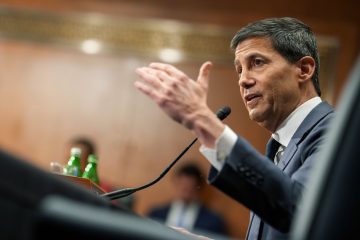
The Federal Reserve has maintained a notable silence regarding the prospective trajectory of interest rates, as Chairman Kevin Warsh has provided scant indications while policymakers contend with resurfacing inflation worries and a more opaque economic landscape. Federal Reserve officials will have an opportunity to elucidate their perspectives when they disclose their most recent interest rate decision at 2 p.m. on Wednesday, which will be succeeded by Warsh’s post-meeting press conference at 2:30 p.m. Inflation Slowed sharply in June, according to the latest Consumer Price Index, largely due to lower energy prices that month as tensions briefly eased in the conflict with Iran. The encouraging inflation report led investors to reduce their expectations regarding the necessity for the Fed to raise interest rates for the first time since July 2023 to manage price pressures effectively. However, the conflict in the Middle East intensified earlier this month, resulting in a surge in global energy prices last week. Tensions have subsided in recent days, leading to a corresponding decrease in energy prices. However, shipping through two key waterways — the Bab al-Mandeb Strait and the Strait of Hormuz — remains subdued. Almost 25% of global oil transit occurs within this region. Meanwhile, Federal Reserve officials are engaged in discussions regarding the potential implications of the swift integration of artificial intelligence on inflationary trends. The economic crosscurrents have complicated the understanding of the trajectory of inflation.
Compounding that uncertainty, Warsh has refrained from providing explicit guidance on interest rates. Ahead of this week’s policy meeting, markets are divided on the likelihood of the Fed maintaining its benchmark lending rate for the fifth consecutive time or implementing a rate increase. It represents a level of ambiguity that has not been observed in recent years. “The Fed is looking at all these inflationary impulses and determining if they will be there over the longer term,” Narayana Kocherlakota told. “But it’s becoming very difficult to know what the Fed is going to do in the next few months, because Chair Warsh has been studiously uncommunicative about how the Fed is going to react to these changes in economic conditions,” Kocherlakota said. Warsh has long signaled that he intended to ditch a long-held practice known as “forward guidance.” Since 2000, Federal Reserve officials have predominantly employed forward guidance to provide investors with a clearer outlook on the trajectory of interest rates, contending that enhanced transparency enhances the efficacy of monetary policy. However, during his confirmation hearing in April, Warsh stated that he would refrain from speculating on the trajectory of the economy as chairman. With the Fed’s next move still uncertain, it remains ambiguous whether Warsh’s departure from longstanding Fed communication has diminished — or heightened — uncertainty. “It’s going to lead to market volatility,” said Kocherlakota.
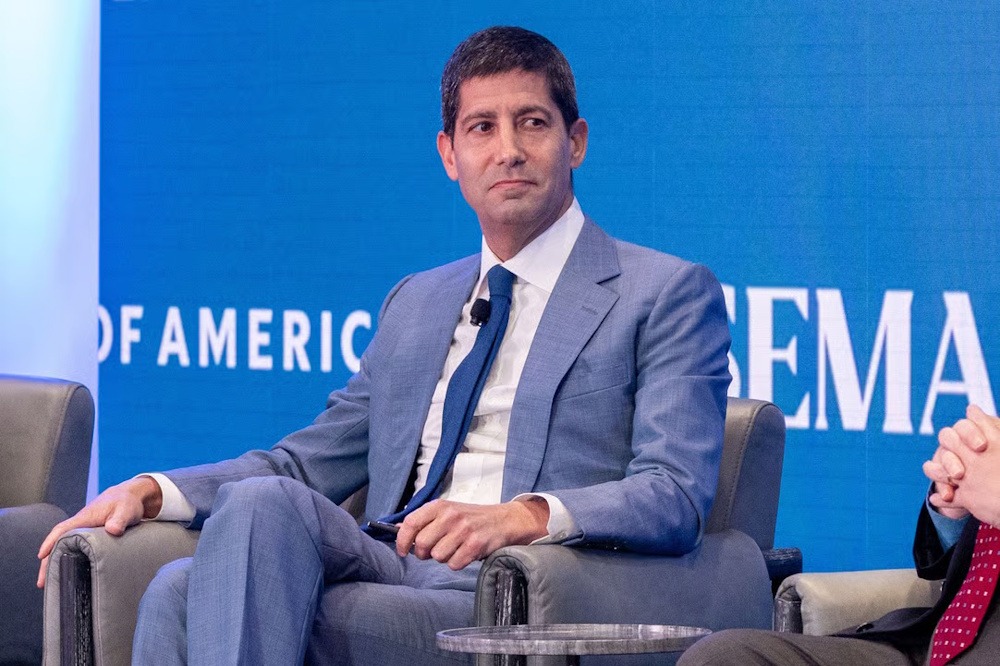
“It makes businesses more reluctant to invest, meaning they’ll be less likely to demand workers to build the kinds of goods and services … because they’re uncertain about what the Fed is going to be doing.” he added “That kind of uncertainty, in my view, is a complete unforced error on the part of the Fed.” Conversely, there are those who contend that Federal Reserve officials have, in recent years, engaged in excessive discourse regarding the economy. “We got to a point where the dissection of the Fed’s forward guidance was so acutely broken down into parts that I’m not sure it helped in the way it was meant to help either,” said Kezia Samuel. Federal Reserve officials generally concur that the central bank ought not to react to rising energy prices with increases in interest rates, as these costs are anticipated to decrease independently. “Conventional wisdom among central bankers is to look through one-time price increases, such as those associated with higher tariffs and a jump in oil prices,” Fed Governor Christopher Waller said this month. However, if price pressures persist, there’s a far greater risk that inflation broadens well beyond the energy market. Such developments may start to undermine Americans’ confidence in the prospect of inflation gradually tapering to the Federal Reserve’s 2% annual objective.
To gauge the trajectory of inflation, central bankers concentrate on core measures that exclude the often fluctuating prices of food and energy. Core inflation provides a valuable indicator for economists and policymakers regarding the persistence of price pressures. To assess Americans’ perceptions of prices, officials examine both market-based and survey-based measures of inflation expectations. Neither of those measures justify immediate rate hikes; however, this assessment could shift if the conflict in Iran escalates significantly or continues for a prolonged duration. Meanwhile, Federal Reserve officials are closely monitoring the substantial expenditures by major technology firms on artificial intelligence data centers, a topic that was addressed during the Fed’s policy meeting in June. “Many participants noted that ongoing strong demand for AI infrastructure would likely sustain upward pressure on prices for technology products and electricity,” the meeting’s minutes read. “Most participants remarked that growth in economic activity that exceeded that of potential output, owing in part to strong AI business investment, could contribute to more persistent inflationary pressures.”