Trump backs diesel export ban as prices soar to record highs
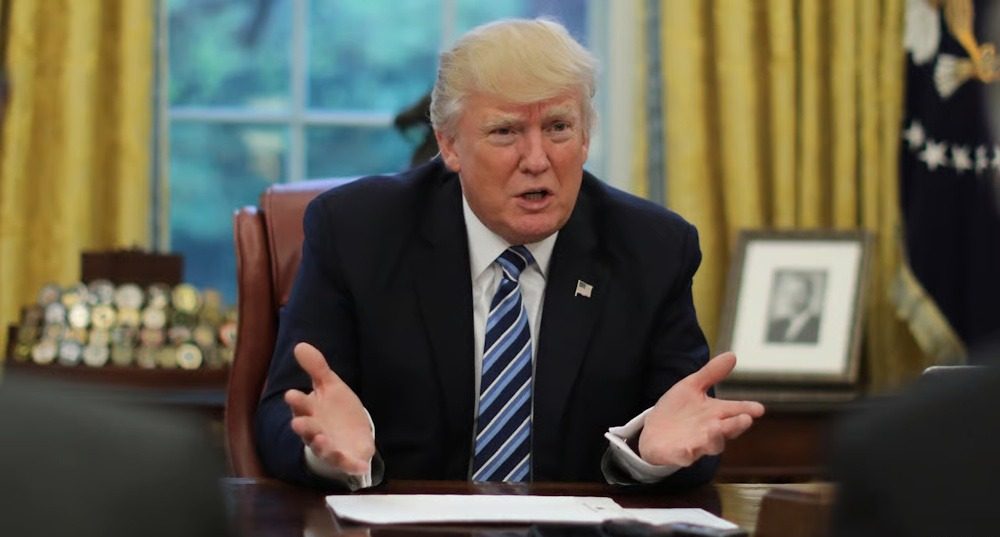
President Donald Trump stated that he has urged his advisers to endorse a prohibition on US diesel exports, as conflicts in Iran and Ukraine are propelling the fuel’s price to unprecedented heights. The president’s comments on Tuesday acknowledge American voters’ concerns regarding the cost of living, particularly with the November midterm elections approaching in just a few weeks. Energy industry figures firmly oppose potential export restrictions, arguing that such measures would yield only temporary price relief, ultimately leading to even higher costs. “I’ve said ‘let’s not send out the diesel,’” Trump said when asked about growing calls from Republican lawmakers to suspend exports. “I’ve called for it within my people. I’ve been talking about it.” Treasury Secretary Scott Bessent stated that officials are “examining whether it’s feasible in terms of the overall refining capacity and whether a full or partial ban would work.” Trump addressed a gathering on the periphery of the UN General Assembly alongside Ukrainian President Volodymyr Zelenskyy, whom he has advised to limit assaults on Russian energy infrastructure. Trump indicated he would discuss the matter with Zelenskyy, after multiple requests for Kyiv to cease attacks on Russian refineries, which have led Moscow to restrict its fuel exports. Global fuel markets are currently facing dual challenges stemming from the interruptions in the vital Strait of Hormuz and ongoing Ukrainian assaults on Russian refineries.
The United States has positioned itself as the supplier of last resort globally, with diesel exports reaching a weekly record close to 2 million barrels per day last month. Even a pause in those exports would compel buyers across Latin America and Europe to seek alternatives at a moment when limited options are accessible. Such developments may exacerbate inflationary pressures in Europe, where energy prices are escalating and raising concerns among central bankers. Within the United States, Trump has encountered mounting pressure to limit diesel exports, a crucial fuel for operating agricultural machinery in the nation’s heartland and for supplying electricity in rural Alaska. High fuel prices have significantly impacted American voters in the lead-up to the midterms, placing Trump’s Republicans in jeopardy of losing their congressional majorities. Trump’s remarks underscore the persistent discussion within the administration regarding the trade-offs associated with new restrictions. Interior Secretary Doug Burgum and Energy Secretary Chris Wright have expressed opposition to an export ban, with Wright highlighting that the United States is prioritising the expansion of supply rather than limiting foreign sales. US retail diesel prices this week surpassed $6.50 per gallon on average, establishing a new record, while unleaded petrol reached $4.48 per gallon nationwide, as reported by source.
Republican Senators Chuck Grassley of Iowa and Dan Sullivan of Alaska have both advocated for the initiative. Senate Majority Leader John Thune, a Republican from South Dakota, indicated last week that he was “open to exploring” the possibility of implementing a diesel export ban. Sullivan, an enthusiastic champion of the US oil and gas industry who’s in a tight re-election contest against Democrat Mary Peltola, said he favored limiting diesel exports until the Iran war is over. “American fuel should stay home with Americans,” Sullivan said. “The cost of diesel is just too damn high.” Executives in the oil and gas sector have expressed caution regarding the initiative. An export ban “would likely disrupt supply chains and harm American oil producers, while failing to lower prices at the pump and potentially driving them higher,” stated Erik Milito, which is among several industry groups that have expressed opposition. Initially, costs are expected to decline as the US retains a greater quantity of refined fuel, thereby augmenting domestic stockpiles. However, without the capacity to export supplies globally, US oil producers and fuel refiners would reduce output, which would ultimately lead to increased prices, according to energy analysts.
“We understand the administration is looking at every option to deliver relief, but restricting U.S. energy exports would only compound the problem – exacerbating refining challenges and ultimately hurting consumers,” Mike Sommers, president of the American Petroleum Institute, said in a statement. “The answer is more supply and more flexibility – not new restrictions that risk making a difficult situation worse.” Any price relief from curbing exports would be temporary, Wright said Thursday at a Daily Caller forum. “Pretty quickly our refineries would have to refine less,” Wright said. “We could fill up storage in two to three weeks and then we’d be producing less gasoline and we’d have more expensive gasoline right away.” The effects would manifest in a disparate manner throughout the country. For instance, the prolific US Gulf Coast region – an outpost for significant domestic refining and export capacity – would likely experience an influx of diesel as supplies accumulated in storage tanks. However, diesel costs may continue to be high in the Northeast US and other regions, due to limitations in pipeline capacity for transporting the fuel and longstanding regulations that require the use of US-built and operated tankers for cargo movement between domestic ports.
While Trump has lifted some of those Jones Act restrictions, decisions are being evaluated on a case-by-case basis. “If diesel exports are banned, refiners will drop runs,” Bob McNally told on Monday. If there’s a ban on diesel, gasoline or petroleum product exports, “refiners will say, ‘You know what? This is a great time to shut down and get some much needed repairs going on.’” Even a limited ban on exports of diesel would likely produce secondary effects for petrol, as both fuels are processed in the same refineries. Trump recognised that dynamic on Tuesday. “That could have a little bit of an effect on regular automobile gasoline because when you do that, you know it’s a sort of a flow. It’s a balance,” Trump said. The US’s 2015 reversal of a four-decade moratorium on the export of most US crude has been credited as a significant factor in driving domestic oil production. When Congress repealed the crude export ban, it included provisions that grant any US president the authority to restrict foreign sales or impose licensing requirements on exports for a duration of up to one year during emergencies or other circumstances. Trump convened with refiners earlier this month to discuss strategies for rapidly increasing their fuel production capacity.