Fed Officials Acknowledge Rate Inaction Was a Blunder
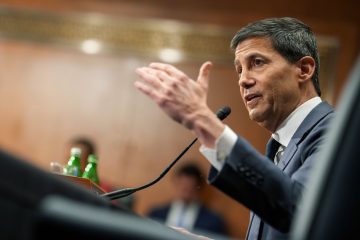
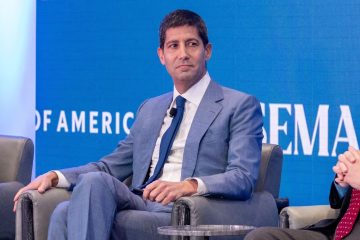
Inflation presents a more significant and enduring challenge than the Federal Reserve has acknowledged, necessitating a response through increased interest rates, according to a cohort of committee members responsible for rate-setting, as stated on Friday. For several months, the conflict in Iran has contributed to instability in the global energy market, resulting in increased petrol prices in the United States. The Fed has no control over that; however, officials noted that it is not the sole source of inflationary pressures. The Fed on Wednesday maintained interest rates at their current level for the fifth consecutive meeting. However, three officials – Fed presidents Beth Hammack of Cleveland, Neel Kashkari of Minneapolis, and Lorie Logan of Dallas – expressed dissent, advocating for an increase in rates by a quarter point. In distinct statements on Friday, each articulated their reasoning for diverging from the majority. Rising energy costs present a significant challenge for the Federal Reserve. Higher fuel costs impact numerous sectors of the economy, influencing shipping prices for groceries, airfares for vacations, and even the petrol expenses that enable Americans to commute to work.
However, interest rates, which serve as the Federal Reserve’s primary instrument to address inflation, cannot facilitate the reopening of the Strait of Hormuz or restore oil supply, which is the underlying issue contributing to the increase in oil prices. But the inflation pressures may already be spreading into the demand side of the economy, Hammack said in her statement: “Businesses describe pricing pressures as broadening rather than fading, and consumers are expressing despair over persistently higher prices.” And the current level of borrowing costs isn’t keeping growth and inflation in check, Logan suggested, writing “labor, consumption and financial market conditions indicate that monetary policy is not restraining the economy.” Kashkari also pointed to the influence of AI spending on inflation: “massive investment in data centers has also added a new demand element to the high inflation Americans are experiencing.” Hiking interest rates would carry less risk than waiting too long allowing inflation to become “entrenched” in the economy, he added. In June, the annual inflation rate decreased to 3.7%, down from 4.1% in May, according to the Personal Consumption Expenditures price index. However, this figure remains significantly above the Federal Reserve’s target of 2%.
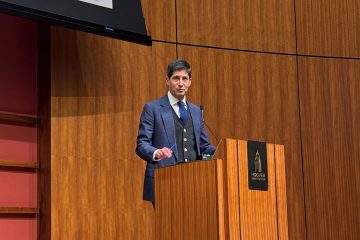
Inflation has persisted above that threshold for five consecutive years, as all three Fed dissenters pointed out on Friday. That indicates a compounding effect of price increases over time: In June, consumer prices rose by 20.8% compared to the same month five years prior, as reported by Commerce Department data. “Every month of above-target inflation compounds the strain on the budgets of American families and businesses,” Logan said. Dissents under former Fed Chair Jerome Powell were infrequent; however, they began to rise during the second Trump administration as economic uncertainty escalated. At the May meeting — Powell’s final as Fed chair — Hammack, Kashkari, and Logan expressed dissent, arguing that officials ought to have indicated that rate hikes are a possibility. Current Fed Chairman Kevin Warsh has expressed a desire for a “family fight,” advocating for an environment where individuals can disagree — even vocally. However, Warsh has not indicated his position on the interest rate outlook, asserting that providing forward guidance limits the Federal Reserve’s future choices. That makes dissents potentially the most reliable indicator of the direction in which rates may be moving. “Dissents are the new forward guidance,” James Bianco, wrote on social media.
Federal Reserve officials have maintained their benchmark lending rate within a range of 3.5%-3.75% across all five policy meetings held in 2026 to date. The Fed has traditionally held what’s known as the “dual mandate” of maintaining high employment and low inflation. However, both Hammack and Kashkari articulated in their statements that the balance has shifted excessively towards the inflationary aspect. The labour market in 2025 experienced job additions at a notably sluggish rate; however, job growth accelerated in the first half of this year, with the unemployment rate remaining stable at a low 4.2%, as reported by Labour Department data. “Given the stability of the labor market, with the unemployment rate near my estimate of maximum employment, I view high inflation as the more pressing problem,” Hammack said Friday.