US Payrolls Expected to Rebound as Labor Market Stays Soft
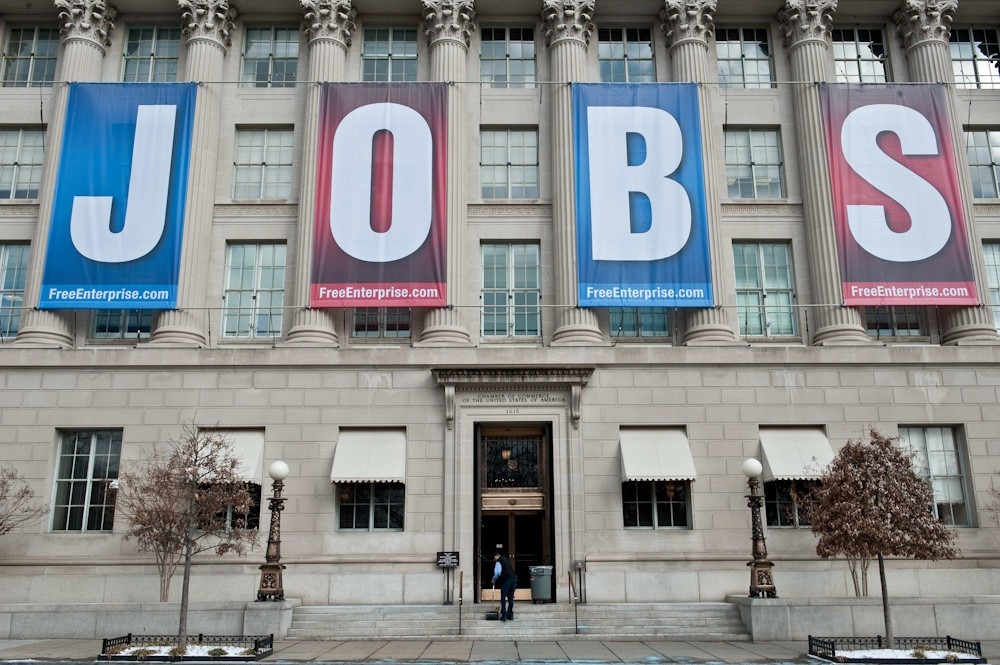
US payrolls growth is expected to have rebounded in August, as the negative impact from local government education has reversed. However, this anticipated recovery may be constrained by job losses stemming from the termination of Temporary Protected Status for Haitian immigrants. The Labour Department’s closely watched employment report on Friday is anticipated to illustrate a labour market that analysts describe as being in a “slow hire, slow fire” mode, with the unemployment rate projected to have remained stable at 4.1 percent last month. Labour market momentum has slowed following a significant increase in the spring, with contributing factors including the oil price shock and supply chain disruptions stemming from the US-led conflict with Iran. Job growth was impeded by President Donald Trump’s extensive import tariffs in 2025. “Businesses felt some of the problems from 2025 were behind, then all of a sudden we get another black swan event that introduces a new set of uncertainties,” said Brian Bethune. “We saw significant problems with supply chains, oil and fuel prices went up, and that situation has not changed. So that’s why the job numbers have dropped from what we saw in the first few months.”
Nonfarm payrolls are expected to have risen by 56,000 jobs last month, following a decline of 23,000 in July, as indicated by a survey of economists. Estimates varied significantly, with projections indicating a potential loss of 25,000 jobs at the lower end and a gain of 121,000 jobs at the upper end. August payrolls often fall short of expectations, attributed by economists to a seasonal anomaly during the summer months. In July, local government education employment experienced a decline of 49,600, with expectations for a rebound to support payroll figures in August. A recovery was also anticipated in the leisure and hospitality industry following a two-month period of job losses. Economists, however, warned that those gains might be counterbalanced by the end of TPS for hundreds of thousands of Haitian immigrants, which affected their work permits. “We are assuming a 15,000 drag on payrolls from the revocation of Temporary Protected Status for unauthorized Haitian immigrants,” said Michael Gapen. “It could be much larger. The TPS-affected Haitians account for an estimated 160,000 of national payrolls.” The drag, which some analysts suggested could be temporary, would be evident in labour-intensive services sectors such as healthcare, primarily in caregiving. Some immigrants who have lost their Temporary Protected Status may transition to alternative visa categories. “If payroll employment in August is a bit weaker than we expect, we would not necessarily dismiss weakness as only a result of the TPS expiration, as other data like hiring plans have been soft,” said Veronica Clark.
The Trump administration is implementing stringent measures on immigration, characterised by increased deportations and the revocation of Temporary Protected Status, thereby contracting the labour pool. That has significantly diminished the number of jobs that must be generated to sustain alignment with the expansion of the working-age demographic, as indicated by economists. Economists project the break-even rate to fall within the range of zero to 50,000 jobs per month. Reduced labour supply, also the result of retirements, is keeping the unemployment rate lower, though some economists expected the jobless rate to rise to 4.2 per cent in August, arguing the recent drop in the labour force participation rate was excessive. “Participation has fallen a full percentage point since the start of the year, a decline that appears outsized relative to broader labor market conditions,” said Gregory Daco. “The drop mainly reflects reduced population growth, aging demographics and rising retirements, and lower immigration flows.” Barring a shock, August’s employment report was unlikely to impact the Federal Reserve’s interest rate decision at the US central bank’s September 15-16 policy meeting, with the focus on next week’s Consumer Price Index report.
The labour market does not serve as a catalyst for inflation, as annual wage growth is projected to have decelerated to 3.0 percent last month, down from 3.2 percent in July. Fed Governor Christopher Waller indicated that he would support maintaining steady rates this month, contingent upon forthcoming data affirming a reduction in inflation pressures. Financial markets indicated a 50 percent probability of a rate hike this month, a decrease from 63.2 percent observed on Wednesday, as per CME’s FedWatch tool. Concerns regarding inflation and the absence of forward guidance from the Fed have contributed to an increase in US Treasury yields, which analysts indicated poses a challenge for the central bank. Rising yields have propelled the 30-year fixed mortgage rate to a peak not seen in over a year, reaching 6.71 percent this week, according to data from mortgage finance agency Freddie Mac released on Thursday. This increase could exacerbate the challenges faced by an already struggling housing market. “The markets have already dialed in tightening on the yield curve; we got 75 basis points of tightening and that’s going to slow down the economy,” said Boston College’s Bethune. “One of the reasons the long-term rates have been going up is because it’s pricing in uncertainty about what the Fed is going to do. That uncertainty is connected with political intimidation.”