Banks Pursue Risky Chip Loans Amid Asia’s $8.2 Trillion AI Surge
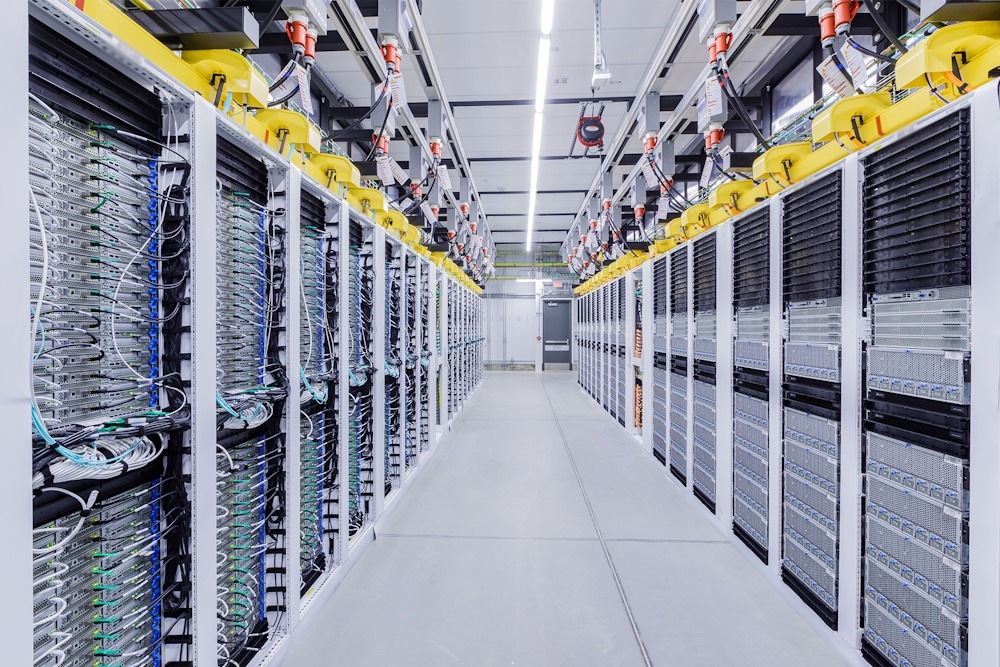
The forthcoming surge in artificial intelligence debt financing is gaining momentum in Asia. Companies constructing numerous data centers throughout the region are concurrently pursuing financing to acquire the sophisticated computer chips necessary for their operation. In the United States, there has been a significant increase in borrowing for the acquisition of graphics processing units. Conversely, in Asia, the limited number of such loans has predominantly been associated with private credit funds that are prepared to assume greater risk. Currently, banks are increasingly at ease with GPU financing, thereby substantially expanding the capital pool accessible for the forthcoming stage of the AI competition. That money will be crucial, as PricewaterhouseCoopers LLP estimates that Asia’s spending on data centers could reach $8.2 trillion by 2050, with the vast majority allocated to hardware, including GPUs and servers. In recent months, banks have been instrumental in facilitating GPU loans amounting to approximately $3.8 billion to GMI Cloud, along with two other AI infrastructure providers, Zankore and PaleBlueDot AI. Citigroup Inc. served as the exclusive debt adviser for Zankore’s $3.1 billion borrowing in Indonesia, whereas JPMorgan Chase & Co. acted as the placement agent for the credit facility secured by PaleBlueDot AI.
Half a dozen bankers and financial advisers across Asia indicated that they were either in discussions regarding or aware of additional financing arrangements associated with GPUs. However, lending remains in its infancy due to apprehensions surrounding the long-term valuation of the chips and the evaluation of risks related to geopolitical tensions and artificial intelligence itself. They requested anonymity while discussing confidential matters. “As deal sizes grow and borrowers push for more competitive pricing, banks will be increasingly important,” said Eric Tan. But GPU financing also exposes lenders to “rapid depreciation, technology obsolescence and volatile rental rates” due to how quickly the technology changes, he said. Among traditional lenders that have entered the realm of Asian GPU financing, global investment banks have emerged as the primary participants due to their proficiency in navigating the intricate structures, as indicated by sources. According to one banker, certain US lenders have engaged specialists from their headquarters to evaluate chip valuations.
Citigroup, JPMorgan Chase, Barclays Plc, Deutsche Bank AG, Banco Santander SA, and Japan’s Sumitomo Mitsui Banking Corp. are presently assessing GPU-linked loans, as reported by sources. GMI Cloud is currently engaged in discussions with banks and private lenders regarding a new loan amounting to $300 million, intended for the procurement of chips for its data center in Thailand, according to sources. Representatives for Citigroup, Barclays, and Deutsche Bank refrained from providing any comments. JPMorgan, Santander, and SMBC have yet to respond to enquiries for comment. Nonetheless, Asian banks are beginning to increase their activity in this sector. Singapore’s United Overseas Bank Ltd., which jointly underwrote Zankore’s $3.1 billion loan with four other banks, is now leading discussions as the data center operator seeks to secure an additional $6 billion from financial institutions, as stated by Zankore Chairman Vikram Sinha. Working with banks is “the right way” because Zankore will need to keep raising money as it expands its AI data center capacity by 10 times to 1 gigawatt, Sinha said at a conference on Sept. 22. “We were very clear [about] the scale we are looking at. We wanted to go the hard way – we wanted to work with banks and a bank syndicate.”
As banks increasingly serve as a significant source of funding, companies aiming to secure loans for chip acquisitions will need to demonstrate more convincingly that their projects will yield sufficient revenue to fulfilll their repayment obligations. Traditional lenders are expected to adopt a more cautious approach to underwriting and increase their requirements for debt service reserves. Mike Arougheti, who oversees Ares Management, one of Asia’s largest private credit lenders, has indicated that his firm is maintaining stringent standards despite the significant funding gap in GPU financing amid the AI boom. “You have to be leading with your risk appetite and not your appetite to deploy,” Arougheti said. “No one could really articulate, at least to me, what the depreciation curve looks like for that technology,” he said, adding that returns are limited and usually only around 100 to 200 basis points higher than other kinds of AI infrastructure lending. GPU loans in Asia have predominantly adhered to a framework established by CoreWeave Inc., a pioneer and significant player in the utilisation of this financing model. In numerous transactions, the repayment of loans is facilitated through the revenue generated from the sale of a data center’s computing power. Customer contracts and the chips themselves frequently act as collateral for the loans.
For a lender, the critical inquiry revolves around the reliability of customers and the duration of the contracts. Transactions supported by Nvidia Corp. have consistently been a straightforward affirmative. In the recent transactions involving GMI Cloud and Zankore loans, the US technology giant committed to acquiring any unsold computing capacity, thereby offering a safeguard in the event that customer contracts do not materialise. In exchange, the firms involved in Nvidia’s cloud partner program will impose elevated prices on purchasers compared to Nvidia’s assured rate and will distribute a portion of their revenue with Nvidia. Major Chinese tech companies have emerged as a significant driver of demand for computing power in Asia. According to a loan banker at a European lender, they represent a relatively secure investment as they have the capacity to attract Chinese banks. Tencent Holdings Ltd. is expected to be the end user of the chips that GMI Cloud intends to purchase for its data center in Thailand, according to sources. Xiaohongshu was poised to acquire computing capacity from chips procured by PaleBlueDot AI for its initiative in Japan, according to sources.
However, Chinese clients also bring their own complexities. The US has implemented restrictions on chip exports to mainland China and is currently contemplating new legislation designed to limit Chinese companies’ remote access to Nvidia chips through cloud computing. This would prevent them from renting computing capacity situated in other nations. “Large Chinese hyperscalers generally have strong credit quality,” said Yijing Ng. However, banks will have to conduct more due diligence to ensure they’re complying with regulations and the ultimate users of the computing power aren’t violating any sanctions or restrictions, she said. At the same time, the existential debate about AI’s dangers and the need to impose guardrails on its growth will continue to influence risk assessments. “The markets are likely to take a while to find an equilibrium,” said Tan. “Deal structures may tighten up, sovereign support may come into play and the model for deals will evolve as a result.”