Trump’s Hormuz blockade targets China and Iran
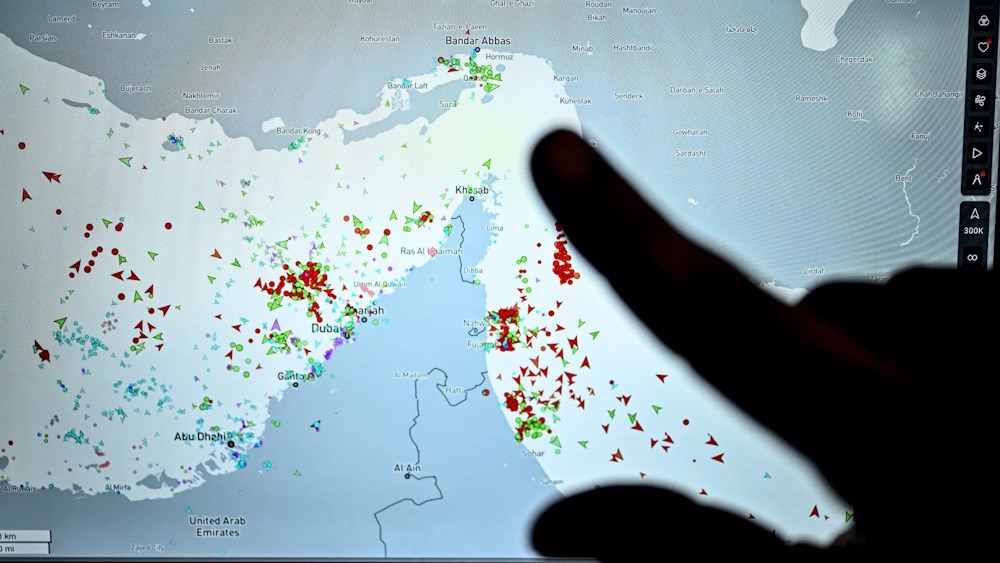
The existence of the black market for Iranian oil is fundamentally tied to China. Prior to the onset of the Iran war, Beijing acquired 95 percent of all the crude oil that Tehran exported through a complex web of sanctioned tankers, enigmatic traders, and obscure financial connections. Thus, President Donald Trump is not solely focusing on Tehran with his blockade of the Strait of Hormuz — he is also directing his efforts towards Beijing. On Monday, the United States announced that vessels operating in Iranian waters would face the possibility of “interception, diversion and capture.” If its navy enforces a blockade on ships entering and departing Iranian ports and coastal areas east of the Strait of Hormuz in the Gulf of Oman and Arabian Sea, Tehran will be unable to export a single barrel of oil. The calculus in Washington seems to have two dimensions: First, impose an unbearable economic burden on Iran; second, compel China to endure a portion of the suffering. If Beijing has more at stake, perhaps it will exert pressure on Tehran to engage in negotiations, or so the theory suggests. The calculations regarding oil, however, are formidable. Tehran likely anticipated that its oil exports would cease during a conflict with the US, particularly if it decided to close the Strait of Hormuz.
However, seven weeks into the war, and despite the closure of the waterway, Iran has experienced a financial boon rather than the anticipated economic hardship. Throughout over 40 days of conflict, Washington has permitted Tehran to load an unlimited number of oil tankers, benefiting from the surge in prices. An even bigger gift was the White House temporarily lifting sanctions on Iranian barrels; rather than having to sell crude at a discount, the Islamic Republic was able to charge a premium. Based on my preliminary calculations, Iran was generating approximately $100 million daily from its crude oil sales prior to the war. Since February 27, that figure has increased to approximately $175 million per day. Indeed, Iran has faced challenges in repatriating a portion of the windfall as a result of banking sanctions. However, the additional funds have been substantial enough to enable Iran to establish a buffer. What is the size? According to calculations, the extra funds gathered during the conflict amount to roughly a month’s worth of pre-war oil revenue. If the US enforces the blockade, the Iranian economy will endure a significant setback in addition to the devastation caused by the war; Tehran will be compelled to begin closing oil wells in the coming days and weeks as its storage tanks reach capacity.
However, it remains to be seen whether that economic hit will lead to a more conciliatory negotiation approach. Attempts to target Iranian oil revenue have been made previously — and they were unsuccessful. During the period of 2020-2021, as Trump initiated a maximum pressure campaign of sanctions, Iranian crude exports fell to under 250,000 daily barrels for several months, coinciding with a decline in oil prices attributed to the pandemic’s effects. Even accounting for some exports going unnoticed, Iran was generating no more than $10 million a day from crude sales — and it still remained resilient. What is the situation in China? To date, it stands as the Asian nation that has been least impacted by the war. Prior to the onset of the conflict, Beijing sourced over 11 percent of its oil from Iran, ranking just behind the 20 percent imported from Russia and the 14 percent from Saudi Arabia. The Iranian barrels have persisted in their flow, ensuring that Beijing remains relatively well supplied compared to its neighbors. The American blockade of the Iranian ports would alter that dynamic. China has already lost at least a fifth of its oil imports, despite the Hormuz bypass measures implemented by Saudi Arabia and the United Arab Emirates. Soon, Beijing would encounter a more significant shortfall. The only option available would be to tap into its strategic petroleum reserve, a course of action it has largely avoided until now. In the last ten years, China has established the largest oil emergency stockpile globally — a complex array of strategic and commercial reserves exceeding one billion barrels.
Washington likely anticipates that Beijing will persuade Iran to moderate its demands during negotiations, as it has successfully done in the past: In 2023, it facilitated an agreement between Saudi Arabia and Iran. However, the majority of the influence that Beijing held over Tehran was based on the financial transactions for oil — a situation that will cease if the blockade interrupts exports. “The current ceasefire is highly fragile, with the region at a critical turning point,” stated China’s Foreign Minister Wang Yi on Monday. “The immediate priority is to prevent a resumption of hostilities and sustain the hard-won truce.” The Chinese Communist Party may choose to adopt a wait-and-see approach, leveraging its reserves instead of feeling pressured to facilitate a lasting ceasefire. Given the volume of crude it has accumulated — possibly in anticipation of a potential crisis surrounding Taiwan — Beijing is in a position to forgo Iranian supplies for several weeks. Even a two-month embargo would result in China depleting its emergency reserves by approximately 10 percent. The calculations regarding oil are decidedly unfavorable for the White House. The blockade faces a minimal likelihood of success. With apologies to John Maynard Keynes, Iran can maintain its defiance — and China its indifference — longer than Trump can sustain his financial stability.