China’s hold on rare earth markets is weakening
Each instance of China tightening its control over rare earths prompts the global community to enhance its capabilities in sourcing these critical materials. Rare-earth permanent magnets — which assist in securing charging cables to laptops, attaching mobile phones to mounting devices, and ensuring earbuds fit into their cases — have emerged as a pivotal front in China’s trade conflicts with its competitors. Beijing employed export controls on the devices to compel US President Donald Trump into a significant retreat regarding his Liberation Day tariffs last year. The same tactic is being employed against Japan in the wake of a diplomatic dispute with Tokyo. It is compelled to refine its focus, as the global landscape is reacting similarly. Approximately 15 years ago, the majority of rare-earth elements were extracted and processed in China; however, years of comparable threats have markedly altered that landscape. Nearly one-third of total production is now conducted in foreign nations, prompting Beijing to concentrate on the most elusive rare earth elements. Neodymium and praseodymium, the elements responsible for the magnetic properties of many household devices, are increasingly abundant, rendering any credible threat to their availability unlikely. Consequently, attention has turned to three increasingly scarce elements: samarium, dysprosium, and terbium. Conventional rare-earth magnets exhibit a decline in effectiveness at elevated temperatures. Therefore, in performance applications such as electric-vehicle motors, wind turbines, guided missiles, and aeronautics, it becomes necessary to supplement or replace them with the so-called heavy rare earths, or HRE.
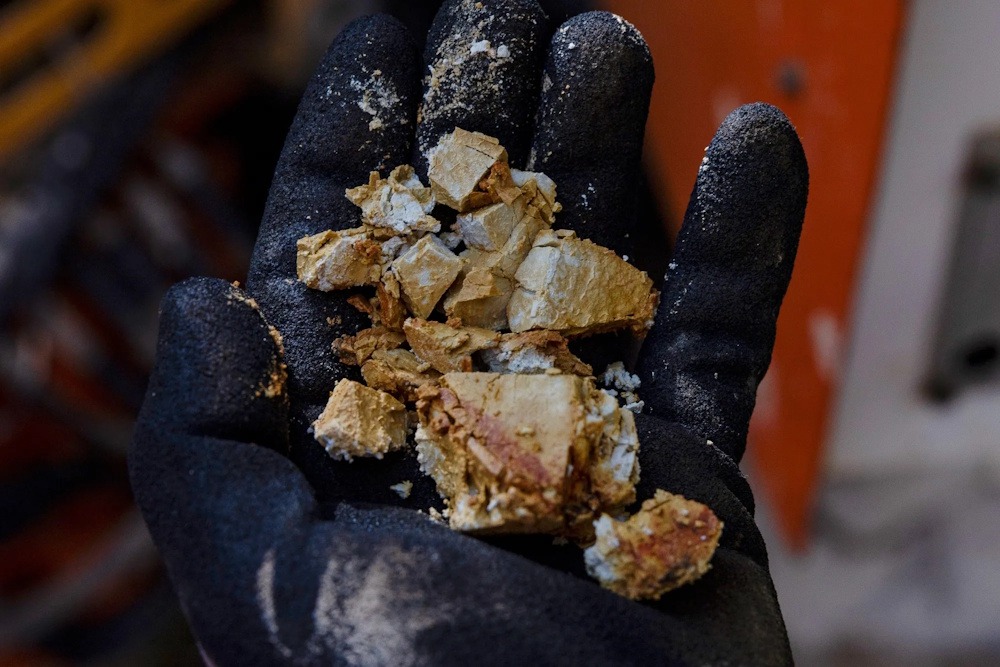
Reflecting on a decade ago, the prevailing consensus among geologists would have indicated that this manoeuvre represented a definitive checkmate for China. HRE represent a geological anomaly. Similar to vibranium, the rare element in the Marvel universe located exclusively in the fictional African nation of Wakanda, unique formations were discovered to exist in a singular location on Earth: Longnan, a remote area in southern China. It was here that geologists, during the peak of the Cultural Revolution in 1969, stumbled upon one such deposit. At present, that assumption appears considerably less assured. Scientists demonstrate remarkable ingenuity in devising solutions to problems that appear to be insurmountable. Industrial chemists address scarcity through the utilisation of alternative materials, as evidenced in recent years with the transition from cobalt in lithium-ion car batteries to the more abundant phosphate. Geologists meticulously examine the globe, revealing that what was once perceived as scarce is, in fact, not as rare as previously believed. It is the latter process that we are currently observing in the case of HRE. The type of formation found in Longnan is certainly rare; however, it is not without precedent. Characterised as an ionic-absorption clay, this material generally develops as a result of extensive heavy tropical rainfall that erodes granite mountains over the course of millions of years.
The process leads to the transportation of heavy rare earth elements to the valley floor, where the weathered rock acts as a geological sieve, effectively capturing these elements. Confronted with governmental limitations on production during the mid-2010s, miners from China were among the earliest to seek opportunities beyond their borders, identifying and capitalising on lucrative deposits in Myanmar’s conflict-affected Kachin state. Those mines may already be yielding more HRE than Chinese pits, accompanied by the various environmental issues inherent to the small-scale nature of the industry. Better-regulated work is being implemented in other regions. In Brazil, the Boston-based private equity firm Denham Capital Management LP dedicated a significant portion of the 2010s to the development of a clay deposit located in the central region of Goiás state. Following the investment from former Xstrata Plc Chief Executive Officer Mick Davis and the commencement of production in 2024, the mine is now being acquired by magnet producer USA Rare Earth Inc. under a $2.8 billion agreement disclosed in April. That may be just the beginning. A study conducted last year confirmed the presence of ionic deposits across four continents, including Madagascar, Malawi, and Uganda, as well as in Chile and Australia, in addition to previously identified sites. Evidence of their presence can also be found in Malaysia, Thailand, Vietnam, and even Finland.
Firms located outside of China that possess the necessary expertise in ore processing are currently developing separation circuits aimed at isolating dysprosium, terbium, and samarium. Lynas Rare Earths Ltd. and Neo Performance Materials Inc. have commenced commercial production. MP Materials Corp. and USA Rare Earth’s partner Carester SAS anticipate operational readiness within a few months. That represents a substantial endorsement of upstream mining operations. The primary investment thesis for these processing enterprises lies in their autonomy from China’s rare-earth supply chain. There is minimal justification for investing in such equipment if they will rely on China and its associates in Myanmar for their raw materials. All this activity serves as a cautionary signal for those who might attempt to obstruct the global movement of minerals for geopolitical advantage. In its efforts to restrict access to rare-earth magnets for competitors, China is unintentionally fostering the development of a global industry that will ultimately increase their availability significantly.