SpaceX IPO catapults Elon Musk to the world’s first trillionaire
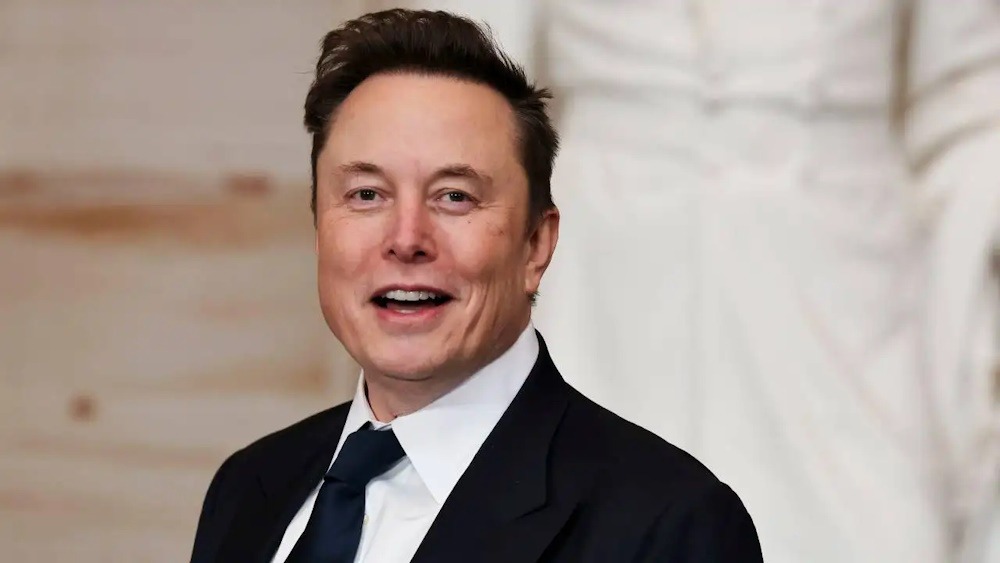
Few business leaders have been as intricately woven into the fabric of popular culture as Elon Musk, the enterprising visionary who has emerged as a pivotal figure in internet culture and accumulated a wealth that positions him as the world’s first trillionaire. At a time when concerns about inequality are prevalent and public sentiments toward the ultra-wealthy have declined, Musk has successfully maintained a devoted following despite his astronomical net worth and lacking the relatable persona that has charmed other magnates like Warren Buffett to the general public. While supporters see Musk’s unfiltered approach as a key aspect of his charm, detractors have criticised him for exercising oligarchic influence, expressed worries regarding the governance of his enterprises, and opposed his growing involvement in partisan politics. Still, SpaceX, the expansive rocket, satellite, and AI enterprise that, along with electric vehicle manufacturer Tesla, constitutes the core of Musk’s empire, secured a remarkable $75 billion in its initial public offering on Thursday, underscoring investor enthusiasm for his business endeavours.
Before the share sale, it was estimated his net worth at approximately $780 billion, significantly surpassing that of the individual in second place, Alphabet co-founder Larry Page. “The second richest person has been hovering around $300 billion, so about less than one-third of what Musk can potentially be worth tomorrow,” said Matt Durot. And only one other individual, (Oracle founder) Larry Ellison, has ever reached a net worth of $400 billion. Most of Musk’s wealth is currently tied to SpaceX, where his stake is valued at approximately $866 billion. Along with Tesla and the rest of his properties, his net worth is projected to surpass $1.1 trillion when trading commences on Friday, as per calculations from Forbes and Reuters based on company filings. Musk rose to prominence with Tesla and SpaceX, subsequently broadening his impact with the $44-billion purchase of social media platform Twitter in 2022. The agreement provided him with a direct connection to hundreds of millions of users and established him as a significant voice on topics spanning politics, immigration, government expenditure, and free speech. His transition into the political arena, especially his involvement in U.S. President Donald Trump’s Department of Government Efficiency last year, has been one of his most controversial undertakings. The political fallout coincided with declining Tesla sales in various international markets in 2025 as protests and consumer boycotts focused on the electric vehicle manufacturer.
Musk, 54, hails from Pretoria, South Africa, where he was born to a Canadian mother and a South African father. He graduated from the University of Pennsylvania in 1997. He assumed the role of CEO at Tesla in 2008, driven by the belief that electric vehicles could merge exceptional performance with software-enhanced capabilities, thereby transforming the global automotive landscape. Some observers of the auto industry suggest that Tesla’s achievements – along with its market capitalisation exceeding a trillion dollars – have motivated conventional automakers to shift towards electric vehicles. Many investors are wagering that he can replicate the success in space and artificial intelligence. Yet SpaceX continues to seek substantial funding, and a significant portion of the company’s valuation is based on technologies that could take years or even decades to achieve commercial viability. In addition to Tesla and SpaceX, Musk has established five additional ventures, such as the tunnelling enterprise The Boring Company and the brain implant innovator Neuralink. As the leader of Tesla, Musk has attracted both controversy and acclaim in equal measure. He is recognised for transforming Tesla into the most valuable automaker globally. Executives at legacy automakers have long downplayed the threat, expressing scepticism that a startup car company could successfully navigate the complexities of mass-producing electric vehicles in a profitable manner. “He renewed the world’s respect for American ingenuity in automotive engineering,” said Bob Lutz.
At the same time, Tesla has encountered legal challenges and shareholder apprehensions related to its prominent CEO, especially regarding his 2018 compensation package, which was valued at $56 billion. Musk’s influence has become so pervasive that market observers have dubbed the network of businesses around him the “Muskonomy.” The phenomenon has led to what certain investors refer to as the “Elon premium,” a valuation enhancement influenced as much by confidence in Musk’s vision as by conventional financial indicators. “Much like Tesla, SpaceX is a bet on Elon Musk,” said Matt Kennedy. “A market cap of $1.5 trillion-$2 trillion would certainly throw all traditional valuation methodologies out the window, and is instead best characterized as the ‘Elon Musk premium.'” The concentration of influence surrounding a single entrepreneur has heightened apprehensions regarding corporate governance, potential conflicts of interest, and the dangers of closely linking company fortunes to one individual. Over the years, Musk has transformed confrontations with regulators, billionaires, short sellers, journalists, and media organisations, including Reuters, into ongoing public disputes that frequently played out on social media.
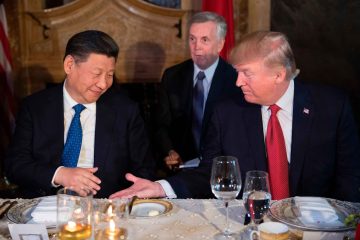
Musk’s partnership with Trump adhered to a well-established trend. Following his financial support for Trump’s bid to reclaim the presidency and his involvement in a senior advisory capacity during the administration’s DOGE initiative, Musk emerged as one of the president’s most trusted corporate partners. The relationship subsequently deteriorated due to disagreements regarding policy and expenditure, leading to a public dispute. Although the two have since adopted a more amicable approach, their disagreement underscored the progressively indistinct boundaries between Musk’s commercial ventures and his political aspirations. Yet for numerous investors, apprehensions regarding Musk’s frequently unorthodox conduct are eclipsed by his history of transforming bold concepts into some of the most valuable enterprises globally. “Elon is the Edison of our time,” JPMorgan Chase CEO Jamie Dimon stated in a recent discussion with Musk. The banker, who once found himself in a prolonged legal battle against Musk, has now transitioned into an admirer of his work. Dimon expressed last year that the two had “hugged it out,” and praised Musk as “our Einstein.”