Artemis III to Test the Future Lunar Economy
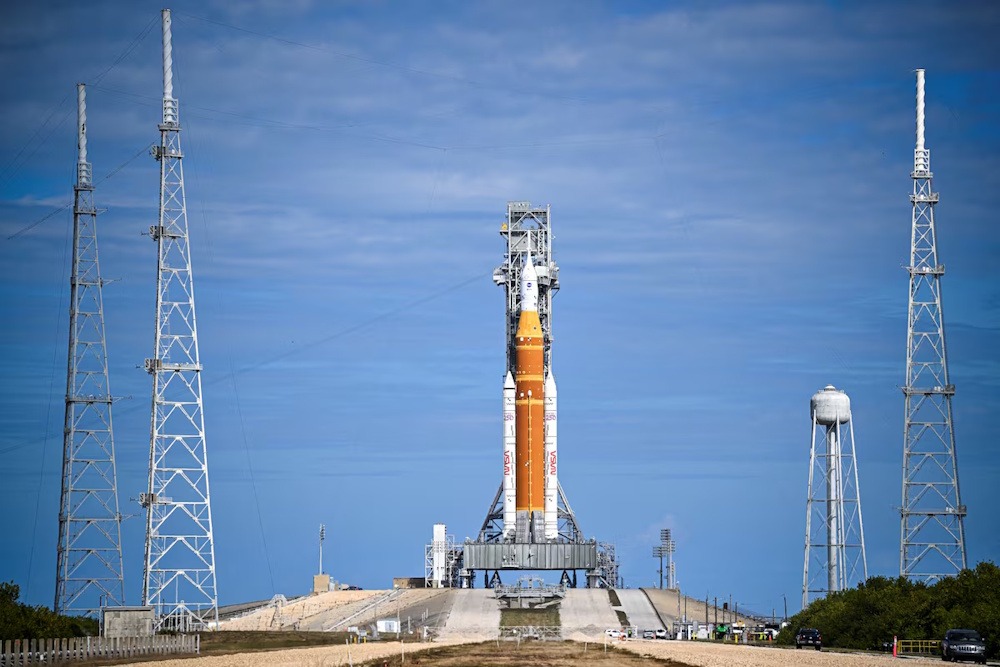
When Nasa unveiled the four-member crew for its Artemis III mission this week, the attention understandably shifted to the astronauts tasked with advancing America’s lunar aspirations. However, the true narrative is situated in a different context. For the first time in its history, Nasa’s next major Moon mission is not primarily focused on exploring new frontiers. Instead, it concerns demonstrating whether private enterprises possess the capability to construct and manage the infrastructure essential for a sustained human presence beyond Earth. Scheduled for 2027, Artemis III is set to not land astronauts on the Moon. Instead, it will evaluate intricate rendezvous and docking manoeuvres involving NASA’s Orion spacecraft and the commercial lunar landers under development by SpaceX, founded by Elon Musk, and Blue Origin, established by Jeff Bezos. The mission aims to validate the systems that will be essential for future lunar landings.
The Artemis mission signifies a pivotal transformation in NASA’s function. During the Apollo era, NASA designed, built, and operated nearly every critical element of its missions. Under Artemis, the agency increasingly functions as a client procuring transport and delivery services from private enterprises. Nasa’s revised Artemis framework depends on commercial human landing systems created by SpaceX and Blue Origin. Artemis III will function as the inaugural in-space evaluation of these systems, positioning the mission as both a commercial showcase and a governmental spaceflight initiative. The agency has adopted a similar framework for cargo deliveries to the Moon via its Commercial Lunar Payload Services programme, wherein private enterprises are compensated for transporting Nasa instruments and equipment to the lunar surface. Nasa states that the programme has a maximum contract value of $2.6 billion through 2028. The commercialisation of lunar exploration extends beyond merely decreasing government expenditures.
Nasa and its partners envision a future where private firms will deliver transportation, communications, cargo delivery, surface mobility, power systems, and habitation services on the Moon. The agency’s plans are increasingly focused on establishing a sustained presence near the lunar south pole, where future missions could extract water ice for life support and rocket fuel. Such capabilities would establish the groundwork for a more extensive cislunar economy — the economic zone encompassing Earth and the Moon. In this framework, government agencies serve as primary clients, while commercial operators create services that may ultimately be marketed to a diverse range of purchasers, encompassing international space agencies and private sector entities. Interestingly, the original Artemis plans included the construction of a moon-orbiting space station known as Gateway. However, Nasa Administrator Jared Isaacman last year cancelled the plan and asked the agency to focus on building a lunar surface base instead, according to a source. Artemis III has evolved into a significant competition among two of the wealthiest entrepreneurs globally.
SpaceX’s Starship Human Landing System and Blue Origin’s Blue Moon lander are anticipated to be pivotal components in NASA’s lunar initiatives. Artemis III is set to evaluate one or both commercial landers in Earth orbit prior to their deployment in forthcoming lunar missions. Nasa officials have recognised that the success of the mission is significantly contingent upon the preparedness of both companies. Delays or technical setbacks at either firm could influence the overall Artemis timeline. Nasa stays optimistic that commercial partners will overcome recent challenges to deliver essential systems, according to source. The economic ambitions extend far beyond a singular lunar landing. Nasa recently outlined plans involving cargo landers, lunar rovers, scientific payload deliveries, and the gradual development of infrastructure that could support a permanent presence on the Moon. The agency’s inspector general has characterised commercial partnerships as pivotal to initiatives aimed at fostering a burgeoning space economy.
Apollo: A Strategic Move in the Cold War Space Race Artemis: Building the Future of Space Economy Artemis III Crew Unveiled: Four Astronauts Announced! The mission’s success hinges equally on companies, contracts, and commercial spacecraft. If successful, NASA could showcase a model where governments don’t have to build every component of deep-space exploration independently. They buy services from competing private providers, similar to how airlines purchase aircraft or logistics firms acquire shipping capacity. Artemis III: More Than Just a Moon Mission A test of turning a lunar economy from fiction to reality.