Kimi subscriptions suspended by Moonshot AI due to demand
Chinese startup Moonshot AI has temporarily halted new subscriptions following a surge in demand for its recently launched Kimi K3 model, which has created a capacity bottleneck. This development occurs as the company pursues additional funding and gears up for a possible listing in Hong Kong. Moonshot is currently unwinding its offshore structure in preparation for a Hong Kong initial public offering, according to two sources familiar with the situation. The company has engaged financial advisers including Goldman Sachs and China International Capital Corp to discuss the IPO plan. However, the timetable remains fluid, according to one source. CICC has yet to provide a response to the inquiry for comment. Goldman Sachs and Moonshot refrained from providing any commentary. Founded in 2023 by Yang Zhilin, an AI researcher who pursued doctoral studies at Carnegie Mellon University in Pittsburgh, Moonshot has emerged as one of China’s most closely monitored AI startups. In May, the company secured over $2 billion from investors such as Meituan, China Mobile, and CPE, as indicated by a fundraising teaser. This achievement elevates the total historical fundraising to more than $5.5 billion.
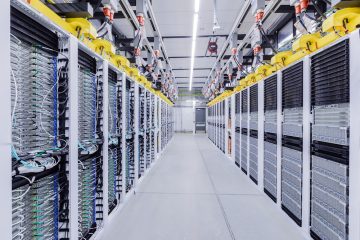
It has since commenced efforts to secure up to $2 billion in new capital, with its valuation having reached $30 billion in June, as indicated by the teaser. Robust demand for more advanced models is enhancing investor interest in China’s top AI startups; however, it simultaneously escalates the requirement for expensive computing infrastructure. Moonshot’s competitors, including DeepSeek, have recently sought external capital to expand compute capacity as Chinese AI firms strive to close the gap with their US counterparts. Moonshot stated on Sunday that following the release of Kimi K3, it has attracted significant user interest, resulting in “unprecedented compute challenges.” Over the past 48 hours, user requests have significantly surpassed projections and are nearing the capacity of current clusters, according to the company. Moonshot announced an immediate halt to new consumer subscriptions, reallocating its available computing resources to support existing paid users, who will remain unaffected by the current shortage. The company also stated it would divide future memberships into two plans, including one specifically for coding, a strategic decision intended to align compute resources more accurately with user demand.
Capacity constraints emerge in the wake of the Kimi K3 launch. The capacity crunch follows a strong reception for Kimi K3, which Moonshot unveiled on Friday as a 2.8 trillion-parameter model, making it the world’s largest open-weight AI system, according to the company. “Kimi K3 has received far more love than we expected, and our GPUs are feeling it,” Moonshot said on X, adding that new subscription spots would reopen in batches as capacity was added. Kimi K3’s dimensions and emphasis on coding and agent-style tasks result in higher costs for large-scale deployment, given that such workflows generally necessitate frequent model calls and substantial inference capacity. While open-weight models permit users to download and customise the underlying system, analysts suggest that few users are likely to host a model of Kimi K3’s scale independently due to the associated hardware costs.
Moonshot indicated that Kimi K3 exhibited competitive performance alongside prominent US models in certain technical tasks, while independent assessments have also highlighted its robust performance. The launch occurs concurrently with other Chinese AI firms like Z.ai and MiniMax introducing more advanced models at reduced prices, thereby challenging the prevailing notion that China’s model developers are trailing their US counterparts by several months. Alibaba, an investor in Moonshot, announced on Sunday that Qwen3.8-Max-Preview, its model boasting 2.4 trillion parameters, has made its debut on its AI platforms prior to a scheduled open-weight release. US export controls on advanced Nvidia chips have rendered access to computing power a significant limitation for these ambitious companies.