DeepSeek and Huawei develop semiconductor programming tools
Chinese AI firm DeepSeek announced on Wednesday its partnership with Huawei Technologies to develop programming tools optimised for Huawei’s Ascend chips. This collaboration represents a further indication of Chinese tech firms strengthening their connections as they explore alternatives to the Nvidia ecosystem. In a recent announcement on its official WeChat account, DeepSeek revealed its decision to open-source programming infrastructure for Huawei’s Ascend platform, which encompasses compute and communication libraries.
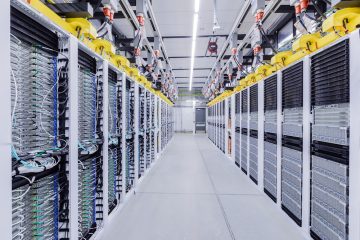
The announcement arrived two weeks subsequent to Huawei’s introduction of its next generation of AI processors and supernode computing systems, with the expectation that its AI systems will see widespread application for model training in the coming year. DeepSeek stated that Huawei offered comprehensive support in the development of the programming infrastructure, and the two firms collaboratively progressed a “supernode” solution utilising 128 Ascend 950 chips, enhancing both computation and communication.
DeepSeek also highlighted the role of TileLang, a high-level open-source programming language for AI chips, in enhancing development efficiency and streamlining code logic. “To build a new generation of independent, self-controlled GPU software ecosystems, the first priority is establishing a high-level language that is universal, easy to program, and still capable of reaching the hardware’s full performance potential,” DeepSeek said. “TileLang was created precisely to meet this need,” and offers “a simpler programming model” than Nvidia’s CUDA, DeepSeek said.