China’s Take on Elon Musk: Visionary, Sometimes Villain, Always Influential
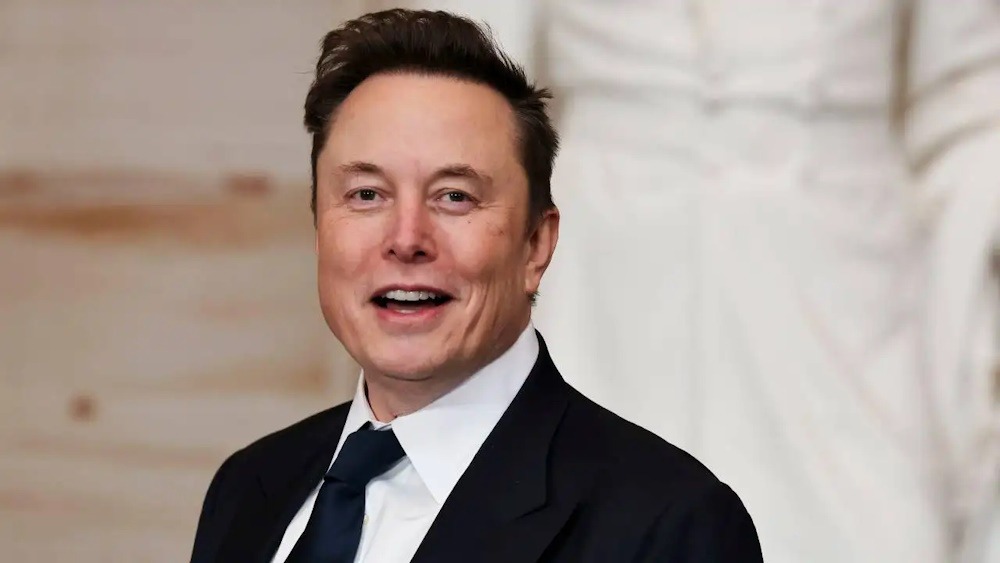
In China, Elon Musk has elicited both admiration and, at times, disdain. The CEO of Tesla has received acclaim as a visionary figure while simultaneously facing criticism from Chinese regulators and the public regarding the purported mishandling of customer complaints. Furthermore, the preeminence of SpaceX and its Starlink satellite division has provoked the discontent of the People’s Liberation Army. As the disparity between Tesla and its Chinese electric vehicle competitors diminishes, Musk faces the potential of diminishing prestige and influence. Musk joins a cohort of over a dozen CEOs and high-ranking executives accompanying US President Donald Trump to Beijing for a summit with Xi Jinping, including Apple’s Tim Cook and Nvidia’s Jensen Huang. The delegation primarily comprises executives aiming to address challenges with Beijing, and the world’s wealthiest individual is well-acquainted with the fluctuations inherent in conducting business with China. While exiting the Great Hall of the People on Thursday, Musk articulated his desire to achieve “many good things” in China in response to inquiries from reporters. Despite facing competition from local electric vehicle manufacturers in terms of technology and pricing, Tesla, along with Musk, continues to wield significant influence in China. According to Kyle Chan, this alignment is partly due to the convergence of Musk’s interests with those of Beijing. According to Chan, a close examination of Beijing’s technological priorities reveals a striking alignment with those championed by Elon Musk, particularly in areas such as electric vehicles, autonomous vehicles, artificial intelligence, humanoid robotics, brain-computer interfaces, and satellite technology.
According to Chan, Tesla’s self-driving technology remains the benchmark within the Chinese market. Chery, the electric vehicle manufacturer, derives its inspiration from industry leaders Tesla and Toyota, as articulated by its chairman, Yin Tongyue, during an interview last month. Chery, currently expanding its presence in Europe, seeks to combine Tesla’s commitment to innovation with Toyota’s dedication to quality, according to Yin. In 2018, Tesla achieved a significant milestone by becoming the first foreign automotive manufacturer permitted to establish a production facility in China independently, without the necessity of a local partner. Last year, it achieved sales of approximately 626,000 vehicles in China, positioning itself as the fifth-largest automaker in the nation regarding the sales of electric vehicles and plug-in hybrids, as reported by the China Passenger Car Association, an industry organization. According to company data, China represented approximately one-fifth of Tesla’s revenue last year. Tesla’s emphasis on engineering vehicles with an emphasis on battery efficiency and software capabilities is “definitely one of the biggest inspirations for many Chinese carmakers,” stated Felipe Munoz, an experienced automotive analyst. During the pandemic, as traditional automakers faced lockdowns and semiconductor shortages, Chinese firms focused on analyzing Tesla’s vehicles and developing their own iterations, according to Munoz.
Nonetheless, Beijing has expressed strong opposition to various aspects of Musk’s business empire. The near-monopoly that SpaceX maintains in lower-Earth orbit satellites, which offer cost-effective and dependable communications, alongside its significance in the ongoing conflict between Russia and Ukraine, has raised concerns in Beijing and prompted the development of domestic alternatives.The impressive efficacy of ‘Starlink’ satellites during the Russian-Ukrainian conflict is likely to encourage the United States and Western nations to deploy ‘Starlink’ extensively in potential hostilities across Asia, according to a September 2022 article co-authored by researchers at an engineering university affiliated with the People’s Liberation Army. Despite the prohibition of his X social media platform in China, Musk boasts 2.3 million followers on Weibo, where he has been celebrated on local social media as “a pioneer,” “Brother Ma,” and a “global idol” during previous visits. Even Musk’s mother has attained a degree of celebrity status in China. This week’s visit aligns with his intention to acquire $2.9 billion in equipment for solar panel manufacturing from suppliers in China, as reported in March. The endeavor may face complications as China contemplates imposing restrictions on the export of its most sophisticated technologies to the United States.
Tesla is pursuing regulatory approval to enhance the adoption of its Full Self-Driving assistance system. Musk has navigated strategically in China, given that it is the largest auto market globally and its extensive supply chains are crucial for sustaining his diverse business interests in electric vehicles, solar energy, and the space sector. In 2021, Tesla issued an apology to Chinese consumers due to its inadequate response to a customer’s complaints within an appropriate timeframe. A dissatisfied customer ascended a Tesla model at the Shanghai auto show to voice her grievances regarding the company’s response to her issues with malfunctioning brakes. This incident gained significant traction on Chinese social media and drew criticism from state media outlets. In 2021, security concerns regarding the cameras installed on Teslas led to a prohibition on their entry into military compounds. The lifting of that ban occurred subsequent to Musk’s visit to China in 2024, following the endorsement of its data compliance by the auto industry association. In the long run, the most significant challenge to Musk’s appeal in China may stem from the persistent growth of the domestic automotive sector. “As Chinese companies catch up or even overtake Elon Musk’s tech empire, his stature in China may start to dim,” said Chang Yan. However, he is expected to continue being a significant figure within China’s technology sector due to his achievements.