Trump’s filings reveal 3,700 stock trades in just three months
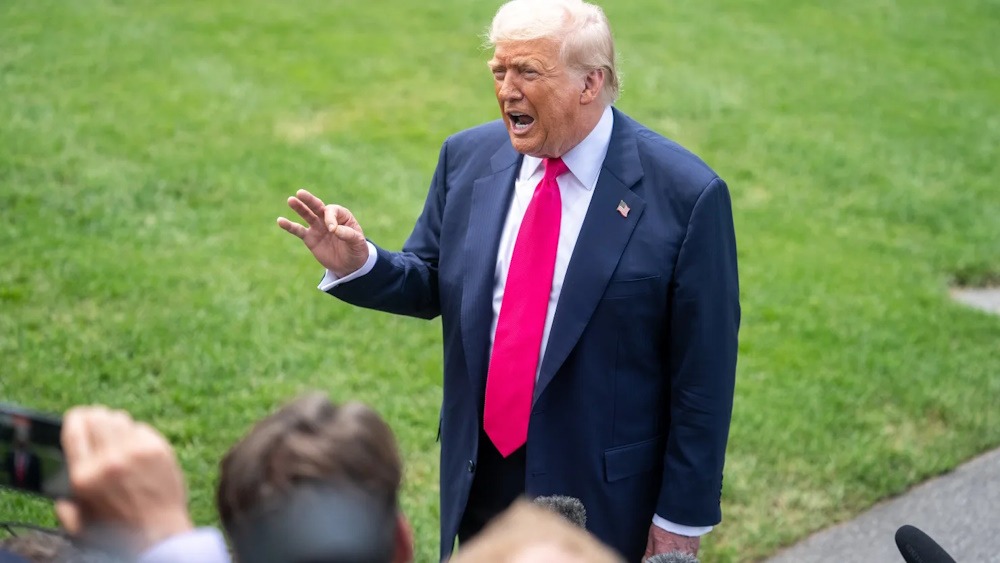
President Donald Trump’s recent financial disclosures reveal that he or his investment advisers executed over 3,700 trades in the first quarter, a significant volume amounting to tens of millions of dollars and encompassing major companies that engage with his administration. The transactions, detailed in over 100 pages of documents submitted Thursday to the US Office of Government Ethics, outline purchases and sales within broad ranges, complicating efforts to ascertain an exact value. However, the trading volume — exceeding 40 transactions daily over a three-month span — is as noteworthy as the prospective dollar value. “This is an insane amount of trades,” remarked Matthew Tuttle during an interview, further noting that it resembles activity typically associated with “a hedge fund with massive algo trades” that engages in both buying and shorting securities, rather than that of an individual account. In the first quarter, the president acquired at least $1 million in various companies, including Nvidia, Oracle, Microsoft, Boeing, and Costco, as indicated by the documents. Other trades included eBay Inc., Abbott Laboratories, Uber Technologies Inc., AT&T Inc., and the discount retailer Dollar Tree Inc. The disclosure revives concerns regarding potential conflicts of interest that have lingered throughout Trump’s presidency. Critics have consistently alleged that he conflates his official responsibilities with his commercial pursuits. In contrast to his predecessors, Trump opted not to divest or transfer his assets into a blind trust managed by an independent overseer. The extensive business empire he has built is overseen by two of his sons and functions across multiple sectors that align with presidential policy initiatives.
Concurrently, Jared Kushner, the son-in-law of Trump, oversees billions in investments from Qatar, Saudi Arabia, and the United Arab Emirates, while also acting as a “volunteer” envoy for the president on matters related to the conflict in Iran and the broader West Asia region. The White House rebuffed inquiries regarding possible conflicts of interest, with spokesman David Ingle asserting that Trump “only acts in the best interests of the American public.” He stated: “There are no conflicts of interest.” A representative for the Trump Organisation previously stated that the president’s assets are managed independently by third-party financial institutions, which oversee all investment decisions, with trades carried out through automated processes. The spokesperson stated that Trump, his family members, and his company do not participate in the execution of transactions. They are not given any prior indication of trading activities and do not contribute any insights, she noted. The trading volume surpasses all figures previously disclosed by Trump. During the fourth quarter of the previous year, he executed 380 transactions, primarily consisting of acquisitions of municipal debt, while also engaging in some purchases of commercial paper, as indicated by his filings. In August, he revealed his initial asset purchases, detailing 690 transactions initiated on January 21, 2025, the day following the commencement of his second term. The transactions, spanning approximately seven months, amounted to a minimum of $103.7 million.
The president’s disclosures prompted inquiries from certain market participants who voiced astonishment at the trading volume. “I’m baffled,” remarked Eric Diton. “In the 40-plus years of my time on Wall Street, this represents an atypical volume of trading by any measure.” Diton stated, “We’d need to see the actual trades to try and understand why anyone would want to do that much trading.” Adam Sarhan remarked that the frequency of trading was “tremendous.” Sarhan inquired, “What I really want to know is at the end of all those trades was the account positive or negative?” Trump has implemented various policy initiatives that influence the publicly listed companies he has engaged with, and he maintains regular interactions with numerous executives from those firms. Nvidia is among those companies, as its chips, essential for AI development, necessitate US government approval for foreign sales. During a recent refueling stop in Beijing, Trump included Nvidia Chief Executive Officer Jensen Huang in his delegation, which also featured leading executives from Boeing, Citigroup Inc., Tesla Inc., and other prominent firms. Six of Trump’s trades involved Intel Corp.; his administration negotiated an agreement to acquire a 10% stake for nearly $9 billion in the iconic chipmaker in August. Trump’s remarks have not consistently provided advantages to the firms whose assets he discusses. During his visit to Beijing, the announcement regarding China’s acquisition of 200 Boeing jets led to a decline in shares, as market expectations had anticipated a more substantial order. Netflix Inc. and Paramount Skydance Corp. engaged in a protracted contest to secure Warner Bros Discovery Inc., with both contenders heightening potential antitrust apprehensions.
Trump engaged in investments associated with all three companies. In March, he acquired a modest stake in Warner Bros., valued at a minimum of $30,000, alongside a stake in Paramount Skydance, also worth at least $15,000 during the same period. During the first quarter, he executed 19 transactions involving Netflix, with sales ranging from a modest $1,000 to a substantial $5 million. “All of this raises questions that one would prefer to avoid as a president,” remarked Tuttle. “Currently, there is a growing inquiry regarding the rationale behind his acquisition of Nvidia and other firms at this juncture.” As the president, one possesses comprehensive knowledge, thus any stock acquisition raises significant uncertainties. Former presidents have engaged in divestiture of assets or implemented various measures to mitigate conflicts of interest or the mere perception of ethical dilemmas during their tenure. George H.W. Bush maintained a blind trust that encompassed his investments during his tenure as vice president and throughout his presidency beginning in 1989. His successor, Bill Clinton, similarly enacted the same measures upon taking office. Prior to the enactment of the STOCK Act in 2012, federal law did not mandate that officeholders disclose transactions involving securities. The legislation enhanced the disclosure obligations for officials in the executive branch and members of Congress. Former President Barack Obama, whose investments were allocated to Treasury bills and a broadly diversified portfolio of mutual funds, and Joe Biden did not engage in trading stocks or bonds during their time in office. Trump represents the inaugural president to activate the disclosure requirement.
On February 10, Trump executed significant sales, divesting from three technology companies: Microsoft, Meta Platforms, and Amazon, with transactions ranging from $5 million to $25 million. In January, he divested a portion of his holdings in a Vanguard ETF, with the transaction valued at a minimum of $5 million. Federal ethics laws mandate that officials disclose trades within a maximum of 45 days following their execution. Both of Trump’s filings failed to meet the deadline; however, the legal repercussions are minimal, entailing a mere $200 fine for each instance of late disclosure. Trump’s filings suggest that he has settled the fee for both instances. Trump has rebuffed detractors who allege that he has exploited his position as president for financial gain. In a January interview, Trump remarked that he did not receive any acknowledgment for curbing his business interests during his first term. “I received nothing but criticism,” Trump stated. The government ethics office has provided Trump with a 45-day extension to submit his annual financial disclosure. The document outlines the value and income generated in 2025 from his extensive business empire, encompassing cryptocurrency, resorts, golf courses, and his social media enterprise. Extensions are typically granted upon request. The disclosures, initially scheduled for submission on Friday, are now expected by June 29.