Microplastics: Heat Trappers Fueling Climate Change
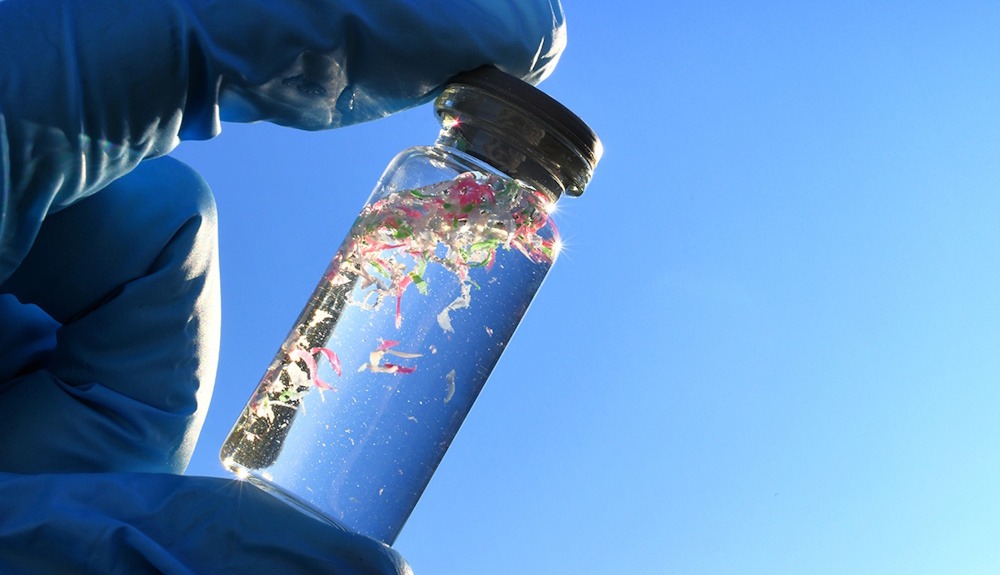
New research indicates that microplastics in the atmosphere are contributing to the heating of the planet, thereby amplifying the impacts of climate change. According to a paper published on Monday, scientists in China and the US discovered that tiny, colored plastic particles absorb sunlight as winds carry them across the globe, trapping heat and contributing to rising temperatures. “The plastic problem is not just in our blue oceans, it is also in the invisible skies above us,” said Hongbo Fu. “Climate models need to be updated.” The researchers’ laboratory experiments and atmospheric modeling indicate that airborne plastic pollution has 16.2 percent of the heat-trapping impact of black carbon, the second biggest contributor to global warming after carbon dioxide. The scientists indicate that while the effect is minor on a global scale, it can hold considerable significance in regions with substantial plastic concentrations, particularly in certain areas of the Pacific Ocean. In that context, plastic particles exhibited an impact 4.7 times greater than that of black carbon.
Researchers had earlier identified the existence of nanoplastics and microplastics, measuring from a billionth to a millionth of a meter, in the atmosphere. As plastic waste washes into the ocean and litters the landscape, it breaks down into smaller and smaller pieces when exposed to sunlight. Eventually, winds sweep the particles into the atmosphere, where they become suspended in air currents. The planet is inundated with plastic waste, and its harmful effects on the environment, wildlife, and human health are currently being investigated. However, previous studies indicated that microscopic plastic has a minimal effect on global warming, given that white-colored plastic particles reflect sunlight. The researchers at Fudan University discovered that most plastic particles present in the atmosphere are colored and have the ability to trap heat.
Drew Shindell stated that their experiments break new ground by precisely measuring the rate at which different-colored particles absorb sunlight. He stated that atmospheric plastic particles are either inherently dark, or that lighter ones tend to darken over time as they age. “The net effect is warming,” stated Shindell. The researchers stated that those impacts are maximized in regions of the world where plastic pollution is concentrated, such as in the Texas-sized Great Pacific Garbage Patch that lies between California and Japan. Typhoons and tropical cyclones have the potential to generate atmospheric hotspots and influence regional climate patterns, as powerful winds elevate a greater number of plastic particles into the atmosphere. A super typhoon in 2023, for instance, resulted in a nearly 51% increase in the atmospheric concentration of nanoplastics, according to the paper.
The scientists stated that the impacts of such extreme weather would probably be significant yet brief in the immediate vicinity. The precise extent of warming linked to plastic is yet to be established, largely due to the challenges involved in measuring particle concentrations in the global atmosphere and the rates at which they are released into the air from both oceanic and terrestrial sources. This suggests that the researchers may be misjudging the effects on climate change. “We need more measurements from all around the world to really characterize more precisely how much of the stuff is in the atmosphere,” said Shindell.