The $81 billion Paramount-Warner merger passes after states resolve lawsuits
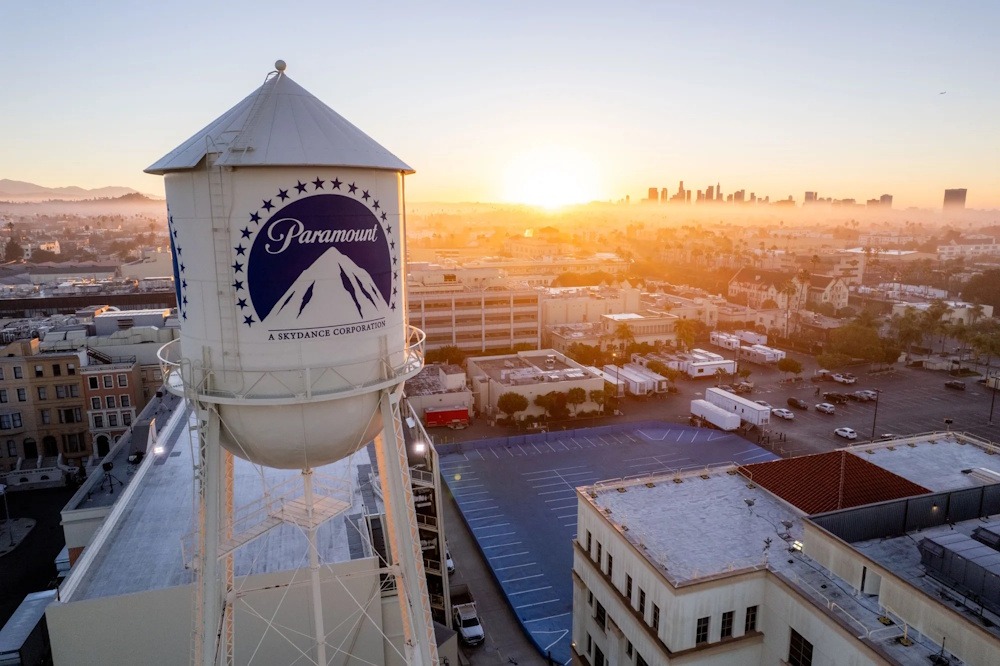
Twelve states and Hollywood writers contesting Paramount’s acquisition of Warner Bros Discovery reached a settlement on Monday, thereby facilitating the completion of the $81 billion mega merger, accompanied by certain new commitments from the company. The blockbuster deal will significantly transform Hollywood by uniting two of the remaining “big five” studios, essential television networks such as CBS and CNN, and streaming services like HBO Max and Paramount+. This merger also incorporates extensive libraries featuring iconic titles from “Harry Potter” to “Top Gun.” Among the terms of Monday’s agreement announced by California Attorney General Rob Bonta, who led the state’s case, Paramount, owned by Skydance, pledged to increase film production in the U.S., commit millions of dollars to a fund to support workers displaced by the merger, and establish new monitoring of the editorial independence of the company’s news operations. The settlement awaits final approval from a judge.
Paramount CEO David Ellison expressed satisfaction with the agreements finalised with both the states and the Writers Guild of America on Monday, characterising it as “complete clearance” for his company’s merger with Warner. He emphasised that this combination will “build a stronger Hollywood.” Critics, however, condemned the settlement terms as insufficient and charged the state solicitors general with yielding to corporate influence. Many viewed the litigation as the final safeguard against the realisation of a combined Paramount-Warner entity. Paramount’s pursuit of Warner has been significantly influenced by political factors. Attention is focused on the billionaire Ellison family’s connection with President Donald Trump and the prospects for assets such as CNN, which the Republican administration excluded from the White House due to what Trump described as unfavourable coverage. The settlement terms established by the states are delineated as follows. The coalition of states, which includes California and the entertainment powerhouse New York, initiated legal action in July to prevent the merger, claiming it would “extinguish competition” and result in diminished options for consumers, especially those frequenting movie theatres and cable services.
In the agreement reached on Monday, the states announced that they had obtained several “court enforceable” commitments from Paramount. These commitments include a pledge to enhance domestic film production over the next five years by allocating at least an additional $1.5 billion, which translates to $300 million annually, as well as a commitment of $47.5 million to support training and career development for workers affected by the merger. Paramount is obligated to fulfilll its commitment to release 30 films annually for the next two years, followed by 32 films each year for the subsequent three years. If it fails to do so, the states assert that it will be obligated to divest from Miramax Studios and remit $30 million for each unfulfilled film toward health care and retirement trust funds linked to the Writers Guild of America and other industry unions. In the realm of cable, the settlement reached on Monday mandates that the company engage in negotiations for existing Paramount-owned and Warner-owned basic channels independently over the next five years.
The states assert that this approach will contribute to maintaining lower consumer prices. The company must also establish a “News Editorial Independence Board” to oversee news operations at CBS and CNN. Bonta stated that the settlement was focused on “protecting people’s careers, the lives they’ve built here in California, the livelihoods their families rely on,” while emphasising that it did not constitute a vote in favour of the merger. WGA has also resolved its challenge, albeit with a cautionary note regarding potential harm to writers. “We continue to believe the merger will cause damage to writers and the industry at large,” the WGA said in a statement. The union maintained that as a nonprofit “with no backing from government enforcers,” the complex litigation would have cost millions of dollars. New York Attorney General Letitia James, who facilitated Paramount’s pledge to contribute USD 17.5 million to the Writers Guild health care fund, stated that she will oversee the company’s operations “to ensure they are following this agreement and the law.” Paramount has previously consented to postpone its transaction until well into the following year, allowing the challenges to navigate through the judicial system.
However, it quickly necessitated a resolution – particularly as the likelihood grew that the cost for Warner could escalate significantly. Paramount had committed to compensating shareholders with a “ticking” fee of $7 million for each day the deal remained unclosed beyond September 30. Paramount’s acquisition of Warner is presently assessed at approximately $111 billion, factoring in billions of dollars in debt and the value of outstanding shares. “Today, billionaires have yet again bribed, censored, and bullied their way to the top,” Alvaro Bedoya said in a statement. “Layoffs will follow. People from L. A. to Atlanta will lose their jobs, small businesses will lose their contracts, your cable bill and movie ticket will be even more expensive.” Bedoya claimed Bonta and California Gov. Gavin Newsom caved to pressure – particularly after Paramount reportedly threatened to leave the state amid the antitrust battle.
Paramount has not made any public statements regarding a possible relocation from California, and the settlement reached on Monday does not clarify whether the headquarters will remain in the state. However, during the summer months, officials from Tennessee sent a letter to Ellison advocating for Paramount to consider relocating to their state. Connecticut Attorney General William Tong, representing one of the states involved in the lawsuit, articulated that his primary objective was to safeguard the editorial independence of CNN and CBS News, emphasising his desire for a complete divestiture of the two news entities. A week ago, Tong stated that Paramount declined to grant any editorial independence to the news outlets. “The complete abdication of the federal government’s enforcement role in this fight left states with one arm tied behind our backs,” Tong said.