US engages in economic warfare to avoid Trump-Iran conflict
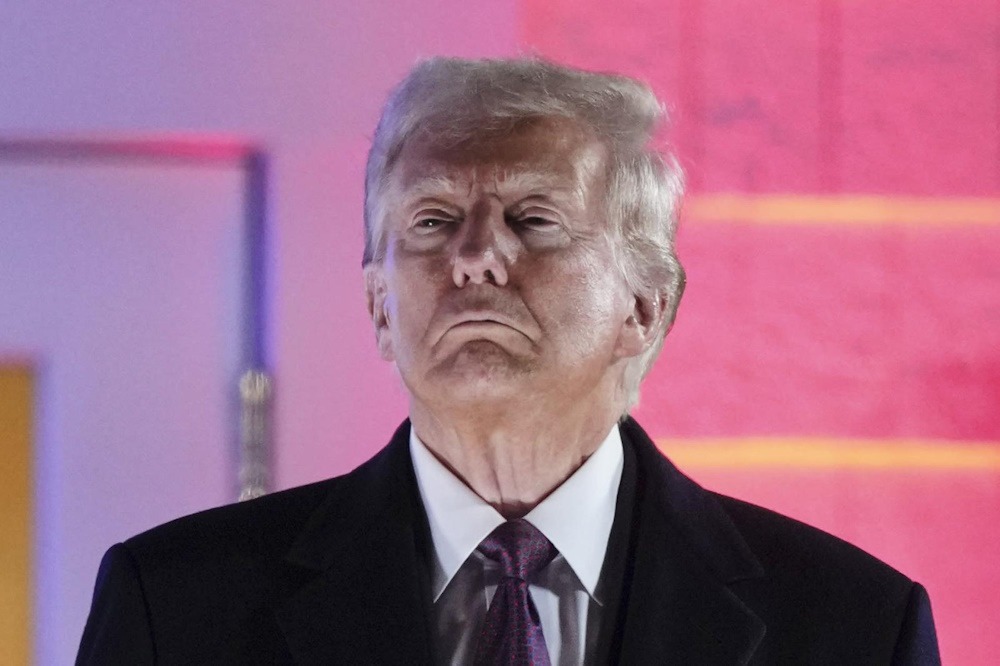
Treasury Secretary Scott Bessent sought to allay investor concerns regarding the ongoing pressure campaign on Iran on Thursday, asserting that a return to “large-scale” hostilities was improbable. The challenge faced by the Trump administration is that Iran was also eavesdropping. President Trump this week pledged a “economic D-Day” against Iran, describing it as a “crushing” operation aimed to “cripple” the nation. The U.S. clampdown is formidable, characterised by a combination of wartime destruction, a naval blockade, and sanctions that have placed unprecedented pressure on the Iranian economy, surpassing anything the regime has faced in decades. However, beneath the surface of the administration’s threats lay a message that Bessent articulated with clarity on Thursday: Trump is not inclined to return to a state of war. The president is conducting an economic campaign against Iran, having previously engaged in weeks of bombing the country earlier this year, and subsequently retracting several threats to renew hostilities. Consequently, analysts assert that Trump finds himself in a predicament characterised by constrained leverage, evident susceptibility, and a fortified opponent. Even as Iran grapples with shortages and inflation, Trump is likely to increasingly experience the pressure of the impending midterm elections amid an unpopular war and elevated petrol prices.
Experts indicate that this combination poses significant risks, potentially leading Iran to perceive a lack of resolve from the United States and respond aggressively. “They read him now as not wanting to escalate militarily,” Dennis B. Ross said of Iran’s leaders. “That creates an incentive for them to show that they may escalate militarily.” Bessent informed on Thursday that the Treasury Department is scheduled to hold a news conference regarding the new measures aimed at Iran next Monday. He stated that traders had misjudged the situation by inflating the price of oil in reaction, as the administration’s recent economic threats indicated that a swift return to extensive bombing was unlikely. “If we are doing the maximum economic pressure, then that means that likely there will not be a large-scale kinetic restart,” Bessent said. “But I would emphasize, that is for now.” Trump announced his upcoming “economic D-Day” against Iran in a social media post Wednesday evening, warning of “Economic Warfare and Isolation on an unprecedented scale.” And “These maniacs are on the ropes, and these HISTORIC MEASURES will cripple them and their ability to project terror worldwide,” Trump wrote on Truth Social. Among the challenges facing Trump is his pattern of issuing threats of large-scale destruction against Iran, only to subsequently retract those threats. He articulated in June his concern that a prolonged conflict could drive the United States into an economic “depression.”
Polls indicate that the Iran war is broadly unpopular, with growing discontent even among Republicans. This situation presents a significant political vulnerability for Trump, as a conflict he characterised as a brief “little excursion” approaches its six-month milestone. In recent months, Iran’s regime has demonstrated its resilience in the face of significant death and destruction caused by American and Israeli bombings. Furthermore, it has managed to impose costs on the United States through actions such as attacking oil tankers in the Strait of Hormuz. U.S. petrol prices continue to exceed pre-war levels by over a dollar per gallon. Additionally, U.S. military installations in the Persian Gulf have sustained significant damage, resulting in the loss of 18 American service members, while munitions supplies are dwindling. Throughout the course of events, a resolution to conclude the conflict has proven to be elusive — particularly regarding the complete reopening of the strait. The Iranian resilience and retaliation seem to have compelled Trump to depend on economic pressure in an attempt to coerce Iran into compliance. Analysts observe that the administration has inflicted significant hardship on Iran’s economy, with Trump’s naval blockade exacerbating the damage caused by this spring’s bombing campaign.
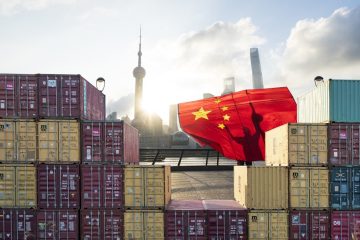
A new escalation emerged on Wednesday when the United Arab Emirates, a vital economic partner across the Persian Gulf from Iran, announced it would cease all trade and financial transactions with the nation. However, advancing further may pose challenges for Trump, who cautioned in his Truth Social post that “ANY country” offering any form of “lifeline to Iran” would “itself face TREMENDOUS Economic Consequences.” China serves as Iran’s most significant financial lifeline, purchasing the majority of Iran’s oil. “China is the indispensable piece” of an economic pressure campaign against Iran, stated Miad Maleki, a senior fellow at the Foundation for Defence of Democracies in Washington, who has prior experience in sanctions policy at the Treasury Department. “No substitute can absorb Iranian crude at China’s scale,” Maleki added in a text message. Trump has endeavoured to enhance his rapport with Xi Jinping, the Chinese leader, who is anticipated to convene with Trump in Washington on September 24. Analysts anticipate that the Trump administration will exercise caution in exerting pressure on China, particularly in light of the forthcoming summit. This raises the question of the potential escalation of the U.S. economic campaign against Iran.
Bessent stated that the administration’s discussions with China regarding the issue would be kept confidential. “Iran has been under comprehensive sanctions for years,” said Edward Fishman. “The only major thing left to do is aggressively target Iran’s trading partners — above all, China.” He added: “I’m skeptical Trump is willing to risk instigating an economic war with China right now.” Then there is the question of how Iran would react under significant financial pressure — particularly in light of the broad acknowledgement that Trump aims to steer clear of renewed military conflict. Ross indicated that Iran might seek to exert new military pressure on the United States or its Gulf allies. That expectation underscores the uncertainty surrounding Trump’s long-term strategy, particularly as petrol prices remain elevated, the midterm elections approach, and munitions stocks continue to be low. “I’ve not seen, throughout this process, the ability to think beyond the immediate next step,” Ross said of the administration’s approach to Iran. “They’re playing checkers. They’re not playing chess.”