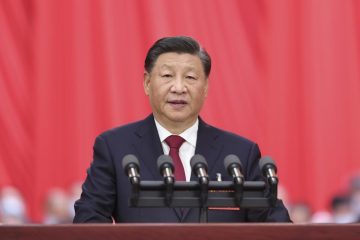
The Trump-Xi Jinping conflict affects global trade and economy
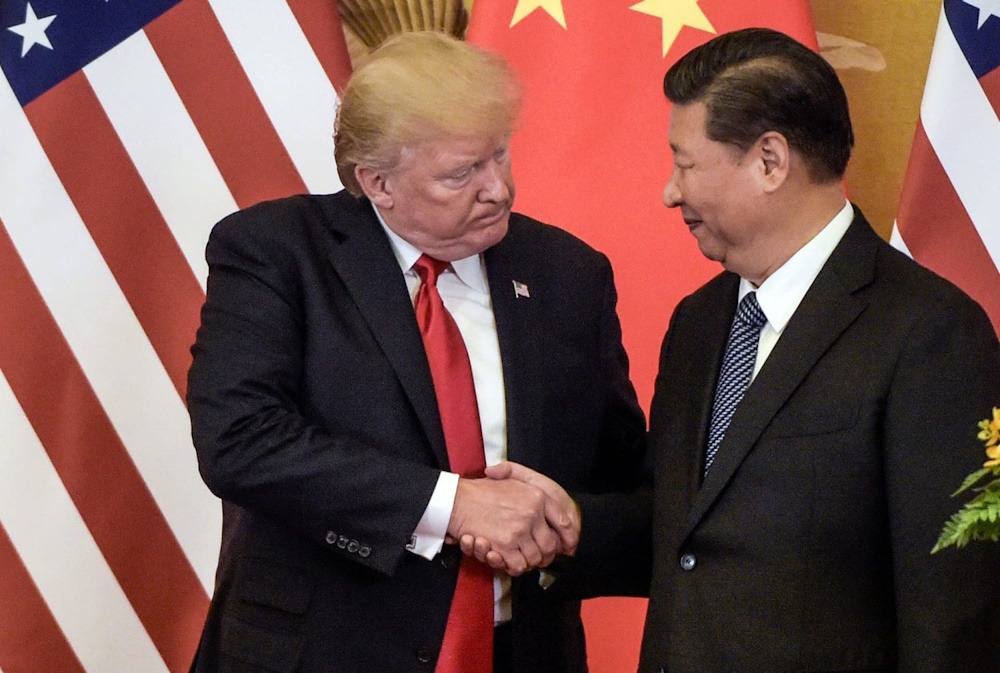
US President Donald Trump’s discussions with China’s Xi Jinping are poised to be the week’s critical event, addressing significant matters ranging from tariffs to technology concerning the globe’s two largest economies. While the leaders meeting in Washington on Thursday will attempt to maintain a stable yet awkward relationship, achieving this may be more challenging than during their gathering in May. Tensions have escalated since that time, with US officials expressing criticism toward China for failing to adhere to the conditions of their one-year trade truce. All matters ranging from tariffs to regulations on artificial intelligence are anticipated to be on the agenda for discussion. Looming over the meeting are Chinese export curbs on critical minerals and rare earths, which have resulted in supply shocks for US and other global companies. Negotiations are poised to reach a critical juncture as both parties have engaged in strategic manoeuvres to enhance their bargaining positions in the preceding weeks.
It remains uncertain whether the trade truce will be prolonged for an additional year, as many analysts anticipate, or if the United States will advocate for a more limited duration to compel China to make further concessions. Beijing, for its part, seeks to maintain the detente through the conclusion of Trump’s term. Thus far, the US president has made efforts to avoid offending his counterpart: a highly anticipated and already postponed report on excess capacity is being deferred until after the summit, and is expected to suspend numerous tariffs on China, retaining only a 7.5% duty. Trump has also minimised reports indicating that China supplied Iran with targeting information to strike US service members in West Asia. The event will also be closely monitored in Brussels as the European Union prepares for its upcoming discussions with China in early October. Trade commissioner Maros Sefcovic indicated that the upcoming meeting must demonstrate tangible outcomes from the Chinese side to prevent the bloc from implementing countermeasures.
US and Canada
In the week subsequent to the Federal Reserve’s decision to increase rates, market participants will be closely observing remarks from various officials for insights into the pace of additional modifications. Kicking off the week is Minneapolis Fed President Neel Kashkari, who spoke to Fox News on Sunday. Following him, Chicago Fed President Austan Goolsbee will address monetary policy in London on Monday. On Tuesday, New York Fed President John Williams delivers keynote remarks at a Treasury market conference. Other Federal Reserve officials slated to address the public in the upcoming week comprise Philip Jefferson, Tom Barkin, Michael Barr, Beth Hammack, and Anna Paulson. The economic data calendar in the United States is notably limited. On Wednesday, S&P Global is set to publish its preliminary manufacturing and services PMIs for September. Both are anticipated to maintain stability with a steady trajectory of growth.
At the conclusion of the week, the government’s August durable goods orders and shipments data will provide insights into the trajectory of business investment. Economists anticipate a robust increase in orders for nondefense capital goods, excluding aircraft. On Friday, the University of Michigan is set to publish its final consumer sentiment index for September, which encompasses the perspectives of respondents regarding inflation expectations. Canada’s government intends to prolong fuel excise tax relief, as investors anticipate a suite of regulatory and labour reforms designed to accelerate project construction timelines. Meanwhile, Bank of Canada Governor Tiff Macklem is set to address economic conditions in Halifax on Monday, while updated retail figures for July are anticipated on Thursday.
Asia
Monetary policy decisions in China and Indonesia will render this week significant for those observing economic trends. China is set to announce its one- and five-year loan prime rates on Monday, with expectations that they will remain stable at 3% and 3.5% respectively. The announcement will continue to be examined for indications of Beijing’s willingness to provide additional monetary support to state banks and insurers as it aims to maintain growth. Indonesia will conduct a review of its interest rates on Wednesday, with expectations that the benchmark will remain unchanged at 5.75%. Reserve Bank of Australia Governor Michele Bullock engages in a fireside chat on Tuesday. Economic activity will be the next focus, with purchasing managers’ indices set to indicate the strength of activity across a region grappling with rising energy prices driven by tensions in West Asia. India’s flash September PMIs are set to be released on Wednesday and will attract significant attention following a deceleration in the overall pace of activity in July, which marked the lowest level in over four years, and a stagnation in August.
With manufacturing and services still in expansion territory, the latest figures will indicate whether business activity is sufficiently strong to sustain the robust economic growth observed in the April-June period. Japan’s PMIs are released on Thursday, providing an indication of whether economic activity continues to be widespread across both manufacturing and services sectors. On Wednesday, Australia will also release its Purchasing Managers’ Index data. India’s core industries output for August, due Monday, will be closely monitored for analogous indications regarding growth. Australia’s labour markets will take center stage on Thursday, following a decline of 15,800 jobs in July. The August figures will play a crucial role in informing the central bank’s decisions, as it prepares for its upcoming meeting next week. Trade and prices will be closely monitored, as South Korea’s preliminary trade data and Taiwan’s export orders will offer new insights into the regional export and technology cycle. Singapore has released its inflation data, and Thailand is set to publish its trade figures later in the week.
Europe, West Asia, Africa
In the wake of this month’s rate hikes from the Federal Reserve and the European Central Bank, institutions overseeing three of the globe’s most actively traded currencies are poised to establish policy on Thursday. The Swiss National Bank is expected to maintain its rate at the current level of zero. Investors will be attentive to insights regarding the economy following unexpectedly robust growth and the swiftest inflation observed in nearly two years. Similarly, with the franc having just reached a 17-month low against the euro, officials might soften their rhetoric regarding potential interventions. Sweden’s Riksbank is anticipated to maintain its rate at 1.75% while it looks for signs that a recovery is taking hold and that low core inflation is beginning to rise. Its policy path may indicate an increased probability of a hike in the latter months of 2026 compared to the 50% likelihood estimated in June. Norges Bank’s decision has divided economists, with some forecasting a second rate hike for the year to control inflation, while others expect no adjustment.
A steady outlook for activity across nearly all business sectors has strengthened the argument for tightening; however, a consensus among analysts suggests that any increase would likely be the last of the cycle. Investors will closely monitor PMIs in the euro zone and the UK, as they assess the impact of rising oil prices on economic activity. In light of the recent electoral success of the far-right Alternative for Germany, the forthcoming Ifo business confidence report on Thursday will provide insights into whether the ensuing political instability is impacting sentiment within Europe’s largest economy. Two additional state elections on Sunday could further jeopardise Chancellor Friedrich Merz’s administration. Italy’s deficit figure for 2025, to be released on Tuesday, may prove to be pivotal. A downward revision to the EU’s 3%-of-output ceiling could potentially pave the way for the country to leave the bloc’s special fiscal monitoring regime. The UK, with its debt levels attracting investor attention, is set to release figures on Tuesday that will disclose the condition of Britain’s public finances for August, marking the first complete month of Andy Burnham’s leadership.
Latin America
Banco Central do Brasil on Tuesday released the minutes of the Sept. 16 decision to lower its key rate for the fifth consecutive meeting, implementing a quarter-point reduction to 13.75%. Next month’s presidential election and global geoeconomic uncertainty had analysts anticipating a cautious post-decision statement from policymakers. However, the board chose to maintain the language from August, which to some observers indicated a willingness to consider further easing. Brazil observers can anticipate the upcoming quarterly monetary policy report, remaining vigilant for any changes in the Central Bank of Brazil’s inflation and output forecasts. Expectations for an adjusted rate outlook appear minimal, alongside the usual array of updated projections and scenario analyses. As the week concludes in Brazil, the mid-month consumer prices report is anticipated to indicate a rise in inflation, aligning with analysts’ prevailing year-end estimate of 4.9%, following a brief period of deceleration back into the central bank’s target range.
Argentina has recently released a disappointing second-quarter output report, indicating that South America’s second-largest economy has contracted for the first time in two years. This development has led some analysts and investors to prepare for a continuation of this trend. GDP-proxy data for July, set to be released on Thursday, may exacerbate worries that have led some analysts to revise their full-year growth projections downward and assess the likelihood of a technical recession. Paraguay’s central bank is expected to maintain its key rate at 5.5% for the seventh consecutive month, as inflation is anticipated to rise in the upcoming months, concluding the year at 3.3%, slightly below the 3.5% target. In Mexico, the focal point is the monetary policy meeting of the central bank, which follows the economic activity report for July and the inflation report due in mid-September. Banxico’s current guidance indicates that it is “appropriate to maintain the reference rate at its current level” of 6.5%, particularly for Thursday’s meeting. The initial outlook on consumer prices anticipates another reading within the target range, yet it remains persistently above Banxico’s 3% target.