US war, taxes, and sanctions criticised in Brics summit statement
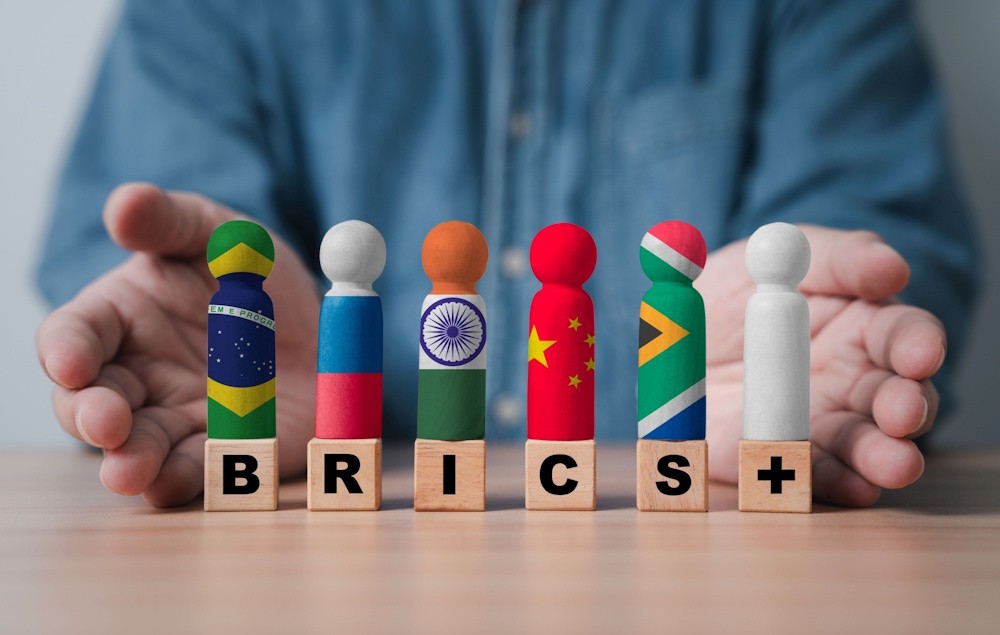
Leaders of emerging powers, including Russia and Iran, presented a cohesive stance at a recent summit in New Delhi. Their joint statement addressed a war initiated by the US in West Asia, as well as Washington’s tariff initiatives and sanctions strategy. The joint communique, spanning 45 pages, issued by the 10 Brics nations, subtly targeted the United States and President Donald Trump without explicitly naming them, highlighting the complex dynamics between both allies and adversaries of Washington. The statement urged nations involved in the West Asia conflict to exercise “maximum restraint” and conveyed “deep concern” regarding the escalation of the situation. It also condemned “deliberate attacks on civilian infrastructure and peaceful nuclear facilities.” The wording, finalised in the early hours of Saturday, constituted a significant appeal for a coalition whose members maintain vastly differing stances in the conflict initiated by the US and Israel against Iran over six months ago – with Tehran at one end and the UAE and Saudi Arabia, not yet a full Brics member, at the other. China and India are significant oil importers, directly affected by the disruption in energy flows from the region. “There is obvious frustration with Trumpism and the many manifestations of that – unilateralism, the snubbing of the multilateral institutional order, the tariff assault, the neglect of rules,” said Ashok Malik.
The statement was “carefully drafted so as not to take sides between Iran, Saudi Arabia and the UAE while leaving everyone with something to go home with,” he added. In remarks made on Sunday as the meeting concluded, Indian Prime Minister Narendra Modi aimed to highlight the importance of cooperation despite the presence of “different realities.” And “The Global South’s trust in Brics has steadily increased because its voice is heard in the grouping, its development experience is respected, and solutions are prepared in consultation with it,” he told attendees. The conflict in the Persian Gulf poses a risk of generating new divisions among the Brics nations. Iranian President Masoud Pezeshkian delivered a passionate address on Friday, asserting that his nation would not capitulate. “They thought that like Venezuela they could conquer our country within 24 hours,” Pezeshkian said in an interview. “It failed.” Despite direct threats from Washington, which has promised sanctions against any country assisting Iran and cautioned groups like Brics against collaborating to counter US interests, the 10-member bloc has resisted Washington’s punitive measures and a global order that emerging economies claim does not adequately represent them. “We strive to advance not by opposing anyone, but by taking everyone along,” Modi told leaders. “Now is the time for us to translate our unity and consensus within Brics into tangible results on the global stage.”
The summit represented a significant achievement for Modi, who has aimed to leverage his nation’s year-long presidency of the Brics group to promote a wider agenda for the Global South. India’s capacity to engage in negotiations with nations positioned on opposing sides of various conflicts, such as those involving Iran and Israel, has facilitated the reconciliation of differences within the bloc, as indicated by diplomats possessing firsthand knowledge of the discussions, who requested anonymity due to the confidential nature of the talks. Divisions were particularly pronounced between Iran and the UAE, as sources indicated that Tehran was pursuing a definitive denunciation of the United States and Israel. The UAE, a US ally, contested this, aiming to condemn Iran for its drone and missile strikes against the Gulf kingdom. During a media briefing on Saturday, Sudhakar Dalela, secretary of economic relations at the Ministry of External Relations, stated that discussions among Brics members progress until a consensus is achieved. “We are very happy that we have a agreed approach on West Asia and the center piece of that approach is that we all believe dialog and diplomacy should be the guiding parameter to addressing any conflict,” he said.
The conflict in West Asia has posed a significant challenge to the cohesion of the Brics alliance this year. During a gathering of foreign ministers in New Delhi in May, the group was unable to reach a consensus on a joint statement, a shortcoming that India attributed to “differing views among some members” regarding the West Asia conflict. The summit provided Russia’s Vladimir Putin with a platform to strengthen relations with Modi and Xi, occurring merely two weeks after the trio convened at the Shanghai Cooperation Organization in Kyrgyzstan. Putin engaged in an official bilateral meeting with Modi and held discussions with Chinese President Xi Jinping during the Brics forum, as reported by the Kremlin. Both Modi and Xi enquired extensively with the Russian leader regarding initiatives aimed at resolving the Ukraine conflict and extended their assistance in seeking a solution to the issue, as stated by Putin’s spokesman, Dmitry Peskov. “The paradox is that Putin’s policies, however you look at them, have not resulted in Russia’s isolation,” said Alexey Maslov. “On the contrary, a rather unusual coalition of countries has formed around Russia, supporting ideas associated with the Global South and security.”
Modi, prominently displayed on Brics posters throughout Delhi, has capitalised on the gathering; however, the meeting also provided a platform for other nations to showcase their diplomatic influence, particularly China, the bloc’s leading economic power, and Russia, which has faced isolation from the US and Europe for several years. Xi contributed significant weight to the assembly, having been absent from the previous year’s Brics summit in Rio de Janeiro. This marks his first visit to India in seven years, indicating a cautious rapprochement with the country after a lethal border clash in 2020. “China and India are partners, not rivals,” representing “each other’s development opportunities, not threats,” Xi said in comments. Xi urged Brics members “to stand on the right side of the history” and be a pioneer in maintaining peace and reforming global governance. He also proposed an open-source artificial intelligence “special zone” for Brics members, aimed at fostering the development and application of large language models.