Seven marine routes that affect energy, food, freight, and geopolitics
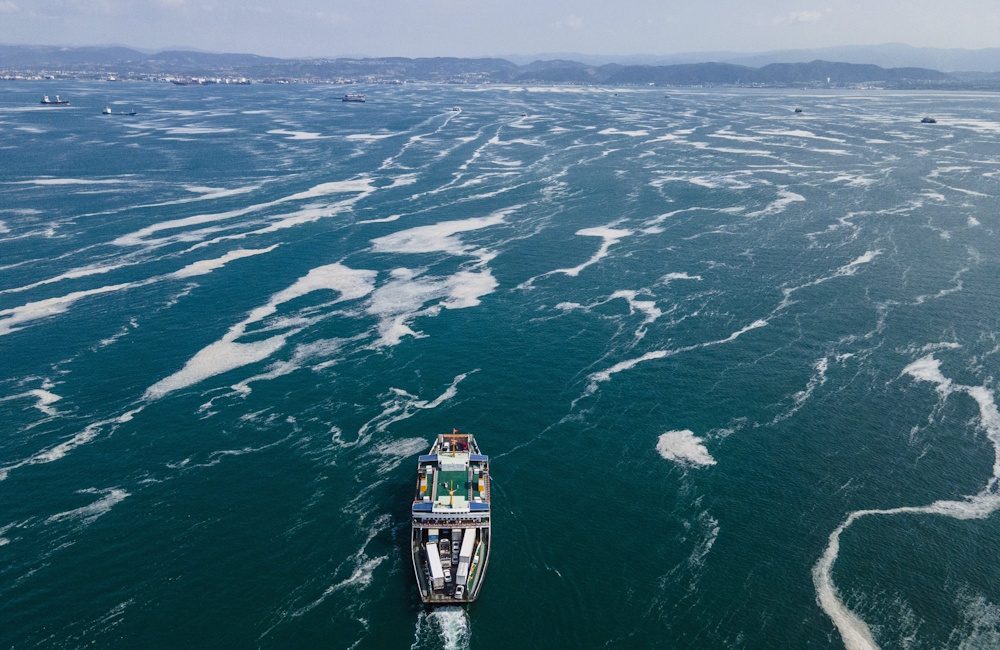
Following the US’s military action against Iran on February 28, Tehran’s countermeasure involved the closure of the Strait of Hormuz. This development exerted significant strain on the global economy, given that approximately 20 percent of the world’s oil consumption transits through this critical maritime route. Last month, Yemen-based Iran-aligned Houthi rebels escalated the conflict by launching missiles at Israel, which has heightened concerns regarding potential disruptions in the Red Sea shipping lane via the Bab el-Mandeb Strait, an area where they have previously aimed at commercial vessels. Seven key routes play a crucial role in global trade: the Strait of Hormuz, Suez Canal and Bab el-Mandeb, Strait of Malacca, Panama Canal, Taiwan Strait, Turkish Straits, and Cape of Good Hope. These routes are essential for the transportation of oil, food, manufactured goods, and critical raw materials. These narrow maritime passages are economically efficient and capable of transporting substantial volumes at scale, in contrast to air travel or other transportation methods. According to estimates, over 80 percent of global merchandise trade by volume is conducted through maritime routes, highlighting the critical role of essential shipping corridors in the global economy. These narrow passages demonstrate cost efficiency and possess the capacity to transport substantial volumes at scale, in contrast to air travel or the majority of alternative transport methods. An examination of pivotal shipping routes reveals their significance within the larger framework of global trade dynamics:
The Strait of Hormuz stands as the second-most vital maritime chokepoint globally, linking the Persian Gulf to the Arabian Sea and facilitating access to the broader international market. The primary passage governs one-fifth of the world’s oil supply and also transports a substantial quantity (nearly 20 percent) of liquefied natural gas, fertilizers, refined petroleum products, industrial chemicals, aluminum, steel products, cement, raw materials, and food items, among various other commodities. Situated to the north of Iran and to the south of Oman and the United Arab Emirates, the region measures approximately 50 km in width at both its entrance and exit, while narrowing to about 33 km at its most constricted point. Iran exerts considerable influence over the Strait of Hormuz, particularly at its narrowest juncture, owing to its geographical closeness. The United States maintains a substantial naval presence in the region, largely as a consequence of its relationships with other Gulf nations, given Iran’s control over the Strait. In early 2026, approximately 20 million barrels of crude oil and petroleum products traversed the Strait of Hormuz each day, representing 25-30 percent of the global seaborne oil trade. The closure of the strait signifies a substantial effect on the global gas trade. The crisis in West Asia has led to trade disruptions along this route, causing crude oil prices to exceed $100 per barrel. The Strait of Malacca, equally significant as the Strait of Hormuz, serves as the busiest shipping route globally, facilitating approximately 40 percent of world maritime trade. The passage facilitates the transportation of oil and gas shipments from West Asia to China, Japan, South Korea, and various other Asian countries. In addition to oil and gas, it also transports manufactured goods, containers, and raw materials. The Strait is delineated by the nations of Indonesia, Thailand, Malaysia, and Singapore.
Nearly 80 percent of China’s oil imports traverse this route, a reliance that Chinese strategists refer to as the ‘Malacca dilemma.’ During the initial six months of 2025, it accounted for the shipment of approximately 23.2 million barrels of oil daily, representing 29 percent of overall maritime oil movements. Although the strait has not recently been the focal point of geopolitical tensions, it has increasingly become a site for illicit ship-to-ship transfers, where oil is transferred between tankers at sea to conceal its origin. The Suez Canal and Bab el-Mandeb constitute a vital maritime corridor, facilitating the connection between Asia and Europe via the Red Sea. The Suez Canal, an artificial sea-level waterway located in Egypt, serves as a conduit between the Mediterranean Sea and the Red Sea. Meanwhile, Bab el-Mandeb, situated at the southern extremity, connects the Red Sea to the Arabian Sea and the broader Indian Ocean. The corridor facilitates the transport of containers, crude oil, LNG, consumer goods, machinery, chemicals, grains, and various other commodities. While the Suez Canal manages approximately one-fifth of global container traffic and accounts for about 12-15 percent of world trade, Bab el-Mandeb supports around 8-9 percent of global trade flows. Egypt exercises control over the Suez Canal via the Suez Canal Authority. Bab el-Mandeb, situated between Yemen, Djibouti, and Eritrea, continues to exhibit significant susceptibility to regional conflict and militant assaults, especially those associated with the instability in Yemen. This represents the most efficient maritime pathway connecting Asian manufacturing hubs with European consumer markets. Any disruption may compel vessels to navigate around the Cape of Good Hope, potentially extending transit time by up to two weeks, thereby escalating fuel and insurance expenses, constraining shipping capacity, and driving up global freight rates. In 2021, the Ever Given container ship became lodged in the Suez Canal for a duration of six days, resulting in a significant traffic congestion involving more than 200 vessels and leading to disruptions in global supply chains.
The Panama Canal, a human-engineered maritime passage inaugurated in 1914, spans 82 kilometers and serves as a crucial link between the Atlantic and Pacific Oceans. The maritime passage functions as a critical conduit for global commerce, connecting the US East Coast, Latin America, and Asia, thereby circumventing the significantly lengthier path around South America. The canal facilitates approximately 5-6 percent of worldwide trade. The primary cargo traversing this route encompasses containers, grain, liquefied petroleum gas, LNG, automobiles, chemicals, and various other bulk commodities. It holds significant relevance for cargo destined for the US, as well as for agricultural exports and energy shipments. The Panama Canal Authority operates the waterway, thereby granting Panama direct operational control. The United States stands as one of the principal users due to the canal’s pivotal function in facilitating transcontinental trade dynamics. The canal is significantly dependent on freshwater sourced from Gatun Lake to operate its lock system. In recent years, droughts associated with shifting weather patterns and El Niño events have resulted in diminished water levels in Gatun Lake, necessitating limitations on vessel size and daily transits. The constraints in question have resulted in delays, increased freight costs, and necessitated rerouting, illustrating the disruptive potential of climate risks on global commerce. The Taiwan Strait serves as a crucial maritime corridor that distinguishes mainland China from Taiwan, connecting the South China Sea with the East China Sea. As one of the most heavily trafficked shipping lanes globally, it serves as the sole direct maritime corridor connecting China and Taiwan, playing a pivotal role in East Asian trade dynamics.
The strait facilitates the movement of high-value electronic components, such as semiconductors, machinery, and energy resources (including crude oil and LNG), alongside container traffic traversing East Asia. This holds particular significance for technology supply chains associated with Taiwan’s semiconductor sector. China asserts its sovereignty over the strait, a position that Taipei contests, supported by the US perspective that regards it as international waters. China possesses military leverage due to its geographical proximity and naval capabilities, whereas Taiwan’s location endows it with significant strategic relevance. Taiwan stands as a prominent manufacturer of sophisticated semiconductors that are integral to AI systems, smartphones, automobiles, and high-end electronics. Any disruption in the Taiwan Strait has the potential to significantly impede global AI research and technological progress by hindering manufacturing processes, disrupting technology shipments, and instigating substantial supply-chain shocks on a global scale. The Turkish Straits, which include the Bosporus and Dardanelles, serve as the sole maritime connection between the Black Sea and the Mediterranean. Vessels navigating between the two bodies of water are required to traverse these constricted passages, thereby rendering them essential for commerce, military access, and the stability of the region. The route plays a vital role in facilitating exports from Ukraine and Russia, particularly for grain, fertilisers, crude oil, refined fuels, metals, and various other commodities. The straits thus assume a critical position in the context of global food security and energy markets. Türkiye exercises control over the passage as stipulated in the 1936 Montreux Convention Regarding the Regime of the Straits, granting the country the authority to establish transit regulations and to manage naval movements in periods of conflict or increased tensions.
Vessels also incur transit-related service charges, rendering it the sole natural sea routes subject to such fees. Any disruption, congestion, or geopolitical escalation in the Turkish Straits can swiftly impact Black Sea exports, elevate grain and fertilizer prices, and induce volatility in global food and energy markets. Situated at the southern extremity of South Africa, the Cape of Good Hope serves as the primary alternative maritime passage when disruptions occur in the Suez Canal or the Red Sea corridor. Prior to the inauguration of the Suez Canal in 1869, it served as the primary maritime route linking the Atlantic and Indian Oceans for trade between Europe and Asia. The Cape of Good Hope serves as a crucial trading point for containers, crude oil, LNG, coal, iron ore, grains, and various other bulk commodities, particularly in situations where conflict, blockages, or security threats render the Suez route perilous. The significance of energy and container traffic between Europe and Asia is particularly pronounced during times of crisis. The route continues to function as an open-ocean passage, characterized by the absence of a singular controlling authority, thereby maintaining its strategic neutrality. Nevertheless, vessels traversing the passage encounter extensive distances, turbulent waters, and a lack of adequate support infrastructure in contrast to canal routes. As the primary alternative route globally, navigating around the Cape can extend voyages by 10 to 15 days, simultaneously elevating fuel expenses, insurance costs, and pressures on vessel scheduling. Adverse maritime conditions in the southern African region exacerbate the potential for cargo loss, delays, and an increase in global freight rates.