Antarctic tourism growth raises pollution, illness concerns
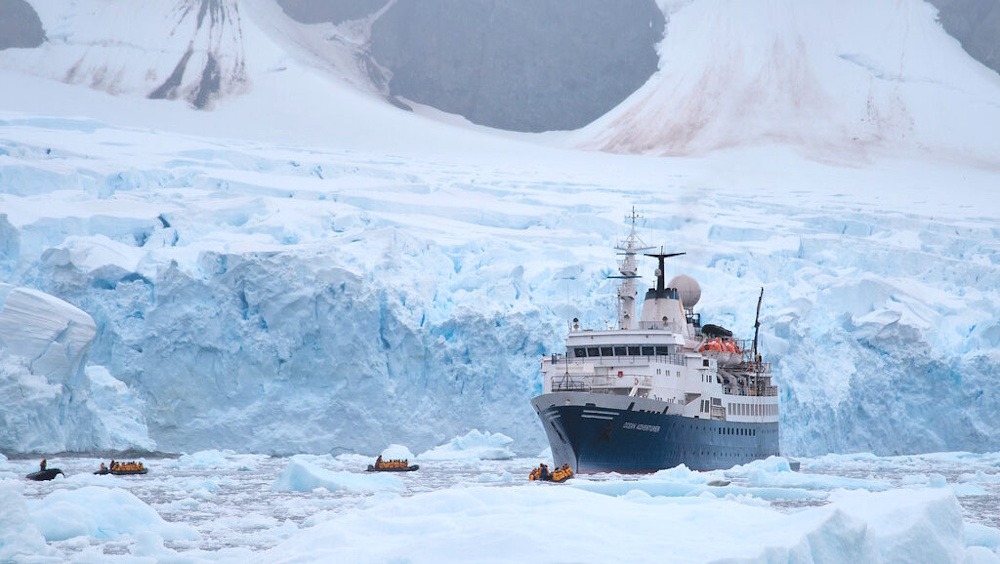
Fueled by concerns that the frigid terrains of Antarctica could be undergoing irreversible melting due to climate change, tourism to this remote region is experiencing significant growth. Experts caution that a rise in visitors correlates with a heightened risk of contamination, illness, and various forms of damage to the continent. Although visitor numbers remain relatively low—partly attributable to the significant costs and time involved—they are increasing at such a rapid pace that scientists and environmentalists are raising concerns. A significant outbreak of the uncommon hantavirus on a Dutch vessel during an extended polar cruise has highlighted the increasing trend in tourism. The majority of expeditions are directed towards the Antarctic Peninsula, recognized as one of the regions experiencing the most rapid warming globally. Between 2002 and 2020, approximately 149 billion metric tons (164 billion tons) of Antarctic ice melted annually, as reported by the National Aeronautics and Space Administration. A prevalent pathway involves traveling south from Argentina towards Antarctica, subsequently proceeding north along the African coastline – mirroring the trajectory of the cruise ship MV Hondius. “The sites you will see in Antarctica are extremely unique and not replicable anywhere else on the planet – the whales, the seals, the penguins, the icebergs – it’s all really stunning and it makes a huge impression on people,” said Claire Christian. In 2024, over 80,000 tourists arrived on the expansive ice-covered continent, while 36,000 observed from the security of vessels, as reported.
The International Union of Concerned Scientists estimates that tourism to Antarctica has increased tenfold over the last three decades. According to Hanne Nielsen, that number could increase in the coming decade as costs decline due to the introduction of more ice-capable hulls and advancements in technology. Colleagues at the university project that the annual figure may increase threefold or fourfold, potentially exceeding 400,000 visits during that period. Some tourists visit Antarctica for “last chance tourism,” fully aware that the melting landscape is undergoing rapid transformation, Nielsen noted. Officials have not provided any indication of contamination linked to the MV Hondius. According to the U.S. Centers for Disease Control and Prevention, recent years have seen flocks of migratory birds transporting avian flu from South America to Antarctica. The outbreak led the International Association of Antarctica Tour Operators and other organizations to strengthen regulations regarding tourists’ behavior and hygiene, aiming to safeguard visitors from potential contamination. To safeguard the delicate ecosystem from both large and microscopic invasive species, visitors are advised to refrain from interacting with animals and to limit contact with the ground to their feet only. “There are rules that people are bound by when they’re heading south,” Nielsen stated, reflecting on her five voyages as a former guide. Crews and passengers employ vacuums, disinfectants, and brushes to meticulously clean shoes and equipment of bugs, feathers, seeds, and dirt that may carry microbes. “Between the tongues and the laces of the boots, one can discover a multitude of items,” she remarked.
Cruise ships have experienced outbreaks of diseases such as norovirus, which can proliferate rapidly in the confined spaces of a vessel. In 2020, a COVID-19 outbreak aboard the Diamond Princess transformed the cruise ship into an incubator for the then-mysterious virus. Hantavirus transmission typically occurs through the inhalation of aerosolized particles from contaminated rodent excreta. The World Health Organization reported on Tuesday that MV Hondius departed from Ushuaia, Argentina, on April 1, making stops in Antarctica and various remote islands. Dr. Maria Van Kerkhove stated that the organization is investigating potential human-to-human transmission aboard the cruise ship. Officials suspect that the initial infected individual likely contracted the virus prior to boarding, she stated, and it has been reported to officials that there are no rats on board. The Antarctic Treaty, established in 1959, governs Antarctica, designating the region as a scientific preserve intended solely for peaceful purposes. A series of regulations designed to guarantee that all visits, irrespective of their geographical context, do not negatively affect the Antarctic environment or its scientific and aesthetic significance, as stated by the treaty’s secretariat.
Companies and scientific ventures adhere to biosecurity guidelines and provide environmental impact assessments for operations in Antarctica. The treaty was drafted during a period characterized by significantly lower tourism figures, Christian stated. “Activity needs to be regulated appropriately, as you would with any of the world’s sensitive and precious ecological sites,” Christian said from Hiroshima, Japan, where she was preparing for an Antarctic Treaty Consultative Meeting. There she will participate in discussions aimed at enhancing safeguards for the penguins, whales, seabirds, seals, and krill of Antarctica—small organisms that form the foundation of the ecosystem. Currently, the appeal of the frozen frontier persists in attracting visitors. “You can put a footprint in Antarctica and it’s still there 50 years later,” Christian remarked.