Anthropic commits $200 million to examine AI’s economic impact

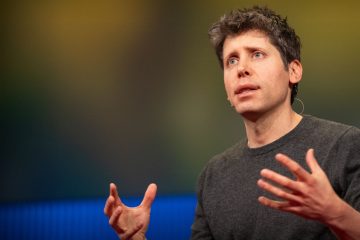
On Wednesday, Anthropic aligned itself with the increasing demand for the artificial intelligence sector to explore methods to mitigate the disruptions caused by technology. The company unveiled an initial investment of $200 million aimed at researching the effects of AI on employment and the broader economy. In conjunction with fresh policy proposals from the creator of the Claude chatbot, Anthropic’s CEO and co-founder Dario Amodei has released an essay on his personal website. This essay elaborates on his stance advocating for government assurances of economic support for individuals adversely affected by AI. The technology could produce much larger disruptions to the labour market than previous technological advancements, Amodei wrote, and those disruptions could last longer. “The key challenge in such a world won’t be incentivising growth, but finding a way for everyone to share in the benefits,” Amodei wrote. The announcement follows closely after Anthropic’s competitor, OpenAI, outlined its objectives on Monday, which included the aim of ensuring that the benefits derived from the technology are “widely shared”. OpenAI CEO Sam Altman recently engaged in discussions with Senator Bernie Sanders regarding a proposal for public ownership in artificial intelligence firms such as OpenAI. The plan involves utilising their stock to establish a public wealth fund aimed at distributing the wealth generated by major AI corporations.
In the Oval Office on Wednesday, President Donald Trump informed reporters of an upcoming meeting with executives from several prominent AI companies to deliberate on the concept of “giving back” to the public. “We’re discussing the notion of returning value to the public, and if we pursue this course, the public stands to gain considerable wealth,” Trump stated. “I think they’ll do that, and I think it’ll make it very popular.” In his essay, Amodei expressed that his warnings regarding job displacement are not intended to serve as a “prophet of doom,” but rather to ensure that “both policymakers and the private sector have the best chance to adapt and respond. He suggested enhanced data collection to monitor AI job displacement, pro-employment policy incentives to mitigate or lessen displacement, and “mechanisms such as universal basic income” should job displacement more permanently diminish labour demand. Amodei noted that universal basic income might be funded through taxation on “relevant companies” or by increasing the capital gains tax.
Limited information emerged on Wednesday regarding the $200 million investment from Anthropic. The company indicated that these funds will be allocated to what it refers to as an Economic Futures Research Fund, aimed at supporting research trials and “program evaluation” of public policies it considers to be promising. The company is also establishing a $150 million national fellowship program aimed at assisting early-career professionals in “extend the benefits of AI to communities across America”. Anthropic and OpenAI have both recently declared their intentions to pursue initial public offerings of shares. This development follows the announcement from Elon Musk’s rocket company SpaceX, which is positioning itself as an AI-centric space enterprise in anticipation of its public offering. The economic policy framework proposed by Anthropic on Wednesday outlines recommendations for how the US government might address three tiers of economic disruption induced by AI: a scenario where the national unemployment rate hits 5 percent, another at 10 percent, and a third, unspecified level described as “unprecedented.” The latest unemployment rate, reported last week, stood at 4.3 per cent. In the current scenario characterised by its unprecedented nature, the company indicated that more permanent support will be essential. It outlined various methods to generate and distribute revenue widely, such as basic income, sovereign wealth models, and equity-sharing mechanisms. This would be “novel economic territory,” the company wrote.
The company’s proposals also delineated various recommendations for alleviating safety and security risks. Anthropic is recognised for its focus on safety and the development of dependable, “steerable” AI systems. Amodei and the co-founders separated from OpenAI to establish the new company in 2021. The proposals indicate that the government should possess the authority to “block or deter” the deployment of AI models that “pose a significant risk of catastrophic harms”. Amodei stated that AI regulations ought to align with the stringent standards set by the Federal Aviation Administration, necessitating that AI models undergo technical testing and auditing akin to that of aircraft. They would not be released if they did not meet stringent safety standards. Last week, Trump enacted an executive order concerning AI oversight, which set forth a framework for the government to assess the national security risks associated with the most advanced AI systems for a period of up to one month prior to their public release. Amodei stated that current regulations governing aircraft, automobiles, and pharmaceuticals ought to be considered as frameworks for the regulation of artificial intelligence. “They are all powerful technologies essential to the modern economy,” he wrote, “but capable of killing large numbers of people if designed or operated poorly.”