Noise of the Cloud: Hidden Costs of the AI Boom

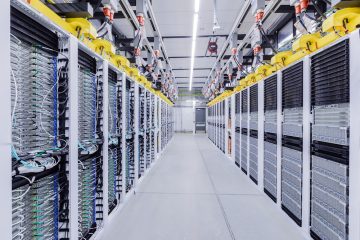
The heartbeat of the artificial intelligence economy resonates like the low-frequency thrum of a neighbor’s central air-conditioning unit, an aeroplane flying overhead at high altitude, or a truck engine idling down the road. It resembles the continuous, resonant beat of a subwoofer at an interminable celebration. Indeed, the cloud produces a sound, and those residing in proximity to data centers that generate this noise have found themselves at their wit’s end in efforts to mitigate its impact. Last month, residents in three small cities initiated legal action against data centers, focusing on the issue of noise pollution. The United States has over 3,000 operational data centers, with an additional 1,500 currently in development, as per an analysis. They have served as the foundation of the information economy for decades, functioning predominantly in the periphery of everyday existence. The boxy industrial facilities accommodate thousands of servers and chips, enabling the processing of billions of operations each day while storing substantial quantities of data. The memory chips produce heat and require large industrial fans to prevent overheating.
The demands of AI necessitate significantly increased computing power and cooling infrastructure, resulting in a surge of data center construction. Today, nearly 40 percent of homes are situated within five miles of at least one operational data center, as reported, and an increasing number are approaching this proximity. “The acoustic footprint is just orders of magnitude different,” stated Les Blomberg. Some of the noise comprises infrasound, which are ultralow frequency sound waves that exist beneath the threshold of human hearing. Instead of audibly hearing these extremely low frequencies, individuals physically perceive them as pressure fluctuations, akin to the deep vibration of a bass drum resonating through one’s core at a concert, according to Scott Hamilton, a member of the Acoustical Society of America and a consultant on data center projects. Noise pollution is governed at the local level via a comprehensive set of zoning ordinances, initially crafted to tackle issues such as raucous block parties, barking dogs, or construction noise, rather than the incessant industrial hum characteristic of a data center. There is a notable absence of federal support, as the Reagan administration eliminated funding for the Environmental Protection Agency’s Office of Noise Abatement and Control during the early 1980s.
While regulations exist, “there’s nobody at home at the EPA to actually enforce them,” stated Richard Neitzel. “They presented that office as a prime instance of regulatory overreach, questioning how the government could dictate the permissible noise level of my lawn mower,” he stated. The three lawsuits contend that although the data centers frequently comply with fundamental zoning codes, the incessant humming and vibrations lead to considerable depreciation of property values and a diminished quality of life for adjacent homeowners. The plaintiffs seek restitution for damages and aim to compel companies to enhance sound safeguards. In Vineland, NJ, a collective of homeowners initiated legal proceedings in federal court, motivated in part by concerns regarding the potential for increased noise in the future. “There is a constant noise of machinery running that is most noticeable at night when trying to sleep,” Stefanie Bartiromo stated regarding the three server rooms already in operation, as noted in the suit. “It resembles a helicopter that remains stationary and at times resembles a heavy-duty truck operating continuously.”
The suit was filed against DataOne USA, which is expanding its Vineland campus. Upon completion, DataOne will encompass a 2.6 million-square-foot complex necessitating 300 megawatts of power, sufficient to supply energy to a medium-sized city. DataOne stated that it has already implemented measures to mitigate noise and will persist in these efforts as the addition reaches completion. “We remain committed to constructive dialogue and to being a valuable and responsible member of the community for the long term,” a spokesman stated. Residents in Dowagiac expressed concerns regarding a 30-Mw data center located in a facility that had primarily served as storage for boats and RVs. To mitigate noise, the industry is transitioning towards liquid cooling solutions. This can decrease the noise levels of a data center by over 50 percent; however, the installation costs are significantly higher. The chief executive of Hyperscale Data, Alliance’s parent company, stated that its operations adhered to the city’s permissible decibel limits and that it would implement systems designed to minimise energy consumption.
The executive, William B Horne, stated his intention to attend a City Council meeting to engage with residents and underscored his commitment to being a reliable partner. “We would offer to purchase those properties at market value and provide a subsidy to help cover the cost of moving,” he stated regarding residents living adjacent to the data center. The crux of the problem, Neitzel stated, is that with numerous conventional community noise sources — such as airports and motorways — the noise levels typically diminish or decrease during nighttime hours. What constitutes a good neighbour? Hamilton stated that this is a crucial inquiry that he examines in his research. “There is no world where any operation doesn’t create any sound,” he stated. “We encounter sounds continuously, yet there exists a spectrum: reasonable, acceptable, and unacceptable.”