Trump to Meet Xi in Beijing Amid War and Inflation Challenges
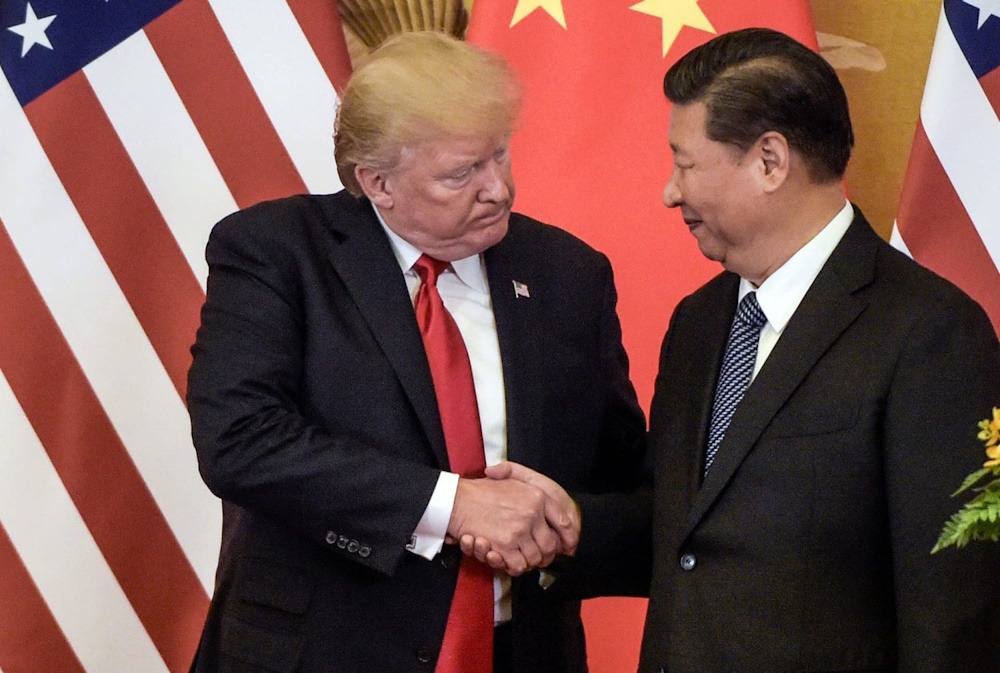
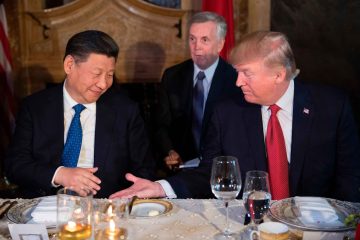
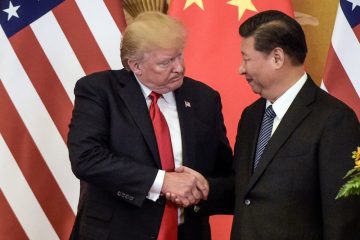
President Donald Trump is scheduled to arrive in Beijing on Wednesday for a state visit with Chinese leader Xi Jinping, coinciding with a period of global unease regarding conflict, trade dynamics, and advancements in artificial intelligence. “We’re the two superpowers,” Trump remarked to reporters as he left the White House on Tuesday. “The United States maintains its position as the preeminent military power globally, with China regarded as the second strongest.” While Trump seeks to convey an image of strength, the state visit takes place during a precarious period for his presidency, as his domestic approval ratings have been adversely affected by the ongoing conflict between the US and Israel with Iran, alongside the inflationary pressures stemming from that situation. The president aims for a victory by finalizing agreements with China to increase purchases of American food and aircraft, asserting that discussions with Xi will focus on trade “more than anything else.” The Trump administration aims to initiate the establishment of a “Board of Trade” with China to tackle the disparities between the two nations. The board may play a crucial role in mitigating the trade war that was sparked last year by Trump’s tariff increases, a move that China responded to by leveraging its dominance over rare earth minerals. This resulted in a one-year truce established last October.
However, Trump arrives in Beijing during a period when Iran remains a significant focus of his domestic policy. The ongoing conflict has resulted in the de facto closure of the Strait of Hormuz, leaving oil and natural gas tankers immobilized and driving energy prices to heights that threaten to undermine global economic expansion. The US president stated that Xi was not required to aid in the resolution of the conflict, despite the presence of Iran’s Foreign Minister Abbas Araghchi in Beijing the previous week. “We have a lot of things to discuss.” Trump told “I wouldn’t say Iran is one of them, to be honest with you, because we have Iran very much under control.” The situation regarding Taiwan remains a significant issue, as China expresses dissatisfaction with US intentions to supply arms to the self-governing island, which the Chinese authorities assert is an integral part of their territory. Trump informed on Monday that he would be engaging in discussions with Xi regarding a $11 billion weapons package for Taiwan, which the US administration authorized in December but has yet to implement. The US leader has exhibited increased ambivalence regarding Taiwan, prompting inquiries into the possibility that Trump may be willing to reduce support for the island democracy.
Simultaneously, Taiwan, recognized as the preeminent chip manufacturer globally, has emerged as a critical player in the advancement of AI, with the United States importing a greater volume of goods from Taiwan than from China thus far this year. Trump has aimed to leverage Biden-era initiatives alongside his own agreements to enhance domestic chip manufacturing in the United States. However, Trump was already framing the trip as a success prior to his departure from the White House grounds. He expressed his thoughts on Xi’s anticipated reciprocal visit to the US, noting with regret that the ballroom currently under construction would not be ready in time. “We’re going to have a great relationship for many, many decades to come,” Trump stated regarding the United States and China. President Xi is scheduled to visit here toward the end of the year. That would indeed be an intriguing development. I can only express a desire for the ballroom to be completed. Trump indicated that he had engaged in discussions with the Chinese leader, characterizing the forthcoming meeting as “positive,” as he set off accompanied by a group of aides, CEOs, and family members. He is scheduled to arrive in China on Wednesday evening and, following a ceremonial greeting, will proceed to his hotel. He is scheduled to participate in a state banquet on Thursday and engage in a working lunch with Xi on Friday prior to his return to the United States.
Despite Trump’s outward confidence, China seems to be approaching the meeting from “a much stronger place,” noted Scott Kennedy. China aims to alleviate technological constraints on computer chip access and seeks to lower tariffs, among other objectives. “But even if they don’t achieve significant progress on these fronts, as long as the meeting does not result in a major conflict and President Trump refrains from seeking to escalate tensions, China effectively emerges in a stronger position,” Kennedy stated. Trump also intends to propose that the US, China, and Russia enter into an agreement to establish limits on the nuclear weapons each country maintains in its arsenal, as indicated by a senior official from the Trump administration who informed prior to the trip. An official provided comments while remaining anonymous, adhering to the guidelines established by the White House.
China has historically exhibited a reserved stance towards entering such an agreement. Beijing’s arsenal, as per Pentagon estimates, surpasses 600 operational nuclear warheads and remains significantly below the levels of the US and Russia, both of which are estimated to possess over 5,000 nuclear warheads each. The most recent nuclear arms agreement, referred to as the New START treaty, between Russia and the United States lapsed in February, eliminating any limitations on the two largest nuclear stockpiles for the first time in over fifty years. As the treaty approached its expiration, Trump dismissed Russia’s proposal to prolong the bilateral agreement for an additional year, advocating instead for “a new, improved, and modernized” arrangement that encompasses China. The Pentagon’s assessment indicates that China currently possesses more than 600 operational nuclear warheads, with projections suggesting this number could exceed 1,000 by the year 2030.