LG, Nvidia will develop humanoid robots and next-gen data centers
In an effort to obtain essential memory chips to support its AI goals and attract new clients, Nvidia announced on Monday a number of agreements in South Korea with IT behemoths like SK Hynix and Naver. The agreements were established during a notable visit by Nvidia CEO Jensen Huang to South Korea, which commenced on Friday. During this trip, he enjoyed grilled pork belly and the local spirit soju with leading corporate figures, threw a baseball pitch and met with a prominent gamer. Nvidia and its partners, which also included SK Telecom and conglomerate Doosan Group, did not disclose the value of the deals. SK Group, South Korea’s second-largest family-owned conglomerate, announced that its SK Hynix and SK Telecom divisions have reached agreements with Nvidia. Memory chip maker SK Hynix has entered into a multi-year technology partnership aimed at developing advanced types of memory for global AI data centres, according to SK Group. SK Hynix and Nvidia announced that the agreement, emerging amid challenges faced by memory chip manufacturers to meet demand, would facilitate supply alignment with Nvidia’s expanding initiatives in robotics, personal computers, and AI supercomputers.
Huang stated that SK Hynix’s intention to double its memory wafer capacity by 2030 would fall short of addressing the escalating demand for AI.SK Hynix has been Nvidia’s largest memory partner. “SK Hynix will continue to be Nvidia’s largest memory partner,” Huang said after a meeting with SK Group Chairman Chey Tae-won at the headquarters of the chipmaker’s parent. Huang stated that the agreement with SK Hynix, a competitor of Samsung Electronics and U.S.-based Micron Technology, spans over two years with the possibility of further extensions. “We already procure and we buy from SK Hynix already billions and billions of dollars each year, and it’s going to grow substantially,” he said. Ryu Young-ho stated that the SK Hynix-Nvidia partnership reinforced the perspective that memory chips were transitioning from a commodity product into a more tailored business for customers. SK Telecom announced plans to construct a gigawatt-scale AI cloud in South Korea utilising Nvidia technology, with the inaugural AI data centre expected to launch in 2027. Nvidia announced that internet giant Naver and conglomerate Doosan would also utilise its technology to assist in the construction of AI data centres.
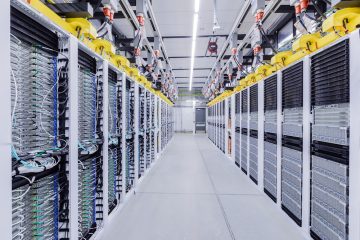
Doosan, which is developing robots and manufactures materials utilised in Nvidia’s most advanced Blackwell chips, stated that it anticipates its energy solution will be integrated into Nvidia’s data centre platforms and that it will also employ the U.S. firm’s physical AI technology. Nvidia is collaborating with LG Group on electronics, mechanical systems, and AI for humanoid robots, Huang stated following a meeting with the tech conglomerate’s Chairman Koo Kwang-mo. Huang stated that the duo were also engaged in the architecture of upcoming data centres, encompassing cooling, power delivery, and the comprehensive design and construction of the facilities. Following an afternoon meeting with Hyundai Motor Group’s Executive Chair Euisun Chung, Huang announced that Nvidia would enhance its collaboration with Hyundai on various AI initiatives, encompassing autonomous mobility, robotics, and AI-driven manufacturing. He also emphasised the potential to expedite the advancement of industrial robotics, stating that Nvidia and Hyundai would collaborate to integrate AI into “all forms of mobility” and enhance their partnership on robotics for practical industrial uses.
Huang characterised Hyundai Motor Group’s proposed AI data centre in Saemangeum as a “AI Valley,” drawing a parallel to California’s Silicon Valley. He expressed his enthusiasm, stating he was “very happy to build Nvidia in Saemangeum.” South Korea’s tech ministry announced in a separate statement its intention to acquire 9,704 GPUs for a state AI project valued at 2.08 trillion won by 2026, which includes 2,016 units of Nvidia’s Vera Rubin GPUs. South Korea stands as a formidable manufacturing hub in Asia, hosting leading producers of chips, electronics, automobiles, and ships. The surge in AI technology has significantly benefited its economy and stock market. SK Hynix and Samsung stand as the foremost manufacturers of memory chips globally, essential elements in data centres. The country’s benchmark Kospi index has doubled in six months as heavyweights SK Hynix and Samsung benefited from the AI wave. However, it closed 8.3 percent lower on Monday after robust U.S. jobs data fanned bets on a Federal Reserve rate hike this year, sparking a rout in global tech stocks.
Shares in Samsung and SK Hynix ended the day down 10.2 per cent and 7.7 per cent respectively. When asked about the global chip stock rout, Huang dismissed the concerns. Everyone should be quite enthusiastic; they now have the opportunity to purchase stock at a lower price, and it is indeed accurate that the future of AI looks very promising. Samsung Electronics’ co-CEO and head of its chip division, Jun Young-hyun, stated that he engaged in discussions regarding collaboration on next-generation foundry chips with Huang. He noted that the two companies conducted extensive talks covering a variety of chip products, including autonomous driving chips, high-bandwidth memory HBM5 chips, and Groq’s AI LP30 chips, which are set to be shipped in the latter half of this year.