Asian Markets Fall as Iran Tensions Lift Oil and Rate-Hike Bets

Share markets declined on Monday in Asia as renewed hostilities emerged between the US and Iran, resulting in an increase in oil prices, while bond yields remained high as investors adjusted their expectations regarding a potential US rate hike. Brent futures increased by 2.8 percent to $90.60 a barrel following the US military’s strike on two Iranian launchers located on the island of Larak on Sunday. In response, Iran was targeting US forces deployed in Jordan, according to source. President Donald Trump subsequently stated that Kharg Island, Iran’s primary oil terminal, was being “blown to smithereens,” although this assertion lacked confirmation from military sources. The resulting risk to inflation maintained a state of unease in bond markets following Federal Reserve Chair Kevin Warsh’s emphasis on Friday that the central bank still had work to do in order to manage inflation. Markets responded by increasing the likelihood of a September rate hike to 57 percent, resulting in a significant rise in short-term Treasury yields and a flattening of the yield curve. “We continue to expect that a hike won’t come until December, though agree that the September meeting is live,” said Michael Feroli. “Moreover, regardless of the exact timing of hikes, Warsh’s speech suggested a chair more willing to translate his concern about inflation into a policy tightening.”
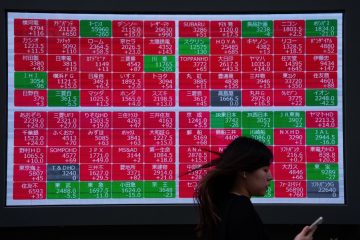
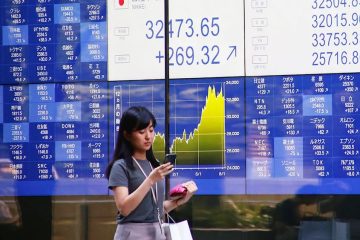
The likelihood of an early interest rate hike hinges on the results of Friday’s August payrolls report and the consumer price data scheduled for release on September 11. Analysts project an increase of 58,000 jobs, rebounding from July’s unexpected decline of 23,000, while the unemployment rate remains steady at 4.1 percent. It would likely require a significantly weaker outcome to substantially reduce the likelihood of a September rate adjustment. The inflation threat is anticipated to prompt New Zealand’s central bank to raise rates for a second consecutive meeting on Wednesday, whereas the Bank of Canada is expected to maintain its current stance, considering the potential harm a trade war with the US could inflict on the economy. In the context of rising yields and prevailing geopolitical tensions, Japan’s Nikkei experienced a decline of 1.6 percent, whereas South Korean equities saw a drop of 2.2 percent. MSCI’s broadest index of Asia-Pacific shares outside Japan experienced a decline of 1.2 percent. Chinese blue chips eased 0.7 percent as the official manufacturing purchasing managers’ index increased to 49.8 in August from 49.2 in July, indicating that activity continues to be subdued.
In Europe, EUROSTOXX 50 futures declined by 0.5 percent, whereas DAX futures decreased by 0.4 percent. On Wall Street, S&P 500 futures experienced a decline of 0.4 percent, while Nasdaq futures saw a reduction of 0.5 percent. Inflation and interest rates will be prominent topics of discussion when G20 finance ministers and central bankers convene in North Carolina on Monday and Tuesday. In an interview on Sunday, US Treasury Secretary Scott Bessent indicated his intention to meet with the head of the Bank of Japan, coinciding with speculation regarding a potential interest rate increase in September. Analysts contend that a succession of rate increases is essential to stabilise the yen, which once more fell below 160.00 per dollar on Friday. Asked about the yen, Bessent remarked that the move was “pretty well contained,” indicating that the decline was not chaotic enough to warrant a recurrence of joint intervention by Japan and the United States. The dollar was 0.1 percent lower at 159.78 yen, still some distance from the July peak of 163.99. Japanese bonds mirrored Friday’s selloff in Treasuries, with 10-year yields reaching their highest levels since 1996 once more.
Two-year Treasury yields remained steady at 4.34 percent, following a significant increase of nearly 12 basis points on Friday. Yields on 30-year bonds were more contained at 5.2080 percent, as investors found some reassurance in Warsh’s focus on combating inflation. The euro was slightly stronger at $1.1590, having declined 0.6 percent on Friday following Warsh’s speech. Data on EU inflation due this week is anticipated to solidify market expectations for an additional increase from the European Central Bank during its meeting on September 10. In commodity markets, US crude experienced an increase of 2.5 percent, reaching $85.50 per barrel. Gold experienced a decline of 1.0 percent, settling at $4,405 per ounce, following a more significant drop of 3.2 percent on Friday, attributed to a surge in yields.