Profits surge as BYD’s global sales surpass China sales for the first time
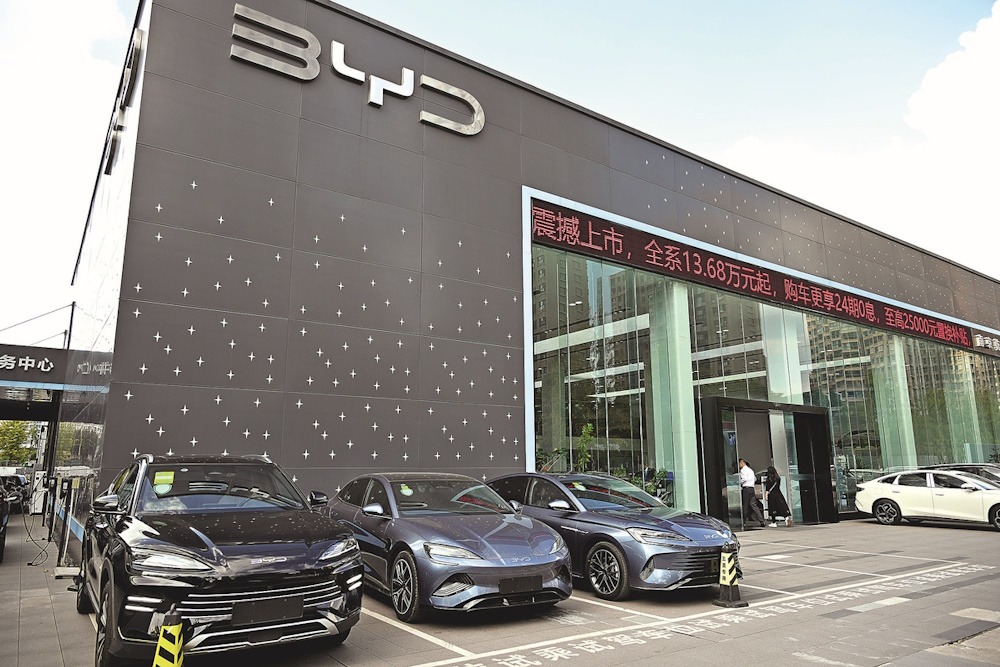
BYD Co.’s overseas revenue surpassed its domestic earnings for the first time, marking the conclusion of one of the company’s prolonged profit downturns and highlighting the necessity for Chinese carmakers to explore opportunities beyond the world’s largest auto market. First-half sales from overseas increased by 34 percent to 181.3 billion yuan, representing 53 percent of the total, whereas sales in Greater China declined by 31 percent, as reported on Aug. 28 by the world’s largest electric-vehicle manufacturer. That fuelled an increase in Shenzhen-based BYD’s profit for the first time in five quarters. The results illustrate the extent to which the expansive Chinese market, characterised by annual vehicle sales that surpass those of the US by nearly two-to-one, has become fiercely competitive, to the point that even its national champion cannot rely on profitability in this environment. That is the reason Chinese carmakers have increasingly sought opportunities in international markets, where they can command higher prices for their vehicles, thereby generating profits despite persistent geopolitical uncertainties. “China‘s automotive industry entered a stage of profound adjustment and divergence characterised by ‘sluggish domestic demand and robust export growth,’” BYD said in its interim report. “The group’s overseas growth momentum will continue to be unleashed.”
It has been more challenging for foreign automakers like Volkswagen AG and Mercedes-Benz Group AG, which have increasingly relied on the Chinese market over the past twenty years, witnessing substantial growth in their sales there. Currently, Chinese consumers are progressively perceiving previously coveted foreign automobiles as overpriced and antiquated. General Motors Co., a prominent player in the U.S. automotive sector, has experienced a significant downturn in its financial performance in China, transitioning from an annual profit of $2 billion to incurring losses over the past two years. BYD experienced a decline of up to 2.7 percent during early trading in Hong Kong on Monday, coinciding with a wider downturn in stock markets throughout Asia. A prolonged industry downturn, now in its 10th month, continued into July, the most recent period for which sales data is accessible. Total passenger vehicle sales declined by 21 percent last month in the country, according to data from the China Passenger Car Association. Consequently, the majority of automotive manufacturers, BYD included, experienced a decline in domestic retail revenue attributed to ongoing price reductions, as reported.
Additionally, Beijing has recently intensified its examination of the industry, pledging to closely monitor automakers’ swift development cycles to ensure that safety is not compromised in their latest models. Given the challenging conditions domestically, international markets have served as the primary catalyst for growth among Chinese automakers throughout the year, with July continuing this trend. Total overseas sales of passenger vehicles from China experienced an impressive increase of 88 percent last month, as reported. It is evident why this is the case. In numerous nations, Chinese automakers have the ability to increase the prices of their vehicles while simultaneously underpricing local competitors, effectively compensating for the expenses associated with shipping cars internationally. Consider BYD’s Seal U plug-in hybrid SUV. Its sticker price starts at 39,900 euros in Germany, or more than double what the Chinese version costs in Beijing, according to car-buying websites. BYD’s second-quarter net income surged by 30 percent to 8.2 billion yuan, driven by robust overseas margins. This figure slightly exceeded the average analyst estimate compiled, providing the company with a crucial respite from fierce domestic competition posed by agile competitors such as Xiaomi Corp. and Xpeng Inc.
Despite BYD’s deliveries not meeting the company’s annual target, exports significantly contribute to analysts’ expectations for an accelerated earnings rebound as the year progresses. Estimates indicate that profits and revenue are projected to reach unprecedented levels in the fourth quarter. However, obstacles arise as the international trading landscape becomes progressively adverse to Chinese imports. The US market, for instance, is effectively closed to Chinese carmakers. The European Union is contemplating the introduction of new tariffs on Chinese hybrid vehicles, as reported by Handelsblatt in June, thereby restricting a profitable market that has developed following the bloc’s imposition of tariffs on fully electric cars from the Asian nation. China’s carmakers currently contend with EU tariffs on all-electric vehicles, a measure that has also been adopted by several other nations, including Brazil and Mexico, in an effort to curb the surge of Chinese imports.
That has led BYD to commit to manufacturing certain vehicles in the markets where it experiences the highest sales, notably in Europe and South America. However, BYD’s flagship factory currently being constructed in Hungary has faced scrutiny regarding alleged labour abuses by subcontractors. Additionally, a change in government in Budapest has initiated an investigation into the state subsidies, tax breaks, and environmental exemptions that were previously granted to BYD. The company has indicated that it adhered to local laws and regulations, yet it has postponed the commencement of production in Hungary until the fourth quarter, approximately one year behind its initial timeline. BYD is exploring every avenue, even aiming to establish a presence in Japan, a market that has proven challenging for global automakers like Ford Motor Co., which have long since ceased their efforts to penetrate it. The Chinese company has recently initiated sales of the Racco, a compact electric vehicle tailored for Japan’s narrow roads, thereby entering the largest segment of the nation’s automotive industry.