September Fed rate hike forecasts boost dollar to two-week high
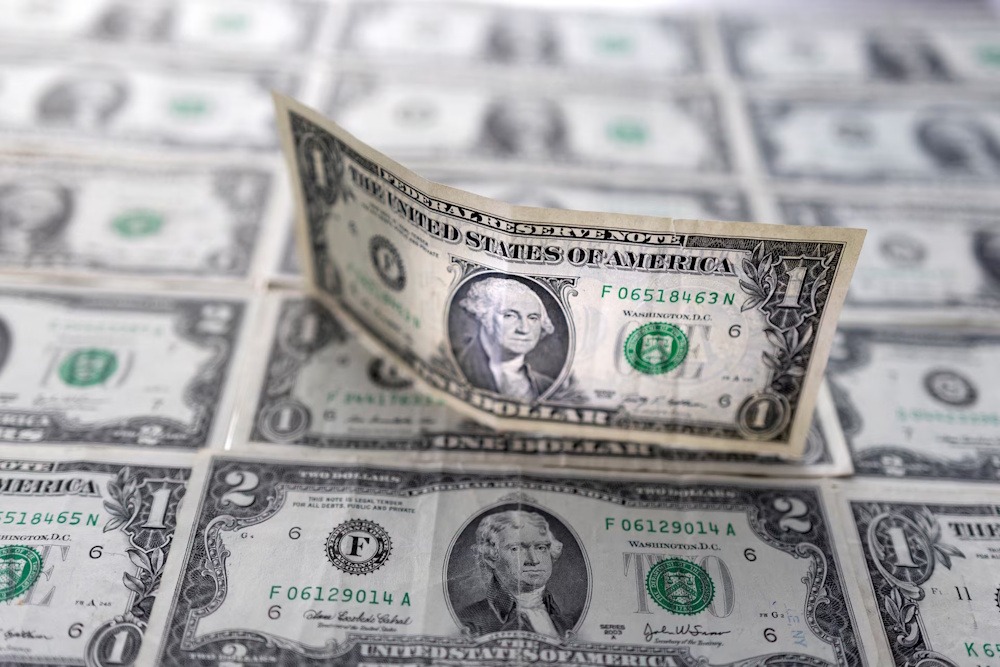
The dollar maintained its position close to a two-week high on Monday, as market participants increased their expectations for a rate hike following hawkish comments from Federal Reserve Chair Kevin Warsh. Meanwhile, the yen retreated past the significant 160-per-dollar threshold. The US central bank will “have work to do” if policymakers don’t gain the necessary confidence that inflation is trending down to 2 percent, Federal Reserve Chairman Kevin Warsh stated on Friday, marking his most explicit indication to date that additional tightening may be required to alleviate price pressure. The remarks intensified speculation regarding a potential rate increase in September. Markets have increased the implied probability of a move next month to 57 percent, while yields on interest-rate-sensitive two-year US Treasury notes have climbed to a more than one-month high of 4.33 percent.
“Warsh’s defense of the inflation target has reduced a major drag on the US dollar and shifted the focus back to economic fundamentals,” said strategist Sim Moh Siong, adding that it helped rebuild the Fed’s credibility and eased concerns about currency debasement. Investors are now directing their attention toward forthcoming US data, especially the nonfarm payrolls report scheduled for Friday and the consumer inflation figures set for release next week. Both of these reports have the potential to influence expectations leading up to the September Federal Reserve meeting. The euro increased by 0.1 percent to $1.1591, whereas sterling remained relatively stable at $1.3539. Both currencies are poised to achieve their second consecutive monthly gains. The dollar index, which measures the US currency against six major peers, experienced a slight decline to 99.6 following a 0.6 percent increase on Friday, reaching its highest level since August 17. Even so, the index remained poised for a second consecutive monthly decline, as US Treasury bond-buyback plans earlier in the month rekindled debasement trades.
On Monday, the demand for the dollar was bolstered by an increase in oil prices. Brent oil experienced an increase of nearly 2 percent following reports of US forces conducting strikes on Iran’s Larak Island on Sunday, according to a US official. This event signifies the first documented American military action against Iran since late July. Attention will shift to a meeting of G20 finance ministers and central bank governors hosted by the United States on Monday and Tuesday. Markets will be attentive to indications of unified actions to cut connections with Iran, alongside initiatives designed to alleviate worries regarding increasing US debt and bond yields. A persistently weak yen is currently under scrutiny, as the dollar’s renewed strength exacerbates the pressure on the Japanese currency, which has relinquished a significant portion of the gains achieved after July’s intervention.
The yen was slightly weaker at 160.01 per dollar, having slid beyond the 160-per-dollar level on Friday. This level is widely viewed as heightening the risk of official intervention and refocusing attention on the potential for Tokyo and Washington to intervene once more to support the currency. US Treasury Secretary Scott Bessent stated on Sunday that the recent fluctuations in the yen had been “pretty well contained” and expressed his expectation that Bank of Japan Governor Kazuo Ueda would “do the right thing” regarding monetary policy. “Historically, interventions have only held when fundamentals moved in the same direction,” said Carlos Casanova. “The yen remains under pressure from a still-wide rate gap, negative real rates, and the Bank of Japan’s cautious pace.” Elsewhere, the New Zealand dollar remained relatively stable at $0.5916, while the Australian dollar experienced a modest increase of 0.1 percent to $0.7163.